
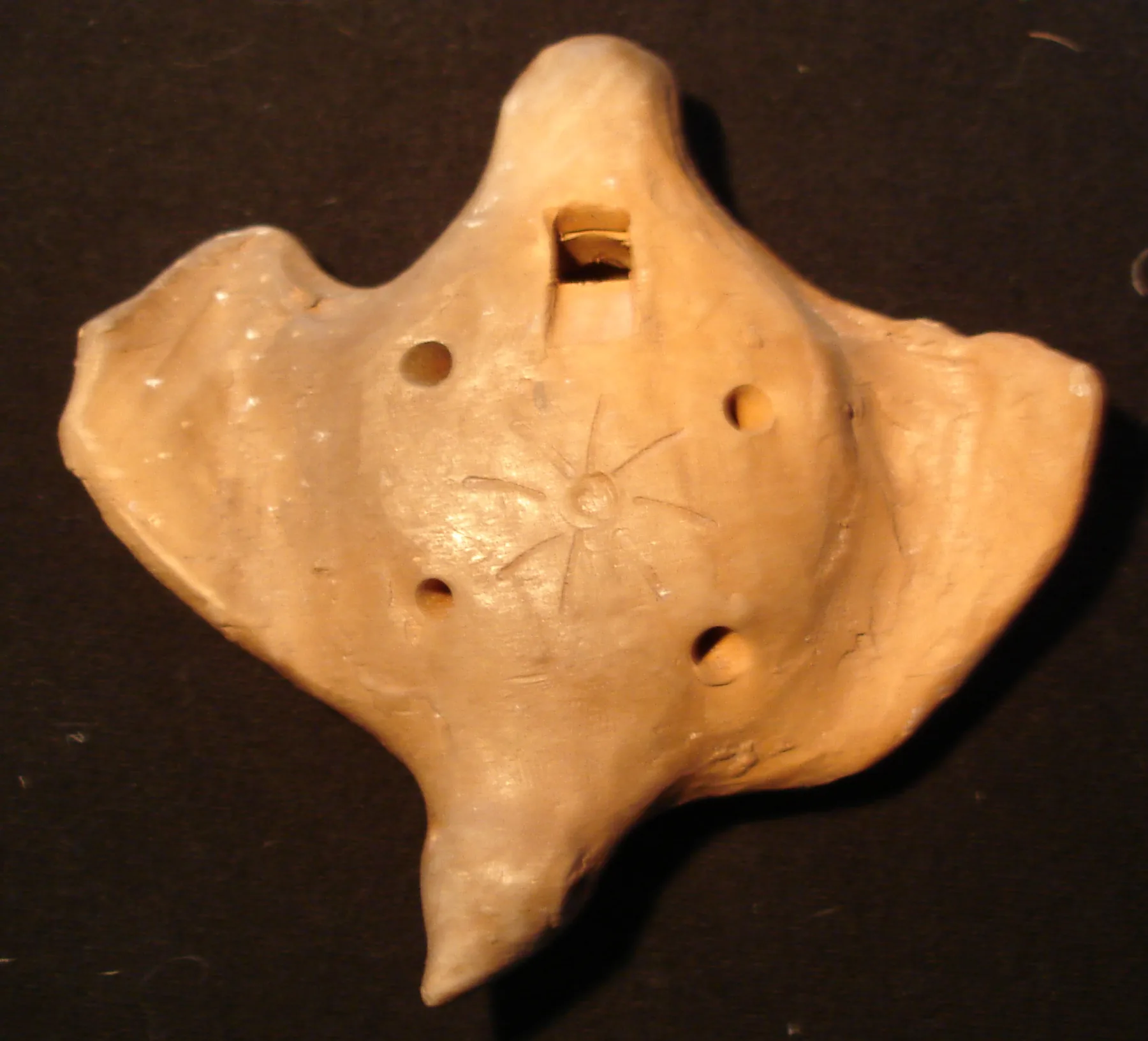

This article offers a clear guide to help you decide whether this instrument is right for your musical journey. It is intended for beginners in France who are looking for a durable instrument that is enjoyable to play.
We explain the specific features of the different models to help you choose. You will discover the differences in range, the importance of weight, and the available tuning options.
The article provides practical advice on fingering, breathing, and maintenance. It also explains which model to choose when starting out and when to move on to a more advanced instrument.
For more technical details about how it works and purchasing advice, see this useful resource: guide to the double ocarina.
Understanding the Ocarina’s Origins and How It Works
Let us explore the ancient history and simple mechanics behind the charm of this wind instrument.
Ancient History and Modern Development
The earliest forms, discovered on several continents, date back more than 12,000 years. This heritage demonstrates the instrument’s cultural importance and longevity.
In 1860, Giuseppe Donati standardized the transverse form. His contribution transformed the ocarina into a more melodic instrument suited to contemporary music.
Playing Mechanism and Sound Production
The principle is simple: blown air enters a hollow chamber and creates vibrations. Covering the holes with your fingers changes the wavelength and pitch of the note.
Mastering breath control and fingering helps stabilize pitch and produce clear notes throughout the octave.
| Component | Origin / date | Effect on sound |
|---|---|---|
| Hollow chamber | Prehistory (12,000 years ago) | Basis of tone and resonance |
| Transverse form | Giuseppe Donati, 1860 | Better intonation and greater comfort |
| Holes / fingering | Modern development | Control of range and notes |
Double Ocarina: Who Is It For and What Skill Level?
Before investing, assess your progress and the type of repertoire you want to play.
The instrument’s popularity has soared: sales have increased by 300% since 2015, largely because of pop culture. For beginners, the 12-hole ocarina remains the best choice. It is easy to handle and provides enough range to learn quickly.
Multi-chamber ocarinas are intended for experienced musicians. They extend the range across several octaves, but require more years of practice and precise breath control.
- Benefit for beginners: rapid progress with a 12-hole ocarina.
- Benefit for experienced musicians: multi-chamber models suited to complex compositions.
- Advice: choose your type of ocarina according to your musical goals and experience.
To compare hole counts and models, read our guide to ocarina holes.
Comparing Models by Number of Holes
The number of openings radically changes how the instrument is played and how it sounds.
Simple Models for Beginners
Models with 4 or 6 holes are ideal for children and novices. Lightweight and easy to hold, they support gradual learning.
In the 1960s, John Taylor demonstrated that a fingering system could enable 6-hole ocarinas to produce 17 notes. This range fits within a compact instrument.
Features of Multi-Chamber Models
Multi-chamber ocarinas (double and triple models) extend the range across several octaves. They suit experienced musicians seeking rich harmonies.
Benefits of Transverse Models
Transverse models have an ergonomic design. Finger placement feels more natural, which supports accurate intonation and sound control.
- The 12-hole ocarina is the standard beginner model: it offers approximately 1.5 octaves and a chromatic range.
- The number of holes affects both playing complexity and the number of playable notes.
- For a considered purchase, compare size, hole count, and ease of fingering.
For a comparison of prices and models, see our price guide.
“The choice of hole count often determines a musician’s learning path.”
Choosing the Right Range and Key
Your choice of range directly affects musical expression and the palette of available sounds.
The choice between an alto, soprano, or tenor model depends on the range you want to explore. Soprano models produce a higher sound, while larger instruments produce warm low notes. Size affects both range and ease of playing.
For beginners, a 12-hole ocarina tuned to C remains a safe choice. It combines a moderate size, an easily accessible octave, and straightforward fingering. This format makes it easier to learn notes and begin practicing scales.
Mastering breath control is essential. Steady breathing improves intonation and tone, especially when moving from 6-hole ocarinas to more complex models. Understanding the role of the number of holes also helps prevent intonation problems.
- Check the key before buying to ensure it suits your repertoire.
- Consider the materials: ceramic for a rich tone and plastic for durability.
- Test the size to make sure the instrument is comfortable to hold.
Professional buying guide — consult this resource for detailed criteria before making your final choice.
“The right range is the one that lets you play comfortably and express your musicality.”
How Materials Affect Sound Quality
The materials used often define an instrument’s sonic character.
Ceramic produces a warm, precise sound. It is well suited to nuanced compositions and legato passages. Protect these models from impacts and temperature fluctuations.
Wood produces rich notes and a beautiful tonal color. These models require regular maintenance to prevent drying and cracking. An annual oil treatment is often sufficient.
Plastic remains a practical choice for beginners. It is durable and affordable, allowing players to practice breath control without worrying about breakage.
Simple Maintenance Advice
Wipe the mouthpiece after every session to preserve accurate intonation. Avoid harsh cleaning methods that could damage the inner surface.
Store your instrument in a soft, dry case. For wooden models, monitor the ambient humidity.
| Material | Sound benefit | Maintenance |
|---|---|---|
| Ceramic | Warm, precise sound | Protect from impacts; avoid thermal shock |
| Boxwood / wood | Rich, warm tone | Oil regularly; maintain stable humidity |
| Plastic | Durable, neutral sound | Gentle washing; simple storage |
“The material affects resonance and the perception of range: choose it to suit your repertoire.”
Tips for Getting Comfortable with the Instrument
Simple adjustments to hand position and breathing can quickly improve note accuracy.
Posture: stand or sit upright with relaxed shoulders. Good posture improves breath control and stabilizes pitch.
Make sure the holes covered by your fingers are completely sealed. Air leaks reduce tone quality and note accuracy.
For beginners, practice articulating each note clearly. On a 12-hole ocarina, this method speeds up progress.
Practice short scales regularly. This develops finger dexterity and mastery of your instrument’s range.
Place the pads of your fingers over the openings rather than your fingertips. This improves control and the accuracy of every note.
- Breathe calmly and continuously to produce a rich sound.
- Take short breaks to prevent tension.
- Listen to each note and correct your fingering if the pitch varies.
“Simple movements make all the difference during the first few months of practice.”
For advice on choosing a model suited to playing and cosplay, see this guide: choosing an ocarina for cosplay.
Essential Criteria for a Safe Online Purchase
A considered purchase begins with identifying a trustworthy seller and a properly tuned instrument.
Choose established brands: STL, Musique de Terre, Dinda, Spencer, and Stein offer factory-checked models. They often provide a tuning certificate and verified reviews.
Avoid risky marketplaces. A 2022 study indicates that 87% of items sold on AliExpress are poorly tuned. This compromises intonation and tone from the very first use.
Check the number of holes, the key (such as an alto or soprano in C), and the presence of a serial number or certificate. These details help ensure that the product suits your needs, whether you are a beginner or an experienced musician.
| Criterion | Why it matters | Practical advice |
|---|---|---|
| Brand | Quality and after-sales service | Choose STL, Stein, or Musique de Terre |
| Tuning | Note accuracy | Request a tuning certificate |
| Number of holes / size | Range and ergonomics | Check the number of holes and playing comfort |
“Investing in a reliable instrument makes musical progress easier.”
- Read verified reviews and watch test videos.
- Be wary of models that are too inexpensive, as they often have design flaws.
- For beginners, a 12-hole ocarina or another properly adjusted model provides a better learning experience.
Conclusion
A good choice depends on your musical goals, desired tone, and the instrument’s ease of use.
Material, range, and tuning determine the instrument’s sound quality and longevity. A simple 12-hole model helps beginners, while a multi-chamber instrument expands the palette available to experienced musicians.
Choose established brands and specialist retailers. Reliable tuning ensures an enjoyable experience from the very first hours of playing.
Finally, devote time to regular practice and make use of educational resources. This approach will support lasting, motivating musical progress.