


Entering the world of this ancient instrument requires a little research before buying. This guide clearly and practically explains the essential criteria for making the right choice.
Why does it matter? The ocarina dates back more than 12,000 years, and each model has its own characteristics in terms of sound and handling.
We explain the differences between materials, hole configurations, and features that make learning easier for beginners. By following this advice, you can avoid common mistakes and progress more quickly.
Throughout this article, you will be able to compare several models and identify the best first ocarina for your needs.
Understanding the ocarina and how it works
The ancient origins and simple mechanism of this instrument explain its enchanting sound.
Origins and history
The history of the ocarina goes back more than 12,000 years. Early models were often shaped like birds or eggs—forms that were easy to mold.
In the 19th century, Giuseppe Donati modernized its design. His version improved intonation and expanded the range, paving the way for today’s transverse models.
Playing mechanism
The principle is similar to that of a recorder: you blow into a mouthpiece to create vibrations inside a hollow chamber.
Covering or uncovering the finger holes changes the pitch. Coordination between breath control and finger placement is essential.
- Different types provide varied sound experiences depending on their shape and size.
- Musicians can explore a broad range of notes, from low to high.
- Its pure tone makes this wind instrument a popular choice in music.
10-hole ocarina: how to choose a good beginner model
This format allows beginners to explore a broader range without excessive complexity.
Why choose it? Ten-hole models offer an excellent balance between the simplicity of six-hole instruments and the versatility of twelve-hole models. They make fingerings easier to learn while providing access to a wider range of notes.
For your first purchase, consider hand comfort and ergonomics. A comfortable grip helps beginners progress more quickly.
Material and quality: terracotta remains popular for its warm tone. Choose established makers such as Musique de Terre for stable tuning throughout the instrument’s range.
“A good flute should provide stable tuning and comfortable ergonomics.”
- Check the required skill level and whether a method book is supplied with the instrument.
- Compare brands before buying online.
- Make sure every note is in tune so that you can train your musical ear.
| Criterion | What it provides | Advice |
|---|---|---|
| Number of holes | A balance between simplicity and range | Ideal for beginners who are comfortable learning fingerings |
| Material | Warmth of tone / durability | Terracotta is recommended for its authentic character |
| Brand | Quality and tuning | Choose established makers (Musique de Terre) |
Comparing formats by number of holes
Depending on how you play, the format affects range, portability, and progression.
Advantages of the standard format
Twelve-hole models remain the standard choice for beginners. They can produce around 22 notes and cover nearly 1.5 octaves.
This range makes it easier to learn fingerings and play a varied repertoire. Their design and stable tuning also help develop your musical ear.
Limitations of smaller models
Six-hole formats are compact and highly portable. John Taylor’s fingering system makes it possible to produce 17 to 18 notes, but the technique requires more memorization.
Your choice depends on how you intend to play: 12 holes for long-term progression or 6 holes for portability. Tuning quality and the material—such as the plastic used for the Night by Noble—affect price and durability.
- Check the number of holes: it determines the instrument’s range and the notes available.
- Choose an ergonomic design for a comfortable grip.
- Read tuning guides for 12-hole models in this article.
“Good tuning and suitable ergonomics help you progress more quickly.”
Features of multichamber models
Multichamber instruments offer harmonic possibilities that a single body cannot provide. They expand the range and make more notes available without requiring a different instrument.
Pacchioni and Asian fingerings
The Pacchioni system, created by Giorgio Pacchioni, promotes exceptionally smooth transitions between chambers. It overlaps the final notes of one section with the first notes of the next, producing remarkable tonal consistency.
The Asian system instead prioritizes maximum continuity between notes. It is designed to extend the range across several octaves while maintaining an uninterrupted melodic line.
- Range: double and triple ocarinas often span as many as three octaves.
- Key difference: the way transitions between chambers are managed distinguishes the two systems.
- Intended players: these models are designed for musicians already comfortable with a 12-hole instrument.
- Harmony: multiple chambers enrich the tone for advanced musical arrangements.
“Mastering these fingerings takes practice to coordinate breath and chamber changes.”
Choosing the right range for your playing
The range determines the instrument’s tonal color and the span of notes you can explore.
Your ocarina’s range defines its register, from bright-sounding soprano models to deep-sounding bass instruments. It affects both the repertoire available to you and your comfort when playing in an ensemble.
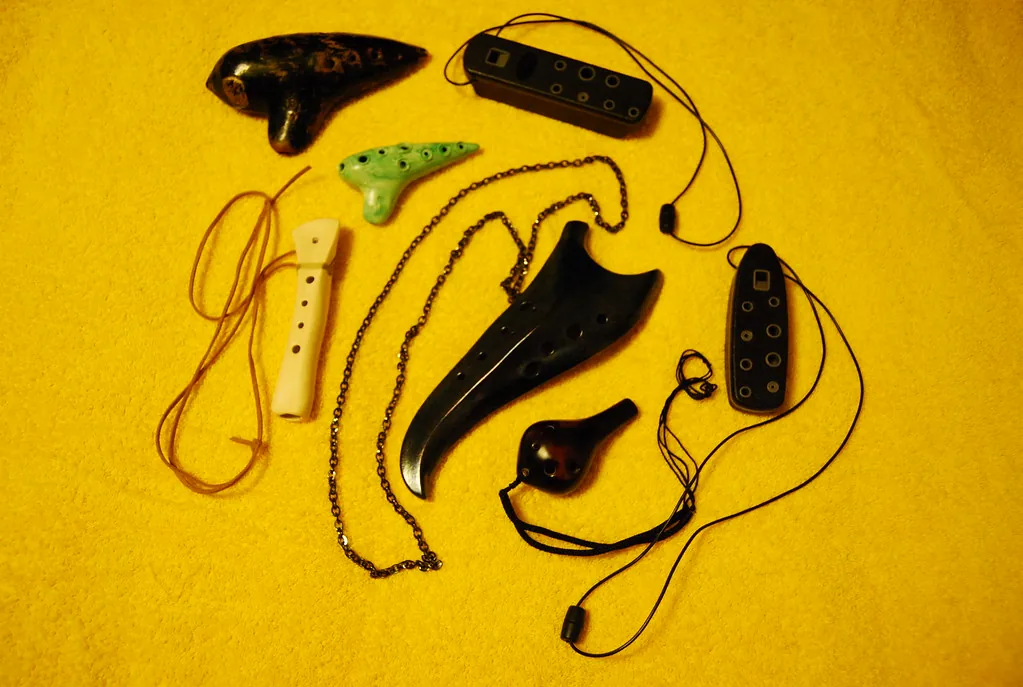
An alto C (AC) remains the best first ocarina for most beginners. It provides a good balance between low and high notes and makes learning scales easier.
- Check the tuning against the A440 standard to ensure stable pitch.
- Practice scales regularly on the alto to master breath control and intonation.
- Soprano models are easier to carry but require precise breath control.
- The range affects the number of usable octaves and your choice of repertoire.
“A well-chosen range makes ensemble playing and musical progression easier.”
Ceramic or plastic: which material should you choose?
The material affects both the tone and the durability of your instrument. Your decision will depend on how and where you play, as well as your budget.
Advantages of ceramic
Ceramic produces a warm tone and excellent sound projection. Glazed terracotta models also stand out for their unique appearance.
Strengths: tonal richness and a commanding presence in both recordings and concerts. Their fragility, however, makes a suitable case essential.
Why choose plastic?
Plastic is lightweight and highly durable. It is well suited to beginners and outdoor playing.
Advantages: affordability, durability, and portability. Pitch accuracy nevertheless depends on manufacturing quality and the design of the holes.
- Ceramic prioritizes warmth of tone and a full range.
- Plastic prioritizes strength and lightness for practice.
- Manufacturing quality matters more than material alone when it comes to reliable intonation and ergonomics.
- To learn more about the sound of ceramic models, read this specialist article: the ceramic ocarina.
“Investing in a good case is essential if you choose ceramic.”
For general advice on buying an instrument, this practical guide may help: beginner equipment guide.
Quality criteria for avoiding marketplace pitfalls
General-purpose marketplaces often feature instruments that look attractive in photographs. Be careful: appearance does not guarantee accurate tuning.
Around 20% of buyers report tuning problems with inexpensive models. These defects often result from poorly drilled holes, leading to unstable notes and a frustrating playing experience.
Always request an A440 tuning certificate and a fingering chart when making a purchase. Without these documents, reject the offer or ask for audio evidence.
- Check the finish and consistency of the holes: clean drilling helps ensure accurate pitch.
- Choose established brands that perform quality checks before shipping.
- Avoid overly decorative models that sacrifice acoustic precision.
- Keep your proof of purchase so that you can return the instrument if necessary.
Practical advice: ask a specialist seller for guidance and compare technical reviews. For an additional buying guide covering smaller formats, follow this useful link: six-hole ocarina guide.
“A reliable specialist seller remains your best safeguard when purchasing a quality instrument.”
Where to buy your instrument in France and online
Buying in France often makes it easier to communicate directly with the craftsperson and reduces delivery times.
Musique de Terre, a French workshop run by Olivier Gosselink, offers handcrafted pieces and personalized advice. This support helps match your choice to your hand size and preferred range.
For your first ocarina, prioritize specialist shops. Internationally, STL Ocarina remains a well-known name with a broad catalogue and delivery times of around 2.5 weeks.
- Review the technical specifications: range, material (ceramic or plastic), and note chart.
- Compare ranges and prices according to construction and available options.
- Look for beginner bundles that include a method book and case.
- Check the quality of after-sales service and delivery times (French retailers often deliver more quickly).
“A good seller provides advice, technical specifications, and support to help ensure a satisfactory purchase.”
| Retailer | Strength | Delivery time |
|---|---|---|
| Musique de Terre | Craftsmanship, personalized advice | Fast delivery within France |
| STL Ocarina | Broad selection, varied construction | Around 2.5 weeks |
| Ocarina World | European retailer, several options | Short lead times depending on stock |
Established brands for a reliable purchase
Established manufacturers often provide better intonation and durability.
Stein and Focalink are valued for the precision of their ocarinas. They meet the expectations of demanding studio and stage musicians.
Musique de Terre offers handcrafted French instruments. Its clay and ceramic models provide a strong tonal presence and a carefully finished appearance.
- STL Ocarina offers a broad range of models, including plastic and ceramic options.
- Aketa, a historic Japanese brand, is known for its distinctive glazed finish.
- Choosing established brands often ensures better customer support and resale value.
“Choosing an established brand reduces the risks associated with poor tuning and repair costs.”
| Brand | Strength | Recommendation |
|---|---|---|
| Stein | Precision, reliability | For professional musicians and studios |
| Focalink | Tuning quality | Excellent tonal consistency |
| Musique de Terre | French craftsmanship, warm tone | Ideal for collections and concerts |
| STL Ocarina | Broad range, multiple options | Good value for money |
| Aketa | Ceramic finish, appearance | For enthusiasts who appreciate handcrafted pieces |
To compare models and prepare for your purchase, also review the best 12-hole ocarinas.
Advice for taking your first musical steps
Starting to play music requires a few simple reference points so that you can progress with confidence.
Posture and breath control
Maintain an upright posture to support your diaphragm. This improves breath control and tonal stability.
Practice for 15 to 20 minutes each day. Consistency turns effort into progress.
Use the pads of your fingers to cover the holes and create an airtight seal. Precise fingerings produce clear notes.
Articulation also helps: begin each note with your tongue as though saying “too” or “doo.” This makes your playing clearer.
- Control your breath: avoid blowing too forcefully or too softly.
- Learn the basic fingerings before playing melodies.
- Follow a structured method to make progress.
“Patience and regular practice turn curiosity into a genuine musical experience.”
Care and longevity of your instrument
Simple maintenance extends the life of your ocarina and helps preserve stable tuning.
After every session, remove any moisture and gently wipe the mouthpiece with a soft cloth.
These steps prevent mold and deposits that can affect the tone.
Always store your instrument in a padded case.
Ceramic models remain fragile and are vulnerable to thermal shock.
- Avoid exposure to extreme temperatures (do not leave the instrument in a car in direct sunlight).
- Clean it periodically with a mild solution if necessary; never immerse it for an extended period.
- Check its tuning once a month with a tuner to detect any change in pitch.
“Caring for your instrument protects your investment and preserves its quality over time.”
| Action | Effect | Frequency |
|---|---|---|
| Wipe the mouthpiece and remove moisture | Prevents mold and maintains a consistent tone | After every session |
| Store in a padded case | Protects against impacts and temperature changes | Whenever transporting it |
| Gentle cleaning | Removes deposits without affecting porosity | One to three times a year, depending on use |
| Check the tuning | Detects changes in pitch early | Monthly |
Conclusion
In conclusion, your choice of instrument depends primarily on the range you want and your playing comfort.
This point sums up the essentials: a 12-hole ocarina in C remains an excellent starting point for beginners because of its range and stable tuning.
Choose an established brand and a material suited to your needs—ceramic for warmth of tone or plastic for durability. Multichamber models provide additional octaves to support your progression.
To explore the subject further and choose your first ocarina more confidently, read this practical guide: choosing an ocarina.
With proper care and regular practice, your wind instrument will become a faithful musical companion.