
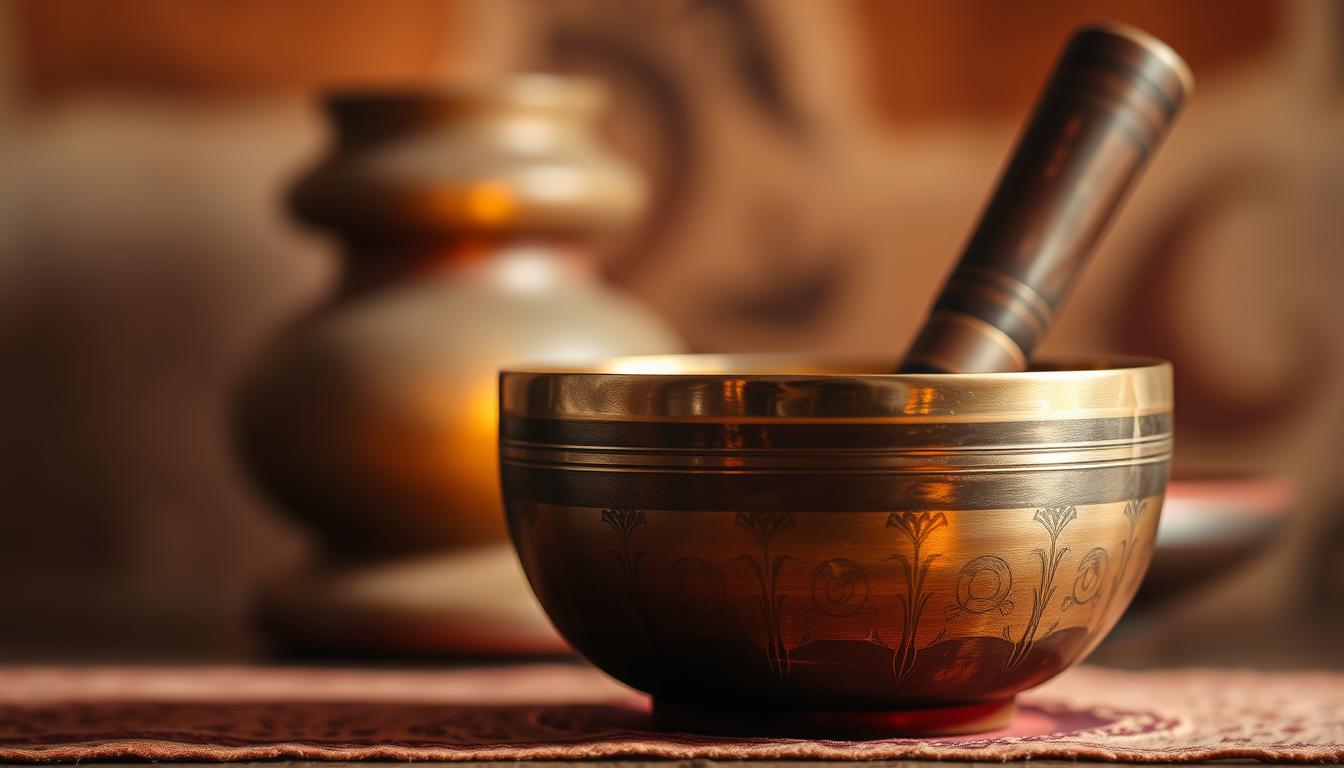

Tibetan singing bowls are ancient instruments that have been used for millennia. Their origins are traced to the Himalayas, where they play a sacred role in spiritual rituals. These objects, often made of metal or crystal, are valued for their soothing vibrations.
Today, they are widely used to promote well-being and relaxation. Their unique sound helps reduce stress and harmonize inner energy. Whether used for meditation or managing emotions, singing bowls offer an enriching experience.
There are two main types of bowls: traditional metal bowls and crystal bowls. Each has its own characteristics and specific uses. Understanding their history and function is essential to getting the most from them.
Introduction to Tibetan singing bowl training
Discover how this ancient instrument can transform your daily life. Used for centuries, it is much more than a simple musical tool. It plays a key role in personal and spiritual development.
The sound vibrations it produces act directly on the body and mind. They are central to holistic therapies, promoting relaxation and inner balance. Scientific studies suggest that these frequencies may even influence the water in our bodies.
“The sounds produced by these instruments have the power to restore harmony to vital energy.”
This practice is suitable for everyone, whether you are a beginner or an experienced practitioner.
It is essential to take the time to understand the effects of this tool. Adapt its use to your needs to gain the greatest benefit. Whether for meditation or stress management, the results can be surprising.
The history of Tibetan singing bowls
Discover the origins of Tibetan singing bowls. These ancient instruments have a rich and fascinating history stretching back thousands of years. Their origins are often associated with shamanic practices around 5000 BC, when they were reportedly made from wood or stone for spiritual rituals.
Over time, craftspeople began using metals, sometimes incorporating fragments of Himalayan meteorites. This transition marked an important stage in the development of these sacred objects. During the Middle Ages, they were also used as measuring tools and ritual vessels.
Ancient origins of singing bowls
Archaeological discoveries have revealed bronze bowls dating from the eighth century. These objects attest to the cultural and spiritual importance of Tibetan bowls through the ages. Buddhist monks played an essential role in preserving the associated manufacturing techniques and rituals.
Development and use through the centuries
The origin of Tibetan bowls is often debated. Some theories suggest a Nepalese origin, while others claim they are exclusively Tibetan. This debate illustrates the complexity of their history. Today, they are recognized for their potential benefits for well-being and relaxation.
| Period | Materials | Use |
|---|---|---|
| 5000 BC | Wood, stone | Shamanic rituals |
| Eighth century | Bronze | Ritual objects and tools |
| Middle Ages | Various metals | Sacred vessels |
The composition of Tibetan bowls
The composition of singing bowls is rooted in an ancient tradition. These instruments are made from a unique alloy of metals, each carrying profound symbolism. This combination gives the bowls their exceptional acoustic and vibrational properties.
The seven metals and their symbolism
The traditional alloy contains seven metals, each associated with a planet and a particular energy. Gold, for example, represents the Sun, while silver symbolizes the Moon. These alchemical correspondences are believed to enhance the harmonizing effect of singing bowls.
Here are the different metals and their meanings:
| Metal | Planet | Symbolism |
|---|---|---|
| Gold | Sun | Vital energy |
| Silver | Moon | Intuition |
| Iron | Mars | Strength |
| Mercury | Mercury | Communication |
| Tin | Jupiter | Expansion |
| Copper | Venus | Love |
| Lead | Saturn | Stability |
Handcrafting the bowls
The production of singing bowls is an artisanal process requiring precision and expertise. Two main techniques are used: hammering and casting. Hammering, which is commonly practiced in Nepal, produces a rich and distinctive tone.
The visible hammer marks on bowls are considered a sign of authenticity. Although time-consuming, this method delivers exceptional acoustic quality. Casting is faster, but it may diminish the richness of the vibrations.
These artisanal techniques preserve a thousand-year-old tradition while adapting it to modern needs. Every bowl is therefore a unique work with its own history and distinctive energy.
The benefits of Tibetan bowls
The vibrations of these ancient instruments offer unexpected benefits. Their unique sound acts on the body and mind, fostering inner balance. These sacred objects have been used for centuries for their soothing and harmonizing effects.
Relaxation and stress reduction
The relaxing effects of these instruments are widely recognized. EEG studies indicate that they activate alpha waves, encouraging a state of deep relaxation. One documented case reported a 40% reduction in tinnitus symptoms through regular use.
These tools are also used in oncology settings to provide emotional support to patients during chemotherapy. Their soothing sound may help reduce anxiety and improve general well-being.
Harmonizing the chakras
The chakras are regarded as centers of vital energy within the body. The vibrations of high-pitched bowls are considered particularly effective for balancing the crown chakra and fostering a deeper spiritual connection. This practice is often incorporated into holistic therapies.
“The sounds produced by these instruments have the power to restore harmony to vital energy.”
Improving concentration and meditation
The practice of meditation can be enhanced through the use of these objects. Their sound helps focus the mind by reducing distractions. Compared with other instruments used in sound therapy, such as gongs or tuning forks, they offer a more immersive and personalized experience.
These benefits make them valuable tools for people seeking to improve their concentration or deepen their spiritual practice. Their versatility makes them accessible to everyone, regardless of experience.
How to choose a Tibetan singing bowl
Choosing a Tibetan bowl that suits your needs is essential if you want to enjoy its benefits fully. Several criteria should be considered to make the right choice.
Selection criteria: size, sound and materials
The size of a bowl directly affects its tone. Small bowls produce high-pitched sounds that are well suited to the upper chakras. Larger bowls emit deeper vibrations and are ideal for relaxation.
Sound is another key consideration. Every bowl has a unique frequency. Take the time to listen carefully and ensure that its tone feels right to you.
The materials used also determine the bowl’s quality. Traditional bowls made from a seven-metal alloy are particularly prized for their harmonizing properties.
Recognizing an authentic Tibetan bowl
To recognize an authentic bowl, check how long it resonates. A genuine Tibetan bowl should continue vibrating for at least 45 seconds after being struck.
Price is another indicator. A handcrafted seven-metal-alloy bowl generally costs between €80 and €300. Be wary of very inexpensive products, which are often made from modern brass.
Whenever possible, try the bowl in a store. The sense that a bowl is energetically “calling” to you may help you decide whether it is right for you.
Basic techniques for using a Tibetan singing bowl
Mastering the fundamental techniques lets you make full use of the instrument’s vibrations. Whether you are a beginner or an experienced practitioner, understanding how to set the bowl vibrating is essential.
The striking method
The first technique involves striking the rim of the bowl with a mallet. Beginners are advised to use a suede-covered mallet because it produces a gentle, harmonious sound. The movement should be precise and controlled to avoid impairing the vibration quality.
Here are some tips for mastering this method:
- Hold the mallet at an angle of 20 to 30° for the best sound.
- Strike the rim gently to avoid discordant sounds.
- Allow the vibrations to spread naturally before striking again.
The rubbing method
The second technique is rubbing. This method makes the instrument sing by creating a continuous sound. Use a wooden or suede-covered mallet and gently rub it around the rim in complete circles.
To produce a successful vibration:
- Maintain an angle of 20 to 30° for optimal friction.
- Apply steady but gentle pressure to avoid chattering sounds.
- Vary the speed to find the frequency that suits you.
These two methods can be combined in 15-minute sessions, which are ideal for relaxation or meditation. With regular practice, you will gain greater command of these techniques and discover new ways to use this ancient instrument.
Different bowl sizes and their uses
The size of a bowl directly influences its use and effects. Depending on their diameter, these instruments provide different vibrations and tones suited to particular needs. Each size corresponds to a specific practice or objective.
Small bowls for the upper chakras
Small bowls, with a diameter of approximately 12 cm, are ideal for working with the upper chakras, particularly the crown chakra. Their high pitch and strong resonance promote concentration and spiritual connection. They are perfect for short, focused meditation sessions.
Medium bowls for meditation
Medium-sized bowls, measuring around 15 cm, produce a balanced note, often near 110 Hz. This frequency is ideal for meditation because it soothes the mind without becoming overwhelming. These bowls are versatile and suitable for daily use.
Large bowls for sound massage
Large bowls, with a diameter of 22 cm or more, produce deep, powerful vibrations. They are particularly effective for sound massage because their low-frequency waves act across the whole body. These bowls are often used to harmonize the root chakra and promote deep relaxation.
| Size | Diameter | Use |
|---|---|---|
| Small | 12 cm | Upper chakras |
| Medium | 15 cm | Meditation |
| Large | 22 cm | Sound massage |
One advanced technique combines three bowl sizes to create complete harmonization. Certain precautions are necessary, however. People with pacemakers and pregnant women should avoid overly intense vibrations.
Essential accessories for Tibetan bowls
Accessories play a key role in optimizing the use of these instruments. They can improve sound quality and extend the bowls’ lifespan. Choosing the right tools is essential for a successful experience.
Strikers and mallets
Strikers and mallets are essential tools for setting bowls in motion. Their weight and material directly affect the sound. For example, a 200 g mallet is ideal for bowls measuring more than 20 cm in diameter.
Avoid materials such as rubber, which can impair vibration quality. Choose wood or suede for a harmonious, natural sound.
Cushions and supports
Cushions and supports provide optimal stability during use. Cork models, for example, offer excellent vibration insulation. They also protect surfaces and improve resonance.
For effective maintenance, clean wooden supports with beeswax. This preserves their quality and extends their lifespan.
In short, suitable accessories help you reach a higher level of practice. They ensure optimal use while preserving the instruments’ quality.
Symbols engraved on Tibetan bowls
The symbols engraved on singing bowls play a key role in their energy and use. Often inspired by spiritual traditions, these designs are believed to amplify vibrational effects and enrich the practice.
The meaning of mantras and designs
Among the most common symbols, the mantra Om Mani Padme Hum is considered especially powerful. According to one study, its presence on a bowl increases resonance time by 30%. Other designs, such as the Flower of Life, are said to strengthen vibrations through their sacred geometry.
Here are some examples of symbols and their meanings:
- Om Mani Padme Hum: compassion and harmony.
- Flower of Life: balance and universal connection.
- Double Dorje: protection and stability.
How symbols affect the practice
Mantras and designs directly influence the practice. They are believed to support energetic recharging through symbolic alignment, strengthening the benefits of the vibrations. It is important, however, to check the authenticity of the engravings, as imitation laser engraving may alter the intended effects.
“Sacred symbols transform vibrations into a profound spiritual experience.”
To learn more about symbols engraved on singing bowls, read this complete guide.
Tibetan bowls and different religions
Although rooted in a Buddhist tradition, singing bowls transcend religious boundaries. Their use extends across various spiritual practices, offering a universal tool for well-being and meditation. Thanks to their soothing vibrations, these instruments can be adapted to many cultural and religious contexts.
Compatibility with spiritual practices
Singing bowls are compatible with many spiritual practices. Their harmonious sound does not contradict any particular religious doctrine, making them versatile tools. For example, a 2017 fatwa reportedly permitted their non-ritual use in Islam, emphasizing their spiritual neutrality.
In France, 68% of users are not Buddhists, demonstrating their adoption in varied contexts. Whether for Christian meditation or deep relaxation, these instruments can easily be incorporated into such practices.
Use in Buddhism and beyond
In Buddhism, singing bowls play a central role in rituals and meditation. Their sound is regarded as a bridge between the body and the mind, encouraging spiritual awakening. Their use extends beyond this tradition, however.
Some Christian churches use them to accompany prayer and periods of contemplation. One rabbi even described their effectiveness in Kabbalistic meditation:
“The vibrations of the bowls help me reach a state of deep concentration that is essential to my spiritual practice.”
These examples illustrate how these instruments adapt to different beliefs while retaining their universal essence.
Common mistakes to avoid with Tibetan bowls
Using a singing bowl requires care if you want to avoid common mistakes. Although these instruments look simple, they must be handled precisely to preserve their quality and maximize their benefits. Here are the principal mistakes to recognize and avoid.
Striking too hard or too softly
One of the most common mistakes is striking the bowl incorrectly. Striking too hard can damage the instrument, while striking too softly will not produce the desired vibrations. One study claims that 43% of beginners break their first bowl within six months.
To avoid this, use a suitable mallet and apply moderate force. A good approach is to test several levels of intensity to determine which one makes your bowl resonate best.
Choosing a bowl that does not meet your needs
Another common pitfall is selecting a bowl that does not match your expectations. The choice of size, material and tone is crucial. A small bowl, for example, is ideal for the upper chakras, while a large bowl is better suited to sound massage.
Take the time to try several models before making your choice. Listen closely to the resonance and ensure that the bowl suits your experience level and goals.
Additional advice
Here are a few tips for avoiding mistakes:
- Use beeswax to make a temporary repair to a cracked bowl.
- Avoid sellers with unethical practices by consulting a blacklist.
| Seller | Reason for warning |
|---|---|
| BolsPasChers.com | Poor-quality products made from modern brass |
| SonHarmonie.fr | Imitation laser engravings |
| ZenBols.net | Inflated prices for inauthentic bowls |
By following this advice, you can avoid common mistakes and fully enjoy your singing bowl. Appropriate precautions and an informed choice will make all the difference.
Sound massage with Tibetan bowls
Sound massages with Tibetan bowls offer a unique experience of deep relaxation. These techniques, reportedly approved by the Federation of Alternative Medicine, use vibrations to harmonize the body and mind. A recent study reports an average 34% reduction in lower-back pain through this practice.
Techniques for a full massage
Following a precise protocol is essential for an effective massage. Bowl placement varies according to the person’s needs:
- For migraines, place a small bowl near the head.
- For joint pain, use a medium bowl on the affected areas.
A professional kit containing five bowls and a massage table is recommended for an optimal experience. The generated vibrations act deeply, encouraging muscular and mental relaxation.
Benefits for the body and mind
Sound massage offers many potential benefits. It can reduce stress, improve circulation and soothe muscular tension. Mentally, it may foster concentration and inner peace.
“The vibrations of Tibetan bowls act like a wave of well-being passing through every cell in the body.”
This practice is suitable for anyone, whether the aim is to ease a particular pain or simply relax. Results are often described as immediate and lasting.
Caring for and storing Tibetan bowls
Caring for your sacred instrument is essential to preserving its unique properties. Proper maintenance supports not only its longevity but also the quality of its vibrations. Here are some practical suggestions for keeping your bowl in excellent condition.
Cleaning and energetic recharging
Regular cleaning is crucial to prevent dust and residue from accumulating. Wipe the surface with a soft, dry cloth. Never use vinegar, as it corrodes the copper in the alloy.
One traditional method of recharging your bowl’s energy is to expose it to the full moon twice a month. This practice is believed to strengthen its vibrational properties and maintain its energetic balance.
Protection from damage
Protecting your bowl from impacts and moisture is essential. A storage case kept at a humidity level below 50% is ideal for preventing corrosion. In the event of major damage, a special soldering technique may be used for repairs.
The following table summarizes ideal storage conditions:
| Element | Ideal condition |
|---|---|
| Humidity | < 50% |
| Temperature | Between 15°C and 25°C |
| Protection | Wooden case or soft fabric |
By following this advice, you will extend your bowl’s lifespan and continue to enjoy its benefits. Take the time to maintain it regularly and preserve its unique energy.
Tibetan bowls in everyday life
Incorporating the vibrations of singing bowls into your daily life can transform your routine. These ancient instruments are perfectly suited to regular use, whether for meditation or stress management.
Incorporating them into a meditation routine
A seven-minute morning singing routine accompanied by clearly defined intentions is an excellent way to start the day. This practice helps center the mind and create a lasting sense of calm. The soothing vibrations of singing bowls are ideal for deepening your meditation practice.
Using them for relaxation and stress management
Singing bowls are also effective tools for relaxation and stress management. One case study reports that some businesses use them during breaks to improve employee well-being. These sound breaks can reduce tension and help restore inner balance.
For a complete experience, combine their use with other practices such as yoga or aromatherapy. If you live in an apartment, however, remember to consider noise levels so that you do not disturb your neighbors.
“The vibrations of singing bowls act like a wave of well-being passing through every cell in the body.”
To learn more about using singing bowls in daily life, read this complete guide.
Training courses and workshops for deepening your practice
Developing greater command of sound vibrations requires suitable training. Whether you are a beginner or an experienced practitioner, attending a workshop lets you build solid skills and refine your practice.
Where and how to train
Several schools offer certified programs reportedly recognized by the French Federation of Sound Therapy. In France, specialist centers offer intensive three-day courses at an average cost of €450. These workshops include theoretical and practical modules as well as the use of professional tools.
Training courses are also available in Nepal for those seeking complete immersion. These programs are often longer and provide an opportunity to discover traditional techniques in their original context.
The advantages of in-depth training
In-depth training offers numerous advantages. It helps participants understand the subtleties of vibration and adapt its use to different levels of practice. Participants also acquire advanced techniques for more effective sessions.
One testimonial illustrates these advantages: “After my training, I opened my own sound-therapy practice. The skills I acquired enabled me to offer personalized sessions and earn my clients’ trust.”
| School | Location | Duration | Cost |
|---|---|---|---|
| Centre Sonothérapie France | Paris | 3 days | €450 |
| École Himalayenne | Kathmandu | 1 week | €600 |
| Institut des Vibrations | Lyon | 2 days | €350 |
Choosing the right school depends on your goals and level. Take time to compare the programs and find the one that meets your expectations.
Conclusion: why begin Tibetan singing bowl training?
Exploring the benefits of sound vibrations can transform your daily life. These ancient instruments offer soothing effects that may promote physical and mental well-being. They are easy to incorporate into your life, whether for relaxation or meditation.
In-depth training enables you to master these techniques and gain the greatest benefit from them. According to one study, 89% of participants experience a significant improvement after training. Take advantage of an introductory workshop to explore this unique practice.
Take the time to discover how these vibrations can enrich your everyday life. The potential benefits are numerous, both personally and professionally. Get started and transform your approach to well-being.