
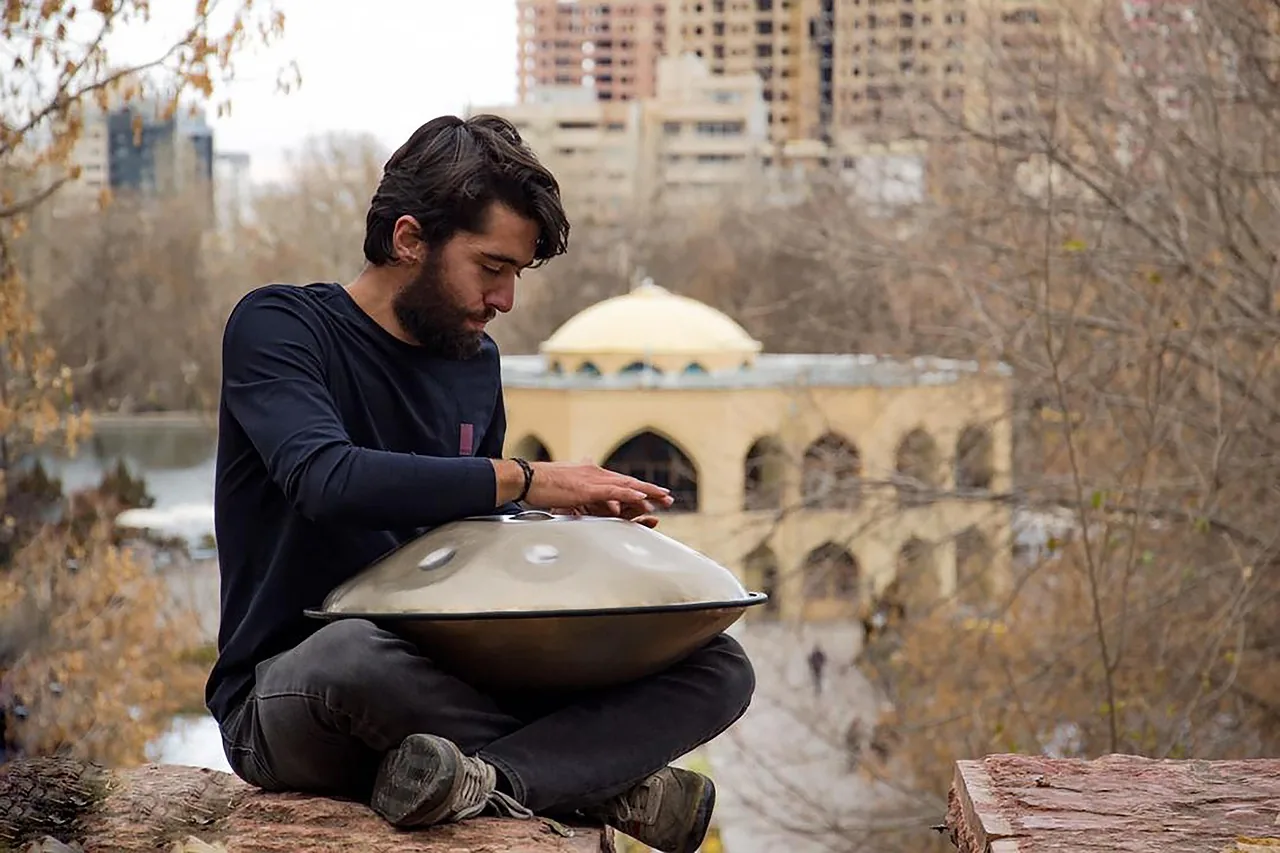

Hello everyone, and welcome to this article about the Panda Drum. I recently made the mistake of buying a Panda Drum brand tongue drum after seeing an advertisement on Facebook. Here, I will give you my review of this percussion instrument. You will see that the company’s business practices are clearly misleading and could even be considered dishonest. I hope this will help you avoid making the same mistake I did.
Panda Drum’s False Promises
Panda Drum is actually just one brand of an instrument called a tongue drum, which was invented in 2007 by an American named Dennis Havlena. There are currently dozens of other brands selling tongue drums. Panda Drum is therefore just one brand among many, but it makes numerous promises that it fails to keep.
Personally, I was taken in by an advertisement featuring music from the animated film “Castle in the Sky” played on the model called the Panda Drum Pro. Naturally, I ordered this model in the golden-yellow color, which I really liked. Here is the information I saw on their store, which is still displayed there:
In short, the Panda Drum was supposed to weigh 2 kilograms and be tuned to C major at 432 hertz. I specifically wanted an instrument tuned to 432 hertz because I wanted to test this supposedly more relaxing frequency, but I also wanted it tuned to C major so that I could play sheet music more easily.
Well, guess what? It turns out that all of this information is false. And I am going to demonstrate that very easily.
The Painful Reality When the Instrument Arrived
I will quickly skip over the ordering process on their website, which was unremarkable except that, in my opinion, their sales methods are very aggressive: once you have chosen your instrument, you are offered numerous additional items that drive up the final price.
Once the package arrived, I opened the box and found this:
This is the only positive comment I will make in this article: I like the instrument’s design. That is also partly why I bought it. The black case underneath is nothing like the one shown on their website. It is much uglier and looks extremely cheap. Still, excited to try it, I began setting myself up in my living room and noticed that the instrument seemed heavier than expected. I weighed it and discovered yet another surprise: it does not weigh 2 kilograms, but 3.5, almost twice the advertised weight. That is not a major issue in itself, but I began wondering whether the people behind the Panda Drum brand had ever actually handled the product they sell. Moreover, the booklet is entirely in English, and I do not understand that language very well. Unfortunately for me, I would not be able to benefit from its advice.
I continued testing it by playing with the supplied mallets, and that brought a huge disappointment. The tones sound nothing like those in the promotional videos used in their advertisement. Listen for yourself:
Some notes clearly sound poor. They buzz, so there is obviously a problem. A closer inspection of the workmanship shows that it is sloppy, which must be causing this horrible buzzing.
However, because I am fortunate enough to have perfect pitch, I also noticed another problem very quickly. The instrument is not tuned to C major at all, contrary to what the advertisement states. After checking it with a tuner, I found that the Panda Drum is tuned to D major! I could have suspected this because, on closer inspection of the store’s photographs, one image of the underside of the instrument shows the letter D engraved on it:
In English notation, the letter D represents the note D, not C. It is impossible for serious people with musical knowledge to make this mistake. If you own a Panda Drum, you can test this quickly. Use any tuner app on your smartphone and play note 1. If the instrument were tuned to C major, the app should display C. Instead, it displays D. This difference matters greatly because, instead of the notes C, D, E, F, G, A, and B found on an instrument in C major, an instrument in D major gives you C-sharp, D, E, F-sharp, G, A, and B, considerably changing the sounds the instrument produces.
Faced with such an error, I wanted to investigate further and determine whether the Panda Drum was really tuned to 432 hertz. This requires a more precise tool—a sound spectrum analyzer—and playing the note A on the instrument. It should normally be at 432 hertz. I should also mention that musical instruments are usually tuned to 440 hertz, so I expected to find either 432 or 440 hertz. Imagine my surprise when I discovered that the Panda Drum plays an A at 451 hertz! This means that not only is the information provided untrue, but the note itself is also completely wrong.
Were you hoping to enjoy the benefits of 432 hertz? If you own a Panda Drum, that will never be possible because the tuning error is so large. A difference of just 1 or 2 hertz might be acceptable, but an error of almost 20 hertz is incompetence. Worse still, every other note has the same problem. Not one conforms to 432-hertz tuning. It is all a lie. To test this at home, if you have had the misfortune of buying a Panda Drum, play note 5, which corresponds to A, and measure its frequency with a sound spectrum analyzer. You are in for an unpleasant surprise…
In short, the Panda Drum weighs nearly 4 kilograms instead of 2 and produces buzzing, out-of-tune notes; it is not tuned to 432 hertz at all, much less to C major. Remarkably, virtually all the information about the instrument is false, except for its diameter. Achieving this level of incompetence is almost an accomplishment.
My Review of This Store’s Nonexistent After-Sales Service
At this point, I no longer wanted to keep my Panda Drum. The product had clearly been misrepresented: this poorly tuned instrument did not meet my expectations. When I checked their terms and conditions of sale, I found that the only address provided was in the United States and that it was explicitly identified as not being a return address.
Moreover, although the site clearly states that returns are free for 30 days, its shipping policy says exactly the opposite. Here is what is prominently displayed on the sales page:
And here is what their shipping policy says, well hidden away:
Furthermore, the package contains no document explaining how to request a refund. Judging by the reviews left about the Panda Drum company, I am clearly not the only person in this situation:
I was therefore forced to keep the instrument. I could sell it secondhand to try to offset my financial loss, but I would feel terrible about selling this poor-quality instrument to someone else.
My Opinion of the People Hiding Behind the Panda Drum Brand
In fact, my biggest mistake was failing to check the reviews before buying from the Panda Drum store. I would then have learned that this store is completely lacking in transparency and is operating unlawfully when it comes to identifying itself. Mandatory and essential information—such as a VAT number, the first and last name of the person running it, or a telephone number—is missing. The company appears to be located in the United States, but the address seems to be merely a registered address rather than the real address of the people operating the website. The Panda Drum trademark was registered by a Norwegian company that later closed following bankruptcy, its Facebook page is managed by people living in Poland, and a law firm working for the company is based in the United Arab Emirates. And can you guess where the charge to my bank account came from? Estonia! Here is the proof, with my bank card numbers deliberately erased:
At this point, I just hope that my bank card is not hacked. Naturally, before you pay, nobody tells you that your card details will be sent to databases on the other side of Europe.
Moreover, the displayed customer reviews seem questionable, as some of the portraits belong to well-known influencers who are presented under different identities depending on the site’s language. While quickly browsing the reviews, I even recognized one influencer. On the Panda Drum website, she is presented as Jeannine B.:
In reality, she is the interior designer Eve Augustin. She offers services through her official website and regularly partners with brands on her homedeco_by_eve Instagram account.
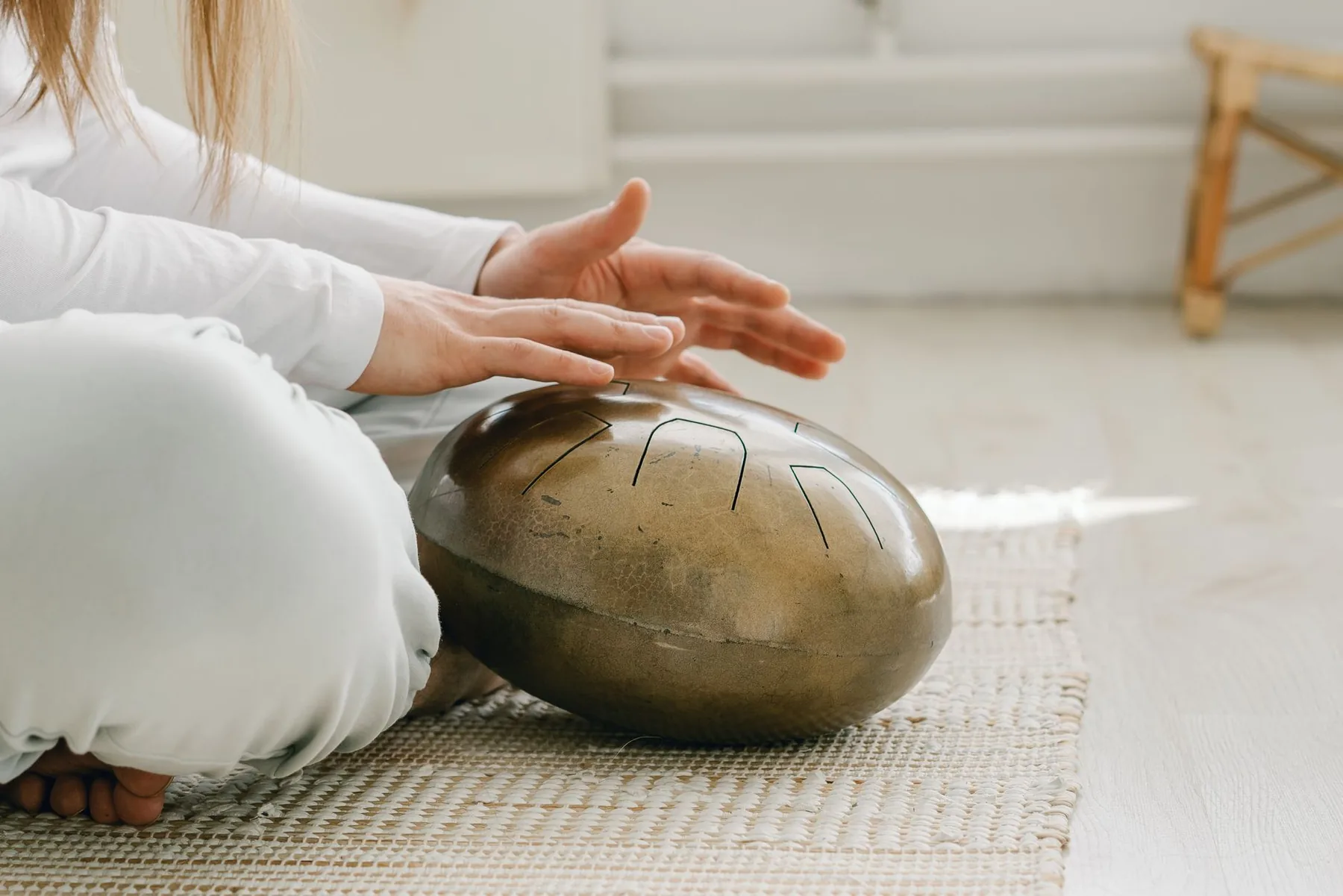
The biggest problem is that her presentation of the Panda Drum on Instagram really is a commercial partnership, as Eve herself states in her post:
Yet Panda Drum changes her name—which is already problematic—and presents this partnership as a supposedly “verified” customer review, even though the influencer received the product free of charge and will almost certainly earn a percentage of the sales generated through her post. This is, of course, prohibited and treated as a misleading commercial practice. Under these circumstances, how can anyone trust the reviews and opinions shown on the store if they were purchased as part of commercial partnerships? Another interesting fact is that the booklet supplied by Panda Drum contains a QR code linking to a few tutorials for learning to play songs. First, it immediately becomes clear that the tuning problem does not affect only my instrument, but all the models sold by this brand. Second, these videos have received an average of 600 views, even though Panda Drum claims to have more than 70,000 customers. That would mean fewer than 1% of its customers used the tutorials, which seems surprising to me. The customer count may well be inflated, although nothing can be verified on that point.
In short, do not be fooled by Panda Drum’s sales claims. Search Google for the term “tongue drum” instead, and you will find better stores offering better products without trying to influence you with misleading information or “verified” reviews that are anything but verified.