


Discover the techniques for mastering the art of sound therapy. This article guides you through basic methods and advanced techniques for a rewarding experience.
With more than 10 years of experience in this field, I share practical advice for deep relaxation and energy harmonization. These practices also help manage stress effectively.
Explore different applications, such as meditation, sound massage, and chakra healing. Practical videos and additional resources are available to deepen your knowledge.
Immerse yourself in this soothing world and transform your well-being through proven techniques.
Introduction to sound therapy and Tibetan singing bowls
Sound therapy is an ancient practice that uses vibrations to harmonize the body and mind. It is based on specific sound frequencies, generally ranging from 87.31 Hz to 164.81 Hz, to promote a state of deep relaxation.
What is sound therapy?
This therapeutic method uses vibrations to affect the nervous system. The sound waves produced by instruments such as Tibetan singing bowls create an enveloping effect that encourages meditation and relaxation.
Unlike crystal bowls, which generate more precise sounds, metal bowls offer a unique acoustic experience. They are often used alongside other instruments, such as gongs, tuning forks, and drums.
Origins and history of Tibetan singing bowls
Tibetan singing bowls have their roots in Nepalese and Tibetan traditions. They are made from an alloy of seven metals: gold, silver, mercury, tin, lead, iron, and copper. Each metal is associated with a celestial body, reinforcing the bowls’ spiritual symbolism.
Their use dates back to the 12th century and is linked to Tantric Buddhism. Today, they are widely recognized for their potential wellness benefits. A study by Lumière University Lyon 2 even reported an improvement in 78% of participants following sound-therapy sessions.
The benefits of sound therapy with a Tibetan singing bowl
Sound therapy offers numerous potential benefits for the body and mind. Through the instruments’ deep vibrations, it acts on the nervous system and promotes an overall sense of well-being. Discover how this practice can transform your daily life.

Reducing stress and anxiety
Sound vibrations act directly on the amygdala and limbic system, helping regulate emotions. A study published in the Journal of Alternative Medicine reports a 37% decrease in cortisol, the stress hormone, after regular sessions.
The sympathetic-resonance technique synchronizes brain waves, promoting deep relaxation. A practitioner in Lyon reports significant improvements in generalized anxiety after just four weeks.
Improving sleep and concentration
The soothing sounds of metal bowls help calm the mind and prepare the body for rest. One validated protocol recommends three 20-minute sessions per week to address chronic insomnia.
In addition, a case study reports a 45% improvement in students’ cognitive abilities. Combining the practice with cardiac coherence strengthens these effects, offering a natural way to improve concentration.
“Sound therapy helped me enjoy restorative sleep again and manage my daily stress more effectively.”
To learn more about the benefits of sound therapy, explore our additional resources.
Warning: this practice is not recommended for people with pacemakers because of the intense vibrations.
How to choose the right Tibetan singing bowl for sound therapy
Choosing the right instrument is essential for maximizing the benefits of sound therapy. The bowl’s size, weight, and type directly affect its use and effectiveness. Here are the criteria to consider when making your choice.
Bowl size and weight
Size determines the sound frequency. A 10 cm bowl produces an A at 110 Hz, ideal for short, dynamic sessions. By contrast, a 25 cm bowl produces an F at 87.31 Hz, making it perfect for deep relaxation.
The ideal weight is between 500 and 800 grams. This range ensures comfortable handling and optimal resonance. A bowl that is too heavy may perform its function less effectively, while one that is too light lacks sonic depth.
Different types of bowls and their sounds
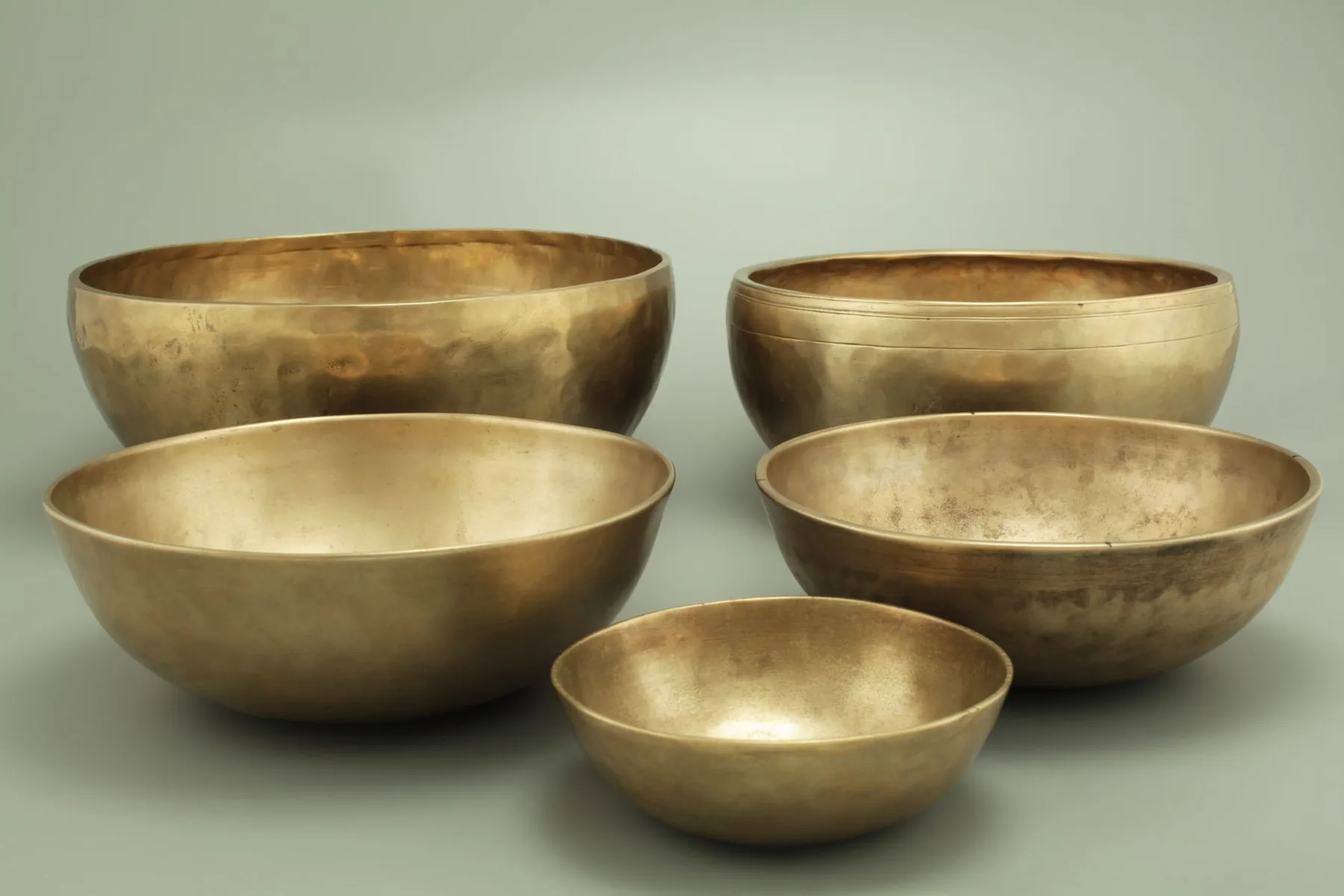
Bowls made from a seven-metal alloy offer unique acoustic richness. Hand-hammered Nepalese bowls are renowned for their long sustain and sonic complexity. Polished Tibetan bowls, meanwhile, produce a more uniform sound.
To assess resonance, use the circular-rubbing method. A good singing bowl should produce a clear, harmonious sound without distortion. Avoid bowls larger than 20 cm to prevent sensory overload.
- Choose a set of Himalayan bowls tuned across two octaves for a complete experience.
- Favor recognized brands such as Garaulion, which guarantee authenticity and quality.
To learn more about the selection criteria, consult this detailed guide explaining how to choose a Tibetan singing bowl.
Basic techniques for using a Tibetan singing bowl
Learning to handle a sound-therapy instrument requires precision and practice. The basic techniques are essential for getting the most from its sound vibrations. Here are the key steps for getting started.
How to hold and strike the bowl
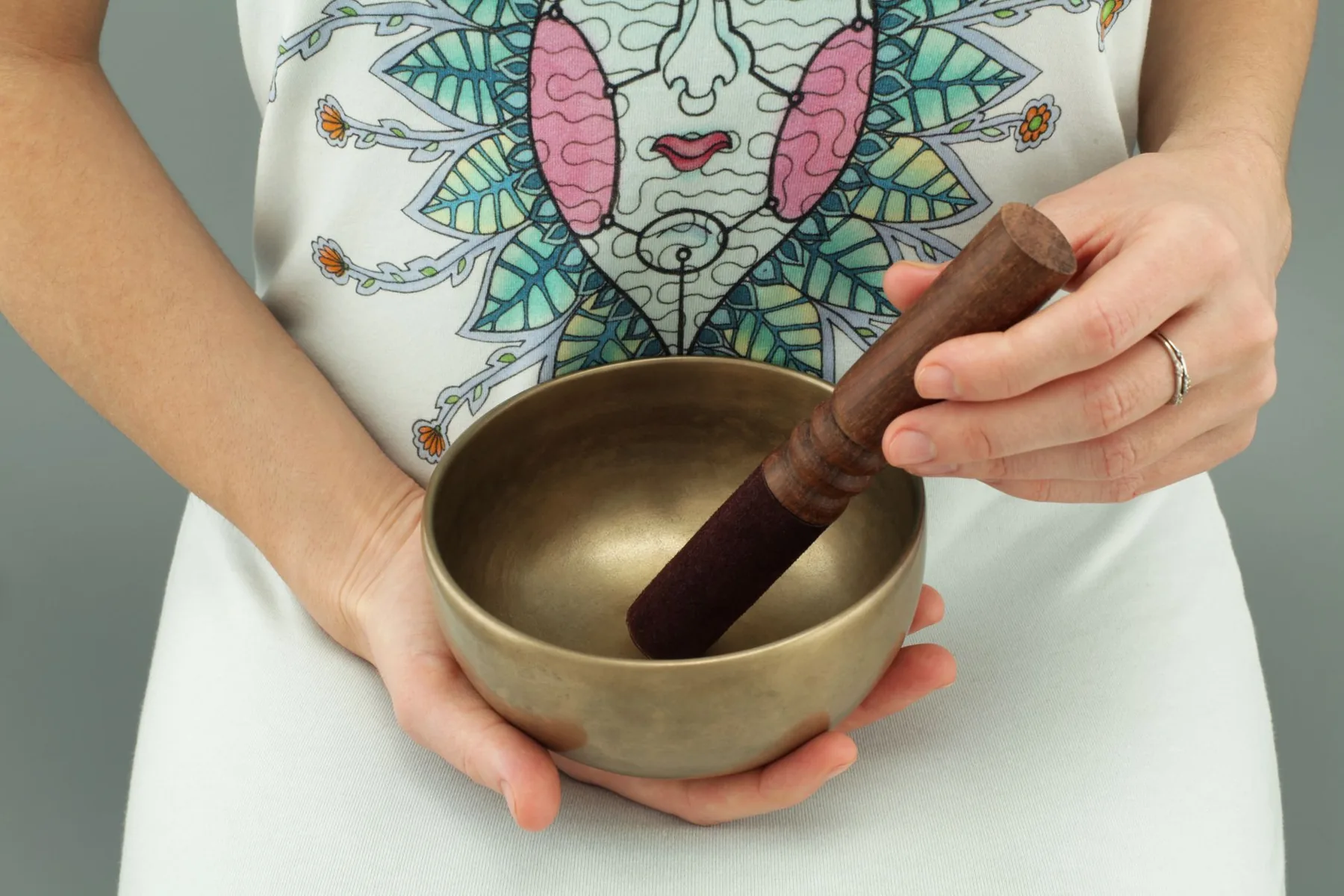
Your grip is crucial. Hold the bowl in the palm of your hand, making sure it is stable. Use a beechwood mallet, held at a 45-degree angle, to strike the outer rim gently. This produces a clear, resonant sound.
For optimal results, alternate between striking the outside and inside. This technique creates rich, varied harmonics. Practice in seven-minute cycles to maximize the therapeutic effect.
The rubbing method for producing sound
Circular rubbing is an effective method for generating continuous sound. Use the mallet to rub the bowl’s rim gently with steady movements. Maintain constant pressure to prevent squeaking.
This technique requires patience. Start slowly, then increase the speed to create a smooth, continuous sound. To learn more, visit the “Practical Sound Therapy” YouTube channel, which offers detailed tutorials.
| Technique | Description | Recommended duration |
|---|---|---|
| Outer strike | Produces a clear, powerful sound | 3 minutes |
| Inner strike | Creates subtle harmonics | 3 minutes |
| Circular rubbing | Generates a continuous, soothing sound | 7 minutes |
By combining these techniques, you can explore innovative applications, such as using the bowl alongside quartz crystal bowls. This enriches the sound experience and amplifies the potential benefits for the body and mind.
Practicing sound meditation with a Tibetan singing bowl
Sound meditation is a powerful approach to harmonizing the mind and energy. It uses sound vibrations to create a state of deep relaxation and foster inner balance. This practice is ideal for anyone seeking to soothe the heart and enhance well-being.
Preparing the environment
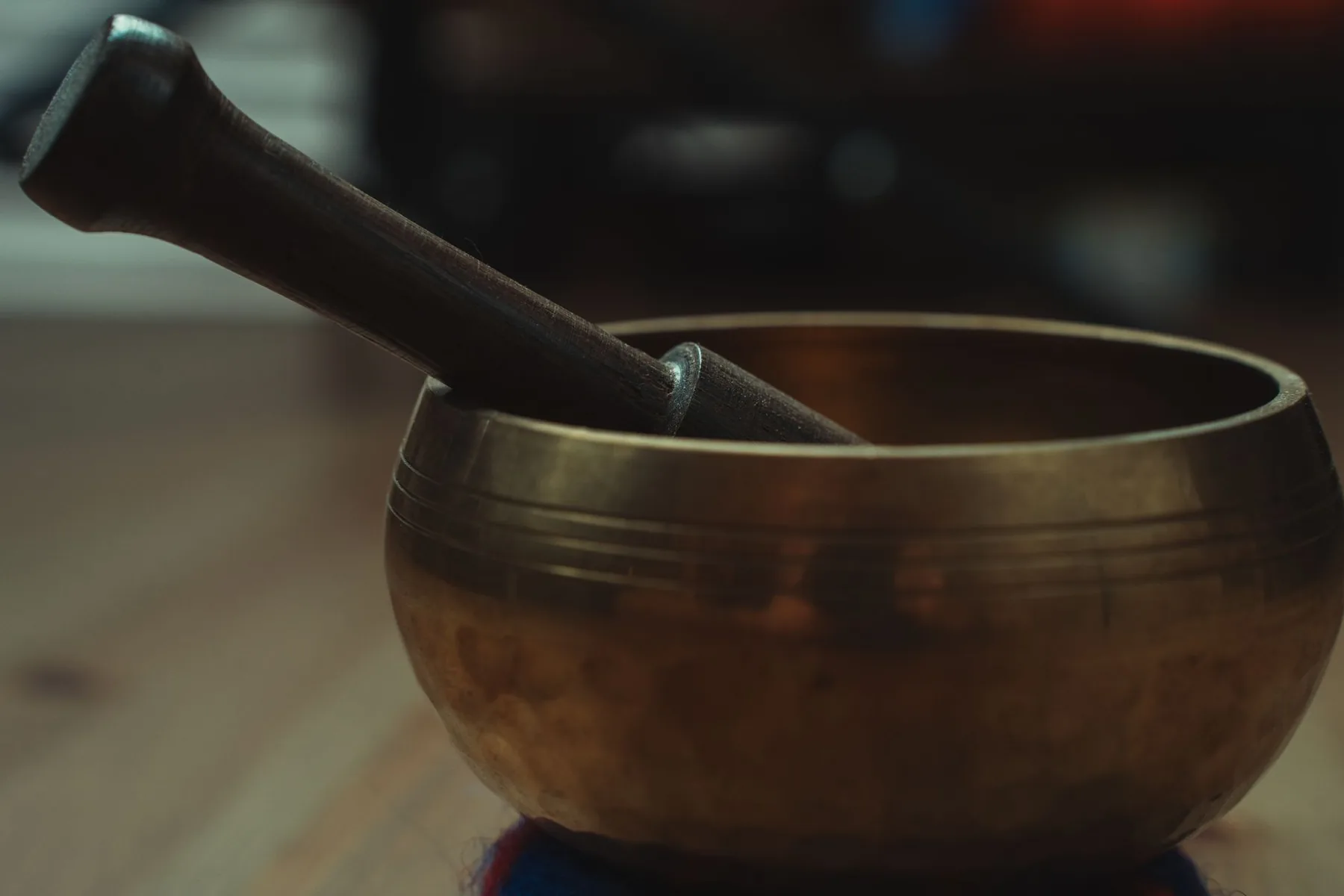
For an optimal experience, creating a sound sanctuary is essential. Here are some criteria to follow:
- Sound insulation: choose a quiet space sheltered from outside noise.
- Light therapy: use soft lighting to encourage relaxation.
- Positioning: sit in the lotus position, with the instrument 30 cm from the crown chakra.
These elements help you enter a deep meditative state.
Sound-guided meditation techniques
Sound meditation relies on specific techniques to maximize its benefits. Here is a sample routine:
- Begin with the F-B-G-D sequence, inspired by Aman Shahi’s teachings.
- Practice the three-breath method, synchronizing your breathing with the sound vibrations.
- Incorporate positive affirmations at alpha frequencies (8 to 12 Hz) to strengthen the effect.
These steps help balance your energy and calm the mind.
“Sound meditation helped me regain inner balance and lasting peace.”
| Technique | Description | Recommended duration |
|---|---|---|
| F-B-G-D sequence | Harmonizes the chakras and energy | 10 minutes |
| Three synchronized breaths | Strengthens the mind-body connection | 5 minutes |
| Positive affirmations | Improve concentration and confidence | 5 minutes |
For people with hyperacusis, the use of vibration pads is recommended. This adaptation makes it possible to enjoy the benefits of sound meditation without discomfort.
Finally, practicing regularly is essential. A stressed executive reported a significant transformation after just four weeks of morning meditation. To deepen your knowledge, discover how Tibetan singing bowls are used.
Sound massage and chakra harmonization
Sound massage is an innovative method for balancing energy and soothing the body. By combining singing-bowl vibrations with specific techniques, this practice enables deep relaxation and harmonization of the energy centers.
Placing the bowls on the body
For optimal harmonization, precise bowl placement is essential. According to Nepalese mapping, a bowl tuned to 164.81 Hz should be placed on the third eye. This frequency supports chakra balance and stimulates mental clarity.
A set of seven bowls tuned to the Himalayan scale is recommended to cover every energy center, from Muladhara to Sahasrara. Each bowl is associated with a specific frequency, creating a unique resonance with the body.
Sound-massage techniques for relaxation
The Nepalese procedure consists of eight steps, separated by intervals during which the sound decays by 70%. This method allows a smooth transition between frequencies, promoting deep relaxation. A case study reports a 60% reduction in chronic lower-back pain after several sessions.
To enhance the effect, combine sound massage with aromatherapy. Sandalwood essential oil and incense can be used to create a soothing atmosphere. A vibrational-sweeping technique performed 15 cm from the body is also effective for releasing tension.
“Sound massage helped me regain inner balance and lasting peace.”
- A complete chakra-alignment protocol.
- A vibrational-sweeping technique performed 15 cm from the body.
- Combination with aromatherapy for a multisensory experience.
To learn more about chakra harmonization, explore our additional resources.
Precautions: avoid placing bowls directly on metal implants to prevent interference.
Conclusion: incorporating a Tibetan singing bowl into your sound-therapy practice
Incorporating this ancient instrument into your daily routine can transform your well-being. Therapist-approved practices, such as circular rubbing and sound meditation, offer tangible results. A 21-day training program is recommended for optimal progress.
To deepen your knowledge, Sylvain Porté’s book, published by Éditions Trajectoire, is an essential resource. It guides you step by step through the exploration of this method’s benefits.
At Instruments du Monde, you can enjoy a unique sensory experience that enriches your daily life. Finally, remember that this practice complements conventional medicine; it does not replace it.