
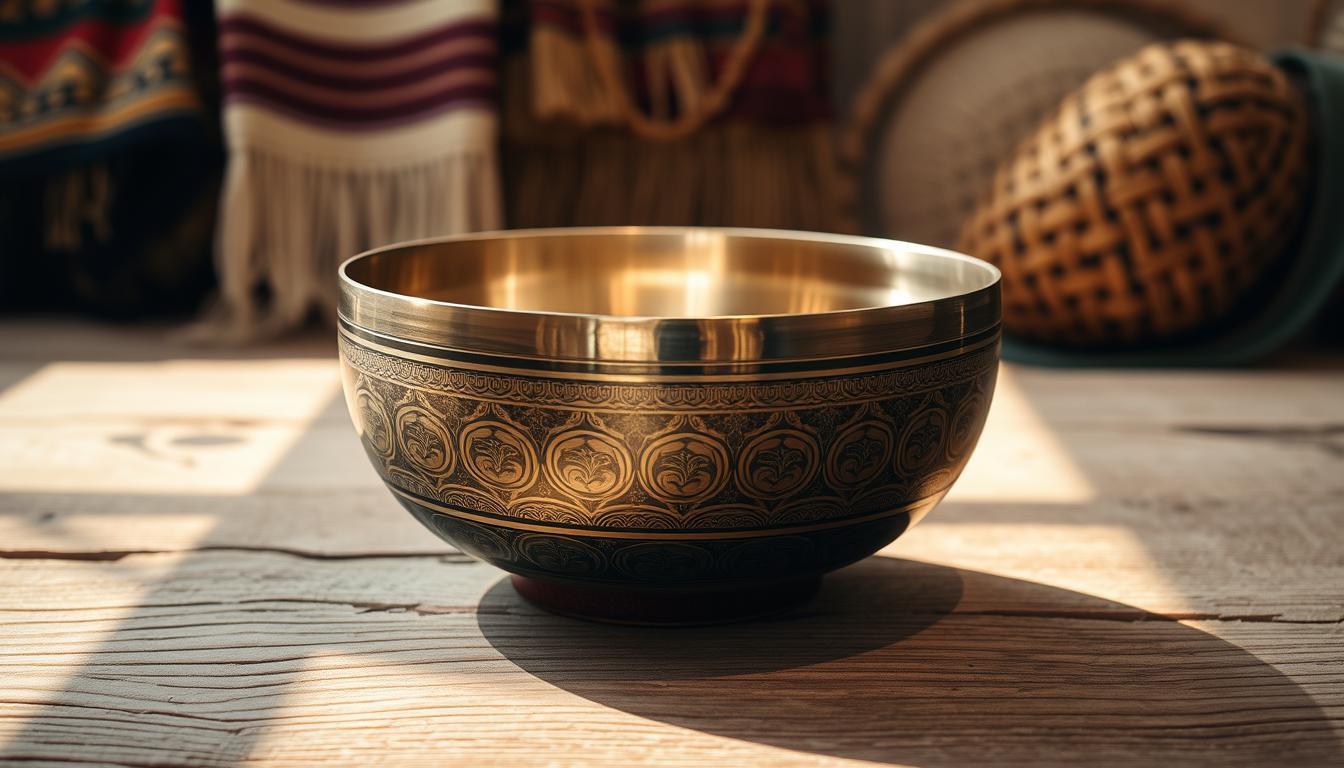

Singing bowls are ancient objects deeply rooted in Himalayan traditions. Used for meditation and sound therapy, their authenticity plays an essential role in their effectiveness. Unfortunately, mass-produced imitations are becoming increasingly common, making genuine pieces harder to identify.
In this article, we present the key criteria for distinguishing a genuine bowl from an imitation. We will examine its history, traditional manufacturing techniques, and the unique characteristics that define these sacred objects. Our goal is to help you make an informed choice with complete confidence.
Whether you are a beginner or an enthusiast, this exploration will help you better understand the importance of authenticity in meditation and therapeutic practices. Discover how to identify a genuine Tibetan singing bowl and learn to appreciate its cultural and spiritual value.
Introduction to handcrafted Tibetan singing bowls
Tibetan singing bowls originated in the Himalayas, where Buddhist monks have used them since the eighth century. Deeply rooted in spirituality, these objects served both as ritual tools and as aids to meditation.
Their use has evolved over the centuries. Originally reserved for religious ceremonies, they are now employed in wellness and sound-therapy practices. This transition reflects how ancient traditions have adapted to modern needs.
The manufacture of these bowls has also undergone a major transformation. Once hammered by hand by local craftspeople, they are now often mass-produced using industrial techniques. This development raises questions about the authenticity of the pieces available on the market.
According to a recent study, fewer than 20% of the Tibetan singing bowls sold in Europe are authentic. This alarming statistic highlights the importance of understanding their history and how they are made.
As one Nepalese craftsperson explains, “Preserving traditional expertise is essential to maintaining the quality and spirit of these objects.” This statement underscores craftspeople’s commitment to protecting their cultural heritage.
| Aspect | Traditional manufacture | Contemporary production |
|---|---|---|
| Technique | Hand hammering | Industrial casting |
| Time required | Several days | A few hours |
| Authenticity | Unique pieces | Mass production |
The essential criteria for identifying a genuine Tibetan singing bowl
Identifying a genuine ancestral object requires attention to specific criteria. For singing bowls, two aspects are particularly revealing: the manufacturing method and the composition of the metals. These features help distinguish an authentic piece from an industrial imitation.
The traditional manufacturing method
Traditional manufacturing involves hammering the bowl by hand, with four craftspeople working for at least seven days. This technique leaves visible ridges and bumps that can be felt by touch. Unlike smooth-surfaced cast imitations, authentic pieces retain these distinctive marks.
A practical test is to run your fingers across the surface. If you feel irregularities, this may indicate hand hammering. These imperfections are not defects but evidence of ancestral expertise.
The metal composition
The composition of the metals is another key criterion. Old bowls are often said to contain 92% copper and 8% tin, forming a bronze alloy. Some copies use brass, recognizable by its golden color, or alloys containing potentially hazardous lead or nickel.
A magnet can be used to test for the presence of iron. The difference in tone between bronze and brass is also a useful indicator. Authentic bowls produce a rich, deep sound, unlike many imitations.
According to one expert source, “Metal composition and the manufacturing method are the foundations of authenticity.” To learn more, read this in-depth explanation.
How to recognize a genuine handcrafted Tibetan singing bowl by its design
The appearance of a sacred object can reveal a great deal about its origin. For singing bowls, design is a key indicator of authenticity. Historic pieces tend to stand out for their simplicity and lack of elaborate engravings, unlike modern versions that are often decorated with commercial motifs.
Standard sizes range from 10 to 30 cm in diameter, with weights from 300 g to 3 kg. These physical characteristics are important when assessing an object’s condition and quality. An authentic bronze piece has a density of approximately 8.9 g/cm³, a detail that can help distinguish it from imitations.
Visual characteristics
A careful examination of the surface reveals valuable clues. Older bowls often display hammer marks and irregularities that indicate handcrafted production. Imitations, by contrast, have a smooth, uniform appearance produced by industrial casting.
Traditional markings, such as Buddhist symbols, are also worth examining. These motifs carry profound spiritual meaning and are rarely reproduced accurately on modern copies.
Wear and patina
A natural patina caused by gradual oxidation can indicate authenticity. It is readily distinguishable from artificial acid aging, which produces an overly uniform and unconvincing appearance. Signs of wear, such as scratches or discoloration, can also provide useful clues.
For example, a piece displayed at the Guimet Museum in Paris has a rich patina and signs of wear consistent with its age. These details support its origin and historical value.
In short, the design, surface, and condition of a singing bowl are key factors in assessing its authenticity. Take time to examine these features before making a choice, especially if the price seems too good to be true.
The importance of sound and vibrations
Sound and vibrations play a central role in assessing the authenticity of a sacred object. For singing bowls, these elements are essential for evaluating their quality and effectiveness. The vibrations produced by a genuine Tibetan singing bowl can have a profound effect on the body and mind, encouraging relaxation and meditation.
The sound qualities of a genuine Tibetan singing bowl
An authentic bowl is distinguished by the richness of its sound and the duration of its vibrations. The average sustain of a genuine bowl ranges from 45 to 90 seconds, whereas the sound of a copy fades in less than 30 seconds. This difference stems from the metal composition and manufacturing method.
Complex overtones are another indicator of quality. When you strike an authentic bowl, it produces several tones simultaneously, creating a unique listening experience. These overtones are difficult to reproduce in industrial imitations.
Using a sound-spectrum analyzer
A sound-spectrum analyzer can be used to assess tonal quality. Apps such as SpectrumView for iOS and Spectroid for Android can record and analyze the frequencies produced by the bowl. Depending on their size, genuine bowls emit frequencies ranging from 110 Hz to 660 Hz.
A study conducted by Kathmandu University confirmed the distinctive acoustic properties of authentic bowls. This research highlights the importance of material quality and manufacturing technique in producing beneficial vibrations.
Where to buy a genuine handcrafted Tibetan singing bowl
Finding an authentic object requires careful attention to detail. Singing bowls are no exception. With the proliferation of counterfeits, it is crucial to know where and how to buy with confidence.
Several options are available, from online retailers to specialist markets. The following advice will help you find trustworthy sources and avoid common pitfalls.
Reliable sources
When looking to buy an authentic bowl, choose established retailers such as Instruments du Monde or MALOA SHOP. These businesses work directly with craftspeople certified by the Federation of Handicraft Associations of Nepal.
Guarantees such as a certificate of origin or metallurgical test are reassuring signs. For example, MALOA SHOP offers an unlimited exchange guarantee as evidence of its commitment to quality and reliability.
Pitfalls to avoid
Be wary of deals that seem too good to be true. Large inventories and express deliveries from Asia are often warning signs. Such practices generally conceal low-quality counterfeits.
Before you buy, ask for a video of the manufacturing process. This can help you verify the piece’s authenticity and support ethical workshops that adhere to fair-trade principles.
Finally, exercise caution at flea markets. A lack of guarantees or certification may indicate a questionable origin. Take the time to examine every detail before making your choice.
Conclusion
Identifying a sacred object requires careful attention to detail. Criteria such as metal composition, manufacturing method, and sound quality are essential. Together, these elements help ensure an authentic and rewarding experience.
Always prioritize quality over quantity. A genuine Tibetan singing bowl is a lasting investment, both for the cultural heritage it embodies and for its benefits in meditative practice. Do not be misled by offers that seem too attractive.
To deepen your knowledge, take part in introductory workshops in France. These sessions can help you better understand the history and use of these objects. Consult this resource to learn more.
Finally, do not let the pursuit of perfect authenticity become an obsession. Every piece has its own history and imperfections. Share your discoveries with the community and enrich your collective experience.