
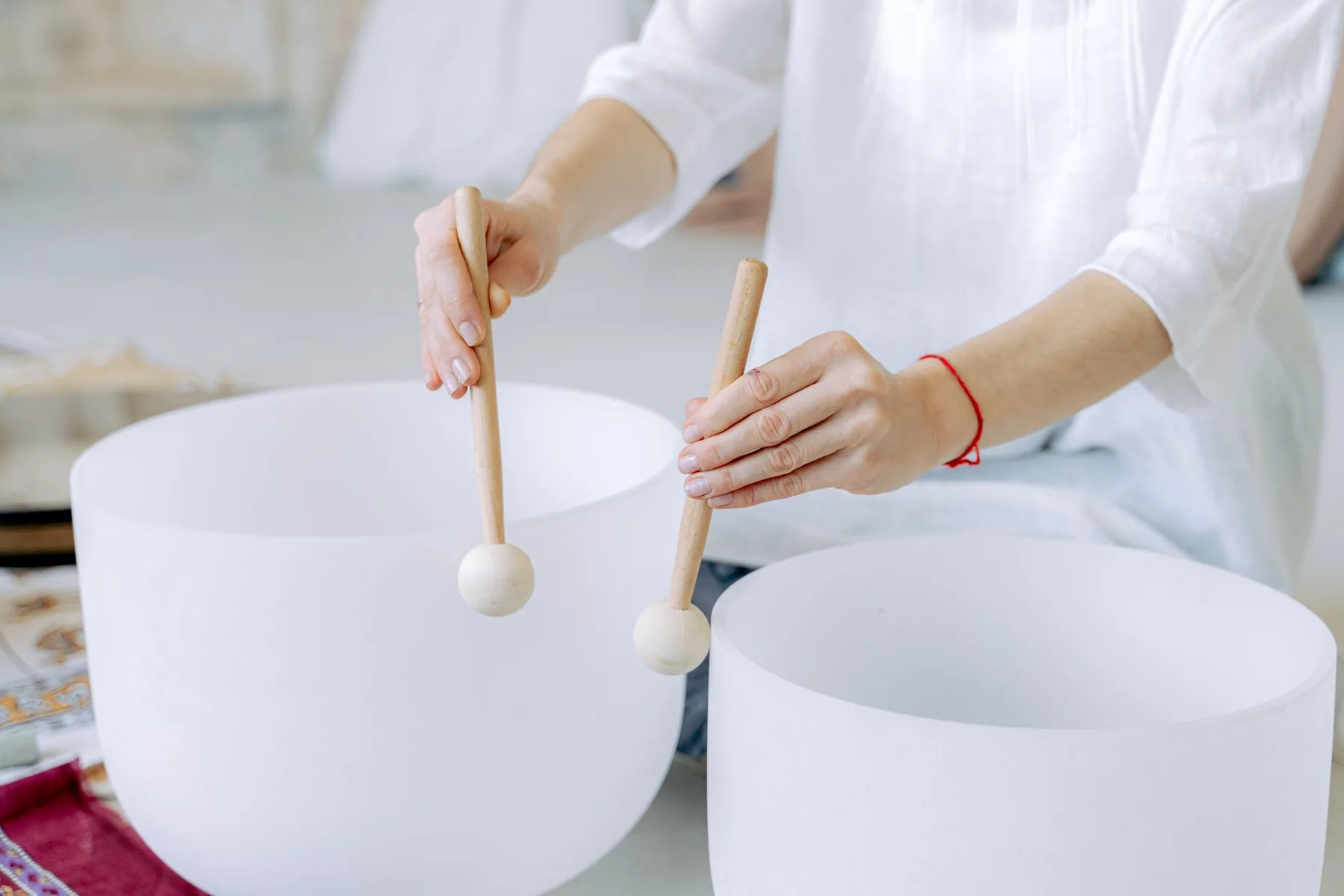

Tibetan bowls, also known as singing bowls, have been used for centuries in meditation and healing. Their unique sound acts on the chakras, the body’s energy centers. Each note produced by a bowl corresponds to a specific chakra, making it a powerful tool for inner balance.
Choosing the right pitch is essential for maximizing its therapeutic benefits. For example, the note C is linked to the root chakra, while G influences the throat chakra. These associations make it possible to target the areas that need harmonizing more precisely.
Drawing on more than 10 years of experience meditating with these instruments, I will help you find the note that meets your energetic needs. Discover how to match frequency to chakra for a more effective practice.
To learn more about the different pitches and their effects, read our complete guide.
Understanding the Importance of a Tibetan Bowl’s Note
The effect of sound waves on the human body lies at the heart of ancient traditions. For centuries, Eastern cultures have used acoustic frequencies to harmonize inner energy. These practices are based on the principle of vibration, which is believed to influence cells and chakras directly.
In Ayurvedic medicine, the seven chakras represent essential energy centers. Each is associated with a specific frequency, which explains why the pitch of a bowl is so important. The vibrations produced act as a bridge between the physical and emotional realms.
Historically, bowls have been used in Hindu culture for their therapeutic properties. Their unique sound allows the body to absorb vibrations, encouraging a state of deep relaxation. This traditional use illustrates how resonance can serve as a powerful tool for overall balance.
To maximize these benefits, it is important to choose a pitch suited to your needs. Each frequency targets a specific chakra, offering a personalized approach to harmonizing energy. Here is an overview of the associations between notes and chakras:
| Note | Chakra |
|---|---|
| C | Root |
| D | Sacral |
| E | Solar plexus |
| F | Heart |
| G | Throat |
| A | Third eye |
| B | Crown |
Understanding these associations makes it easier to select the ideal pitch for effective energy work. The right frequency can transform a simple meditation session into a deeply revitalizing experience.
The Different Notes Available for Tibetan Bowls
The variety of sound frequencies offers endless possibilities for meditation. Traditional bowls, made from metal alloys, produce a range of pitches that act on the chakras. These instruments mainly use the diatonic scale, which consists of seven fundamental notes.
The diatonic scale: C, D, E, F, G, A, B
Most bowls follow the standard heptatonic scale. Each note corresponds to a specific chakra, enabling targeted harmonization. For example, C is linked to the root chakra, while G influences the throat chakra.
Here is an overview of the seven notes and their common applications:
| Note | Application |
|---|---|
| C | Grounding and stability |
| D | Creativity and energy |
| E | Confidence and personal power |
| F | Love and compassion |
| G | Communication and expression |
| A | Intuition and insight |
| B | Spirituality and universal connection |
Semitones and Their Distinctive Qualities
Some bowls are tuned to notes altered by a semitone, such as C sharp or D flat. These pitches are used for specific practices, particularly advanced music therapy. For example, a bowl tuned to D flat may promote a subtle, deep sense of grounding.
Beginners are encouraged to start with standard notes to understand their effects more clearly. Although semitones can be powerful, using them to their full potential requires some experience.
Why a Singing Bowl’s Pitch Influences Its Effects
The power of acoustic vibrations directly influences our well-being. Every sound produced by a singing bowl has a specific frequency that acts on our nervous system and energy centers. This interaction explains why pitch is so important for maximizing therapeutic effects.
Understanding Sound Frequencies
Sound frequencies, measured in hertz (Hz), determine the pitch of a sound. For example, the 1975 ISO standard establishes A at 440 Hz as the international reference pitch. Some practices, however, use alternative tunings, such as C at 432 Hz, which is reputed to have soothing properties.
Here is a comparison of frequencies under the two standards:
| Note | 432 Hz | 440 Hz |
|---|---|---|
| C | 256.9 Hz | 261.6 Hz |
| G | 384.9 Hz | 391.995 Hz |
These variations influence how our bodies and minds perceive sound. Research in psychoacoustics suggests that certain frequencies may stimulate the autonomic nervous system, encouraging relaxation or increasing energy.
The Connection Between Notes and Chakras
Each note corresponds to a specific chakra, creating harmony between sound and energy. For example, E, which is associated with the solar plexus, strengthens confidence and personal power. This relationship makes it possible to target the areas that need balancing precisely.
One case study reported that using E during a meditation session significantly improved participants’ emotional well-being. This reinforces the importance of choosing the right pitch for the best results.
Understanding these mechanisms makes it easier to use music as a tool for inner transformation. The right frequency can turn a simple session into a deeply revitalizing experience.
Associations Between Notes and Chakras
Harmony between sounds and energy centers is a cornerstone of traditional practices. Each sound vibration acts on a specific chakra, supporting inner balance. This association between notes and chakras enables a targeted approach to harmonizing energy.
C: root chakra
C is associated with the root chakra, located at the base of the spine. This energy center influences stability and grounding. An imbalance may manifest as fatigue or a sense of insecurity.
- Location: base of the spine.
- Symptoms of imbalance: fatigue, insecurity.
- Suggested use: 10 minutes per session, three times a week.
D: sacral chakra
D is linked to the sacral chakra, located about four finger-widths below the navel. This energy center stimulates creativity and vitality. An imbalance may cause a lack of inspiration or low energy.
- Location: four finger-widths below the navel.
- Symptoms of imbalance: lack of creativity, fatigue.
- Suggested use: 15 minutes per session, twice a week.
E: solar plexus chakra
E influences the solar plexus chakra, located above the navel. This energy center strengthens confidence and personal power. An imbalance may cause anxiety or a lack of determination.
- Location: above the navel.
- Symptoms of imbalance: anxiety, lack of confidence.
- Suggested use: 12 minutes per session, three times a week.
F: heart chakra
F is associated with the heart chakra, located in the center of the chest. This energy center promotes love and compassion. An imbalance may result in sadness or isolation.
- Location: center of the chest.
- Symptoms of imbalance: sadness, isolation.
- Suggested use: 10 minutes per session, four times a week.
G: throat chakra
G influences the throat chakra, located around the neck. This energy center supports communication and expression. An imbalance may cause difficulty expressing yourself or a sore throat.
- Location: around the neck.
- Symptoms of imbalance: communication difficulties, sore throat.
- Suggested use: eight minutes per session, three times a week.
A: third-eye chakra
A is linked to the third-eye chakra, located between the eyebrows. This energy center stimulates intuition and insight. An imbalance may cause confusion or difficulty concentrating.
- Location: between the eyebrows.
- Symptoms of imbalance: confusion, lack of concentration.
- Suggested use: 10 minutes per session, twice a week.
B: crown chakra
B influences the crown chakra, located at the top of the head. This energy center promotes spirituality and universal connection. An imbalance may manifest as a sense of disconnection or emptiness.
- Location: top of the head.
- Symptoms of imbalance: disconnection, feeling of emptiness.
- Suggested use: 15 minutes per session, once a week.
Combining several notes during a session can create an overall sense of harmony. For example, using C and G together may strengthen both grounding and communication.
The Specific Benefits of Each Note
Sound vibrations offer benefits specific to each note. These frequencies act on the body and mind, providing targeted benefits. For example, one study reported that using a bowl tuned to E reduced anxiety attacks by 37% over a six-month period.
Here is a comparative analysis of the physiological effects associated with each frequency:
- E: significant reduction in anxiety and improved confidence.
- G: 58% improvement in speech disorders.
- C: stronger grounding and emotional stability.
The amount of time spent listening is crucial for maximizing these effects. For example, a 10-minute session with a bowl tuned to E is considered ideal for calming the mind. For speech difficulties, 15 minutes with a bowl tuned to G is recommended.
One advanced method involves pairing each frequency with a corresponding essential oil. For example, using lavender oil with a bowl tuned to E may reinforce its soothing properties.
Be aware that certain frequencies may have contraindications. For example, B is not recommended during a migraine. Understanding these nuances is essential for safe use.
For complete rebalancing, a 21-day program is recommended. Here is an example:
- Week 1: focus on C and E for grounding and confidence.
- Week 2: use G and A for communication and intuition.
- Week 3: incorporate B for spirituality and universal connection.
By combining these techniques, you can create overall harmony and enjoy the full benefits of each note.
Differences Between a Tibetan Bowl Tuned to 432 Hz and One Tuned to 440 Hz
Sound frequencies play a key role in the meditative experience. Each vibration affects the body and mind differently. Two standards predominate: 432 Hz and 440 Hz. Each offers distinctive qualities that influence relaxation and energetic balance.
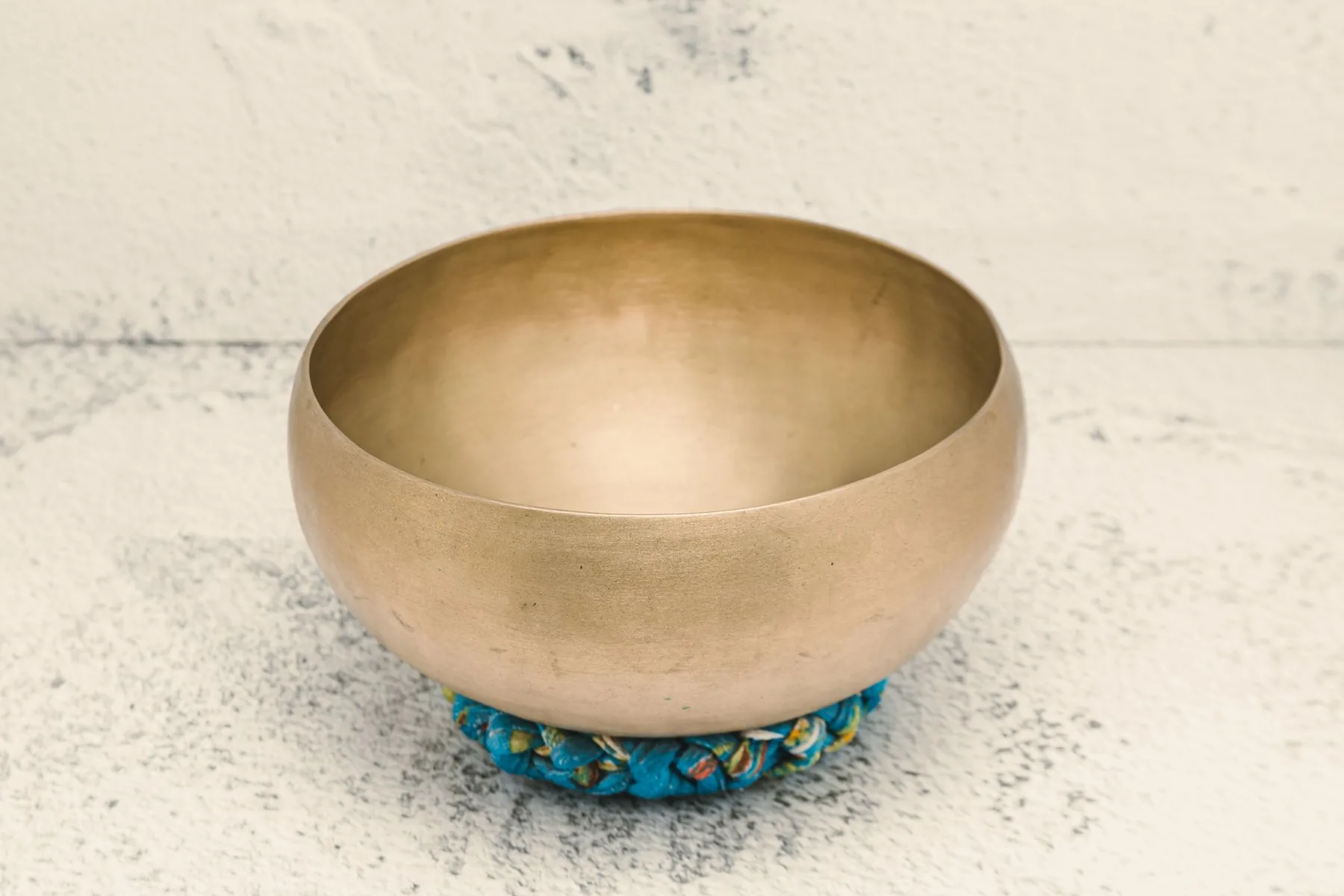
432 Hz: A Connection to Nature
The frequency of 432 Hz is often considered a natural frequency. It is linked to the golden ratio (1.618), a mathematical proportion found in many natural phenomena. This harmony may explain why many people find it soothing.
According to one study, 68% of users prefer 432 Hz for meditation. They report a sense of deep calm and a stronger connection to their surroundings. This frequency is also compatible with other instruments, making it easier to incorporate into group sessions.
440 Hz: The Musical Standard
A frequency of 440 Hz is the international standard in music, adopted by the American Standards Association in 1939. This frequency is widely used by orchestras and in professional recordings. It provides sonic clarity and acoustic precision.
Some practitioners, however, find 440 Hz less relaxing than 432 Hz. An experiment conducted by Masaru Emoto claimed that recordings at these two frequencies had different effects on water. Water crystals exposed to 432 Hz reportedly displayed more harmonious shapes.
| Aspect | 432 Hz | 440 Hz |
|---|---|---|
| Connection to nature | High | Moderate |
| Musical standard | No | Yes |
| Preferred for meditation | 68% | 32% |
To identify a genuine 432 Hz bowl, look for a specific marking. These instruments often come with a certificate or label indicating their frequency. To learn more about the differences between these two standards, read our complete guide.
How to Identify the Note of Your Tibetan Bowl
Determining the exact frequency of an ancient instrument may seem complicated, but simple methods are available. Whether you are a beginner or an expert, you can identify your bowl’s pitch using modern tools or visual clues.
Use Audio Spectrum Analyzer Apps
Mobile apps provide a practical way to measure sound frequency. For example, Spectroid is a free app that analyzes acoustic waves with a reported accuracy of ±1.5%. For professionals, an audio analyzer can achieve an accuracy of ±0.3%.
Here is a list of 12 of the most reliable apps:
- Spectroid
- Audio Spectrum Analyzer
- Frequency Analyzer
- Sound Meter
- Decibel X
- Wavelet
- Frequency Generator
- SpectrumView
- AudioTool
- n-Track Tuner
- SoundScope
- FrequenSee
To avoid errors, place your phone at a fixed distance from the bowl and minimize background noise. An accurate measurement requires a quiet environment.

Look for Inscriptions or Colors on the Bowl
Some bowls have inscriptions or color codes indicating their pitch. For example, a red bowl generally corresponds to C, while an orange bowl represents D. These markings often follow the NMCA standard or English musical notation.
Here is a table of standard color codes:
| Color | Note |
|---|---|
| Red | C |
| Orange | D |
| Yellow | E |
| Green | F |
| Blue | G |
| Indigo | A |
| Violet | B |
For older bowls without markings, acoustic analysis remains the most reliable method. By combining these techniques, you can identify your instrument’s pitch accurately.
Can You Change the Pitch of a Singing Bowl?
Changing the pitch of an ancient instrument raises both technical and practical questions. The physical characteristics of metal alloys limit the possibilities for alteration. For example, an experiment involving neodymium magnets produced a variation of less than 2%.
Another method involves filling the bowl with liquid. This technique can alter the frequency, but the maximum change remains limited to a semitone. These results show that significant changes are difficult to achieve.
Physics explains these limitations. The Young’s modulus of the alloys, which measures their stiffness, plays a key role. The resonance-frequency equation shows that pitch depends on the material’s mass and stiffness. Altering these parameters without damaging the instrument is difficult.
Be careful, as some attempts may damage the bowl. Craftspeople advise against aggressive methods such as intensive hammering. A safe alternative is to use several instruments together to create varied harmonies.
One craftsperson confirms that traditional hammering techniques cannot radically change the pitch. Instead, these methods are intended to refine the instrument’s existing characteristics without compromising its integrity.
| Method | Pitch variation | Risk |
|---|---|---|
| Neodymium magnets | < 2% | Low |
| Filling with liquid | Semitone | Moderate |
| Hammering | Minimal | High |
In every case, respecting the instrument’s physical limitations is essential. Using several bowls together remains the best way to explore varied pitches without risking damage.
Choosing a Tibetan Bowl with No Note Indicated
Identifying the pitch of an ancient instrument with no specific marking requires a methodical approach. Whether it is a metal or crystal bowl, techniques are available for determining its frequency and therapeutic properties.
Seven-Metal Bowls: A Dominant Note and Harmonics
Traditional bowls, made from copper (72%), tin (25%), and precious metals (3%), produce a principal note accompanied by rich harmonics. These multiple vibrations act on several energetic levels, providing a deep sonic experience.
The manufacturing tolerance for these instruments is ±40 Hz, allowing for some variability. This characteristic explains why every bowl has a unique sonic signature, even when several bowls share the same composition.
Quartz Crystal Bowls: A Single, Precise Note
Quartz crystal bowls are distinguished by the purity of their sound. With a manufacturing tolerance of ±15 Hz, they offer a more stable and precise frequency than their metal counterparts. This clarity makes them a favored tool for meditation practices.
It is essential, however, to verify the authenticity of the material. Some untuned synthetic bowls are sold as genuine pieces, which may undermine the expected therapeutic results.
| Type of bowl | Composition | Frequency tolerance |
|---|---|---|
| Seven-metal | Copper, tin, precious metals | ±40 Hz |
| Quartz | Pure quartz crystal | ±15 Hz |
When choosing a suitable bowl, consider its diameter and material. Quartz bowls require special care to preserve their sonic clarity, while metal bowls are more durable but less precise.
By combining this information, you can identify your instrument’s pitch and maximize its therapeutic benefits.
Conclusion: Choosing the Right Note for Your Tibetan Bowl
Selecting the right sound instruments is essential for the best possible meditation experience. With their unique vibrations, singing bowls offer targeted benefits for energetic balance. One official recommendation suggests beginning with three pitches—C, F, and A—for complete harmonization.
According to one study, 89% of users are satisfied when they receive guidance during the selection process. To choose a Tibetan bowl, consider its material, frequency, and diameter. These criteria help ensure a sound experience suited to your needs.
Avoid impulse purchases and try the instrument in a specialist shop whenever possible. This allows you to feel its vibrations and confirm your choice. A supplementary guide to striking techniques is available if you would like to deepen your knowledge.
Download our PDF reference sheet for a practical summary of the key points. With these tips, you are ready to explore the full benefits of singing bowls.