


Origins and charm.
The ocarina is a wind instrument that emerged in the nineteenth century thanks to Giuseppe Donati. Its globular body and gentle tone immediately distinguish it from tubular instruments.
In this article, we will explain the acoustic and structural differences in simple terms. You will see why this instrument often appeals to beginners and remains popular in music education.
Each section will guide you step by step so that you can better understand its shape, operation, and use. To learn more, read our detailed analysis of the differences between flutes and ocarinas.
Introduction to the world of wind instruments
The world of wind instruments encompasses both ancient instruments and modern creations, all brought to life by the breath.
The woodwind family is among the oldest. Remains dating back 43,000 to 67,000 years show that humans have been experimenting with sound for a very long time.
The range extends from tubular instruments to globular resonators. Each type offers a different tone color and playing technique.
Producing music with these instruments always relies on vibrating air. This principle lies at the heart of modern ocarinas and other wind instruments.
- Breath is the driving force that creates the vibration.
- Studying these instruments provides a better understanding of acoustic physics.
- Learning develops the ear and breath control.
| Period | Example | Main characteristic | Educational use |
|---|---|---|---|
| Prehistory | Bone flutes | Simplicity and direct playing | Introduction to sound |
| Nineteenth century | Globular resonator | Gentle tone | Melodic learning |
| Modern era | Various instruments | Broad tonal palette | Technique and ensemble playing |
To explore their history and uses in greater depth, read our introduction.
Ocarina vs. flute: understanding the differences
A brief historical overview sheds light on the birth of the globular resonator and its place among other wind instruments.
The modern history of the globular resonator began in the mid-nineteenth century, when Giuseppe Luigi Donati standardized its shape and playing system. His creation departed from traditional tubular designs.
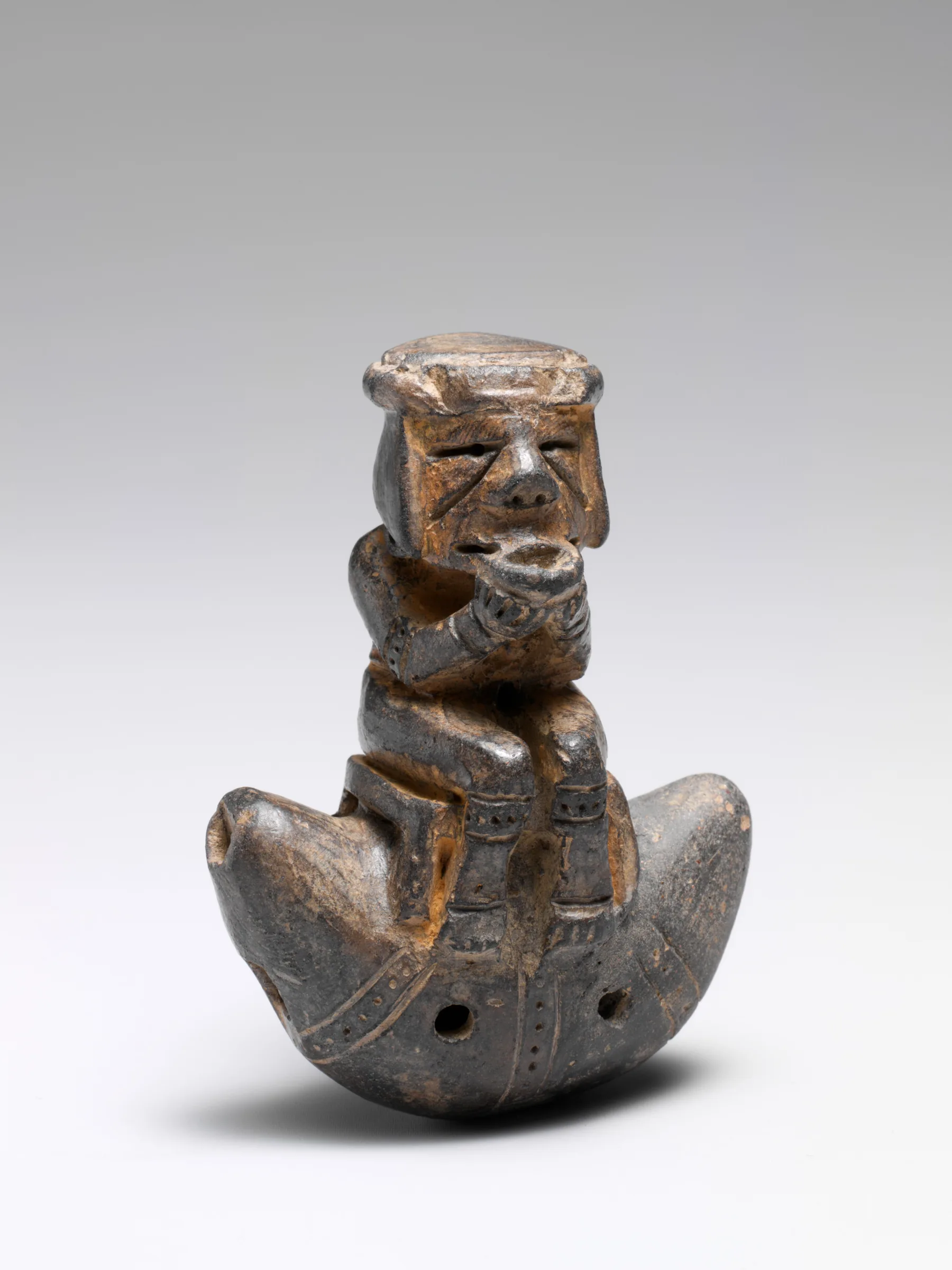
Historical origins
Long before Donati, people had been making whistles and wooden or bone pipes for thousands of years. The Neanderthal flute discovered by Ivan Turk in 1995 is more than 43,000 years old.
Difference between globular and tubular bodies
Shape and mouthpiece. The resonator has no open end; its opening directs the air toward an internal edge. This changes both playing control and range.
Range and playing. In most cases, the range remains limited to one octave. Some versions have no holes on the underside, which changes the scale and fingering.
| Characteristic | Globular body | Tubular body |
|---|---|---|
| Historical landmark | Donati, nineteenth century | From prehistory to the modern era |
| Mouthpiece | Directed opening | Open embouchure |
| Range | Often one octave | Several octaves possible |
For a more comprehensive comparison, read our analysis of the differences between flutes and ocarinas.
Instrument structure and design
The instrument is characterized by a rounded body and a mouthpiece that directs the breath.
The bulging body and mouthpiece create the characteristic shape of this instrument. The design concentrates resonance and produces a gentle tone.
A traditional example has holes on top and sometimes underneath. This arrangement distributes the work between both hands.
The mouthpiece guides the air toward the labium, following a principle inherited from woodwind instruments. Breath control remains crucial to accurate intonation.
“By 1936, catalogs already showed a wide variety of models, demonstrating how rapidly the design had evolved.”
- Hole layout: ease of fingering and precision of note variations.
- Mouthpiece and labium: precise direction of the airflow.
- Varied shapes: adaptation to hand comfort and playing style.
| Element | Role | Effect on playing |
|---|---|---|
| Rounded body | Main resonator | Gentle tone and sustained sound |
| Beak / mouthpiece | Directs the airflow | Controls attack and intonation |
| Holes on top and underneath | Changes the frequency | Produces complex notes and two-handed fingerings |
How the resonator works acoustically
Sound forms when the air in the neck vibrates in interaction with the volume of air inside the globular body.
The instrument works as a Helmholtz resonator: the mass of air in the neck oscillates in interaction with the volume of air inside. This oscillation determines the instrument’s fundamental frequency.
The Helmholtz resonator principle
The physical formula relates the size of the neck and the internal volume to frequency. At 20°C, the speed of sound is approximately 343 m/s, a useful value for estimating intonation.
The role of the finger holes
Unlike on tubular instruments, the position of the holes does not directly affect pitch. Here, the total open area is what matters.
Frequency and intonation
Blowing harder into the mouthpiece raises the frequency: this effect is produced by the coupling between the air jet and the resonator. The quality factor depends on the radiated power, often estimated at 10 mW for a standard instrument.
- The shape and size determine the range.
- Breath control remains essential for tuning and note stability.
- To understand the instrument’s operation in detail, read our guide.
Managing the breath and mouthpiece
Controlling the air at the mouthpiece determines the stability and accuracy of the performance.
The ideal air velocity generally ranges from 5 to 25 m/s. This range allows the air jet to couple with the resonator and prevents the jumps between partials commonly found on other instruments.
Coupling between the air jet and the internal volume sustains the vibration. If the pressure is uneven, the note may drift or stop.
The geometry of the beak, windway, and voicing window affects sound quality. A slight adjustment to the opening changes the relationship between airflow and pressure, as well as the tone color.
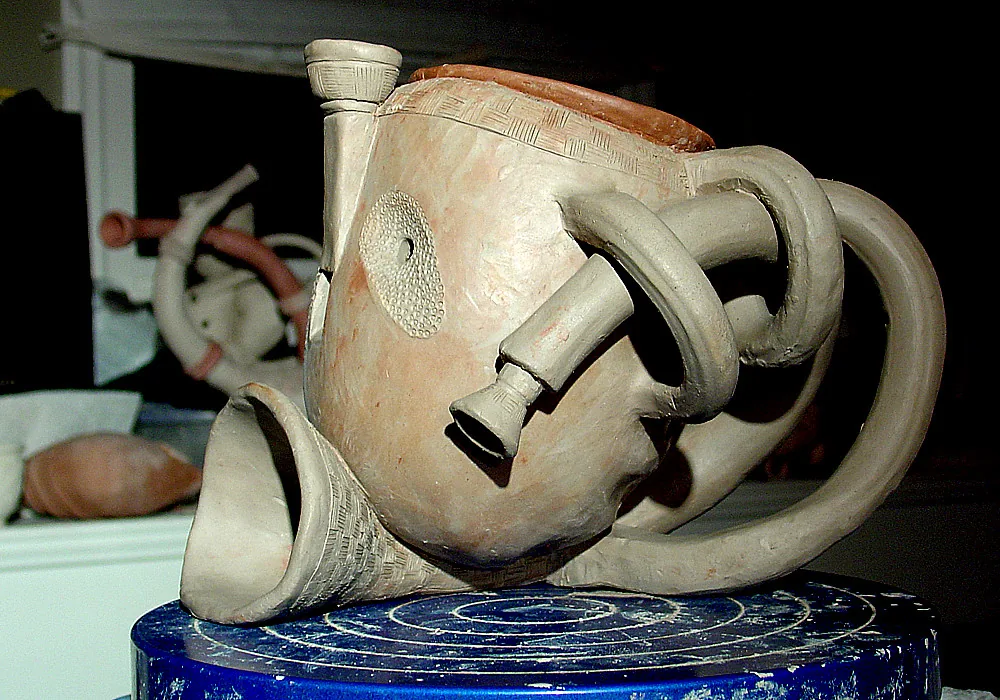
Managing the holes remains essential to the instrument’s range. Closing or opening a hole changes the effective volume and requires steady air pressure to preserve accurate intonation.
“The threshold at which the sound becomes self-sustaining depends on the damping of the Helmholtz mode.” — BB Ninob, 2002
- Practical advice: blow steadily and adjust the mouthpiece rather than forcing the air.
- If the sound is unstable, slightly reduce the intensity of your breath and practice slowly.
Fingering systems and range
Depending on the model, the arrangement of the holes profoundly changes how the instrument is played and tuned.
Comparing fingering systems
On some four-hole models, such as those described by J. André, a simple pattern produces a complete scale despite the limited range.
The hole associated with the lowest note is often located underneath and covered with the thumb. This extends the range downward and makes it easier to produce that note when needed.
Other instruments add holes on both the top and underside to play chromatic notes. This solution makes the instrument more versatile and simplifies tuning between two registers.
| Configuration | Advantage | Effect on playing |
|---|---|---|
| Simple four-hole configuration | Ergonomics and speed | Complete scale, few options in the low register |
| Holes on top and underneath | Chromatic capability | More notes and smoother transitions |
| All holes plus an underside hole | Extended low range | More stable tuning and a stronger bass line |
- Tip: follow the supplied fingering chart to position your fingers and learn more quickly.
- The left hand often manages the upper holes, while the right handles the lower ones.
To learn more, read our guide to fingering systems.
Manufacturing materials and their effect on sound
Terracotta, ceramic, and metal each noticeably alter the tone color.
Traditional clay or ceramic models provide a gentle, warm resonance. The material’s porosity and density affect sustain and timbre.
Metal variants, such as those bearing the mark “A.A. DEPOSE,” provide a brighter sound. Metal often creates a sharper attack and a different balance between power and tone.
However, the size, the shape of the neck, and the chamber volume determine the natural frequency and range.
A smaller model will have a higher range. A bass model will require more air to produce a stable vibration.
Finally, intonation depends primarily on the precision of the holes and the placement of the voicing hole during artisanal or industrial manufacturing.
To explore the technical aspects in greater depth, read our complete explanation.
Learning and music education
In the classroom, this instrument quickly becomes a practical tool for learning the scale and developing breath control.
Educational benefits
In a school setting, the ocarina is easy to pick up. Its shape and mouthpiece reduce the technical difficulty.
Clay models are popular because they limit wrong notes and help avoid the notorious squeaks.
The range, often limited to one octave, makes it easier to learn the basic notes.
Ensemble use
Group playing benefits from a family of ocarinas that includes bass models. This creates a rich yet accessible harmony.
Operating the holes encourages coordination: the left-hand thumb hole is often used to produce the lowest note.
To get started in the classroom, follow a beginner-friendly introduction to the four-hole ocarina.
“A simple instrument enables rapid progress and helps sustain students’ motivation.”
- Advice: practice the scale in short patterns.
- Favor short sessions to improve breath control.
Tips for choosing your first instrument
For a first purchase, choose a well-tuned instrument that is easy to hold.
Popularity and motivation: Nintendo’s “The Legend of Zelda: Ocarina of Time” has inspired many beginners. This renewed interest encourages regular practice and the enjoyment of making music.
Material and intonation: a terracotta model often offers a good balance between tone and accurate intonation. Look for a well-tuned instrument supplied with a clear fingering chart so that you can learn quickly.
Configuration: a six-hole model is generally easier to master than a complex system. Check the mouthpiece opening and the arrangement of the holes on the top and underside to ensure finger comfort and make breathing easier.
“Size affects the range: a smaller model produces a higher sound, while a bass model produces a deeper sound.”
| Criterion | Recommendation | Effect |
|---|---|---|
| Material | Terracotta | Gentle tone, stable intonation |
| Holes | 6 holes (simple configuration) | Sufficient range, easier learning |
| Mouthpiece | Controlled opening | Breathing comfort and precision |
| Size | According to the desired range | Smaller model = higher sound / bass model = lower sound |
For practical buying advice, read our article about choosing your first wooden ocarina.
Conclusion
In summary, the uniqueness of this instrument lies primarily in its shape and acoustic principle. This article has highlighted these elements to clarify how it works and what it sounds like.
We have shown how the arrangement of the holes and the chamber influence intonation. These features make these instruments both accessible to beginners and interesting to experienced musicians.
With good tuning and regular breath practice, your first notes, followed by each new note, will become more stable. Your playing develops with time and attentive listening.
Choosing a properly adjusted instrument remains the first step toward enjoying making music. We hope this article will help you make the right choices and approach playing with confidence.