
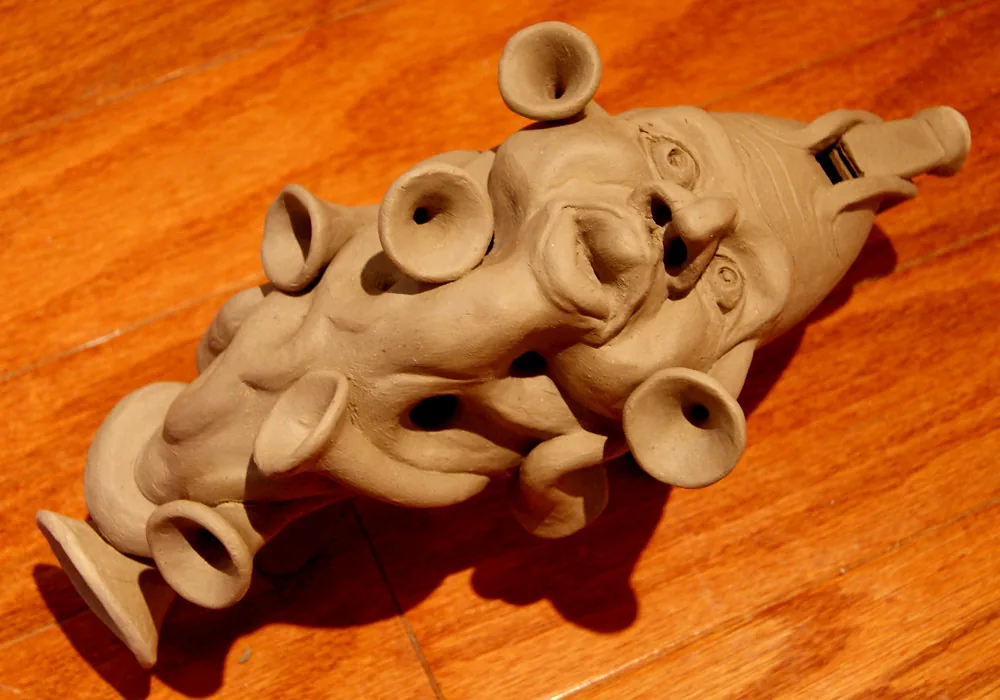

In this article, we examine the features that distinguish two families of wind instruments. The aim is to give readers a clearer understanding of their technique, history, and acoustics.
You will learn how design, materials, and playing technique influence tone and playability. The article is intended for beginners and experienced musicians alike.
Each paragraph provides clear explanations and practical guidance. We clarify the mechanisms of sound production through accessible examples.
As you read, you will be better equipped to choose an instrument that suits your preferred sound and musical style. This introduction lays the groundwork for a more technical analysis and precise comparisons later in the article.
Key points: technical features, materials, tone, ergonomics, and history.
Introduction to Wind Instruments
Wind instruments offer a rich variety of sounds created by remarkably diverse forms and techniques.
The wind family includes many instruments whose operation relies on the vibration of air inside a cavity. The musician controls this vibration through breath and the embouchure.
Each instrument requires a different degree of precision. To produce accurate notes, players must adjust breath pressure, its angle, and the shape of their lips.
- The air column is altered by covering or uncovering holes. This changes the pitch of a note.
- Modern ocarinas and early flutes demonstrate the variety of playing techniques developed over the centuries.
- Understanding the role of breath remains essential for developing musical expression.
To learn more: explore the wind instrument family and its classifications.
| Element | Role | Effect on sound |
|---|---|---|
| Air column | Internal resonance | Determines pitch and harmonic richness |
| Embouchure | Airflow control | Influences attack and dynamics |
| Size and material | Resonator shape | Alter tone and projection |
Ocarina or Flute: What Are the Differences Between These Instruments?
The way the breath interacts with the cavity often defines an instrument’s tonal character.
Acoustic distinction: internal volume controls frequency. A small chamber produces high notes, while a larger cavity produces low notes. The cross-section of the tube or cavity alters resonance and harmonic richness.
Technical Classification
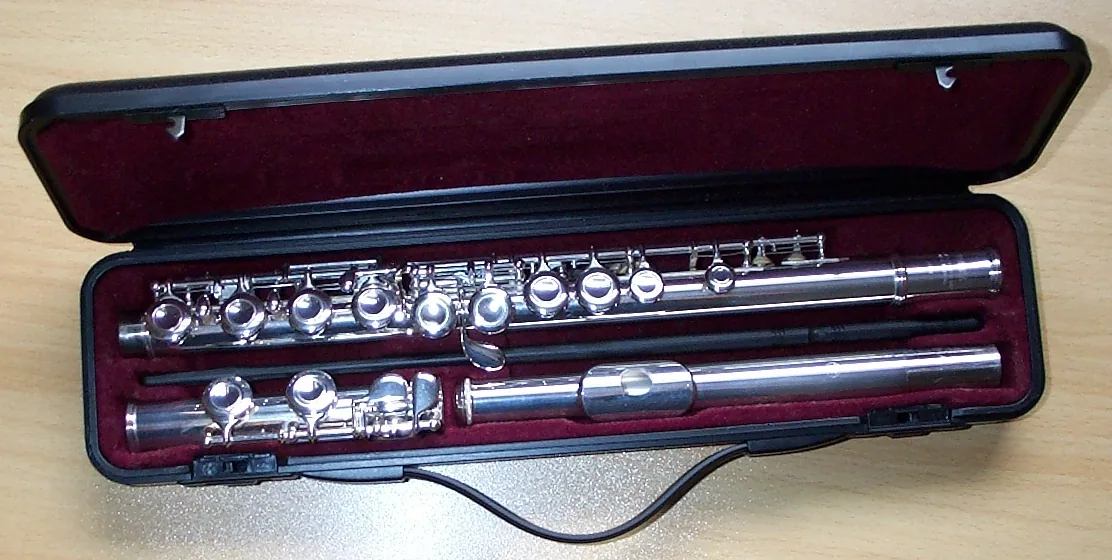
The organological classification 421.221.42 refers to duct flutes. The ocarina, meanwhile, is defined as a vessel flute with an enclosed chamber.
“The enclosed shape often limits the range, whereas an open tube makes it possible to play across several octaves.”
- Each type has its own range: some models are limited to approximately one octave.
- An integrated mouthpiece directs the air differently from a free embouchure.
- The chosen type affects volume and note accuracy.
| Element | Role | Consequence |
|---|---|---|
| Internal volume | Fundamental frequency | Determines the overall pitch |
| Cavity cross-section | Resonance | Alters tone and harmonics |
| Embouchure | Airflow direction | Affects attack and dynamics |
Historical Origins and Cultural Evolution
The earliest musical evidence shows that wind instruments accompanied human rituals thousands of years ago.
Bone flutes dating back 30,000 years prove that people have used breath to produce music since ancient times. Other remains, more than 12,000 years old, confirm the use of early small resonators in various cultures.
In the nineteenth century, Giuseppe Donati revolutionized the modern ocarina family with a 10-hole model capable of playing a chromatic scale. Developed in Budrio in 1850, its standardization enabled wider adoption and more advanced playing techniques.
The evolution of ocarinas illustrates how these objects developed from simple terracotta toys into fully fledged musical instruments. Cultural exchange and technical innovation shaped their role in traditional music around the world.
“These small resonators have endured for thousands of years, adapting to different styles and uses.”
For a more complete historical and sonic profile, read this dedicated article: a portrait of the ocarina.
Sound-Production Mechanisms
Sound production relies on simple physical phenomena that are nevertheless highly sensitive to the smallest design details.
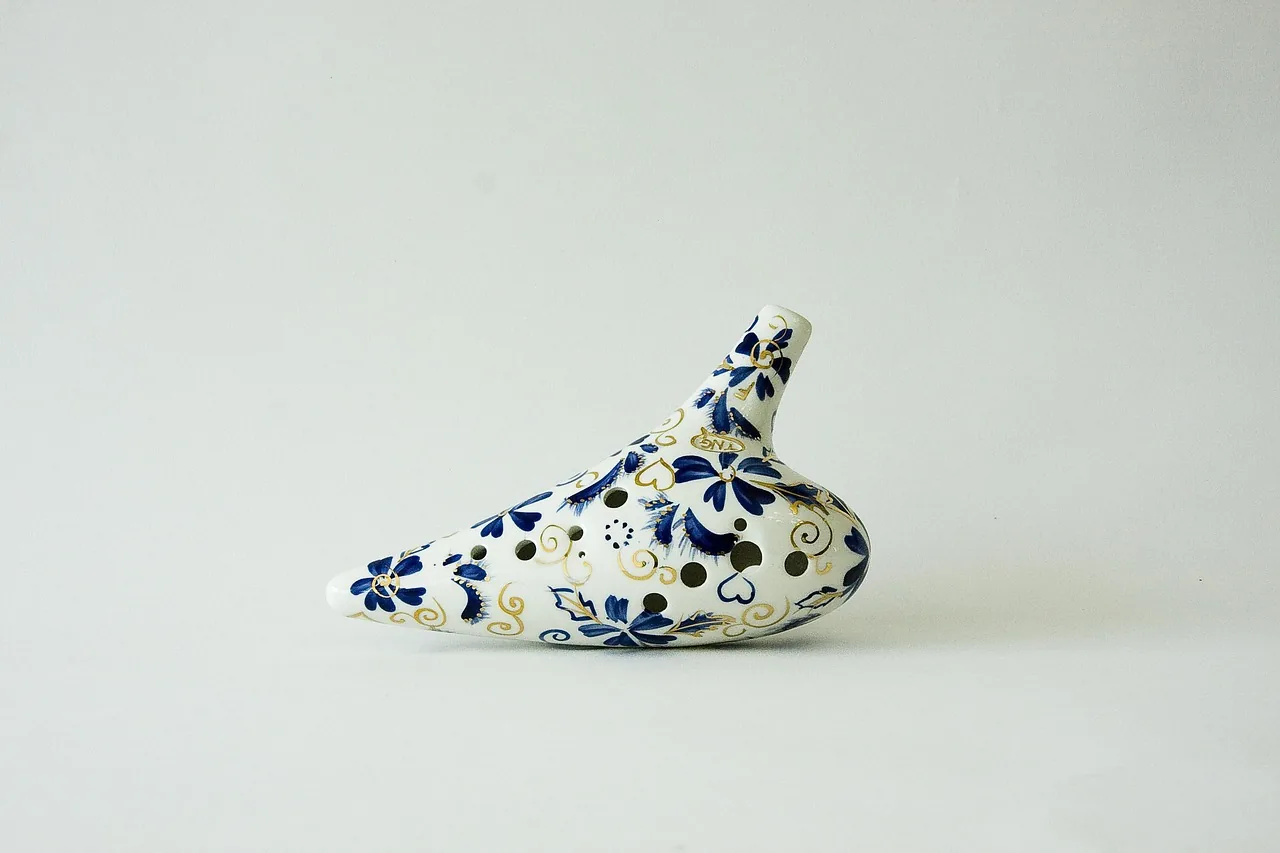
Helmholtz resonance: an enclosed chamber works like a tuned bottle. When air enters, the cavity vibrates at a specific frequency. This response explains why an ocarina produces a rounded tone. The size and volume of the chamber control the pitch.
Standing Waves
In an open tube, standing waves form along the column of air. Nodes and antinodes define the harmonics. Finger position alters the effective volume and changes the fundamental frequency.
Role of the Embouchure
The embouchure directs the flow of air toward an edge. This orientation creates a clean attack and stable waves, which are essential for producing clear notes.
At 20°C, the speed of sound in air is 343 m/s, which affects the frequency of the notes produced.
- Multi-chamber ocarinas extend the range beyond one octave.
- Accuracy results from the combination of the embouchure and hole placement.
Analysis of Manufacturing Materials
Each material gives the sound its own signature, from the warmth of ceramic to the brightness of metal.
Traditional terracotta produces a warm, rounded tone. Porcelain instruments offer a precise tone but remain fragile.
Modern models made from plastic are more durable and affordable. However, they may soften certain harmonics and alter the perceived volume.
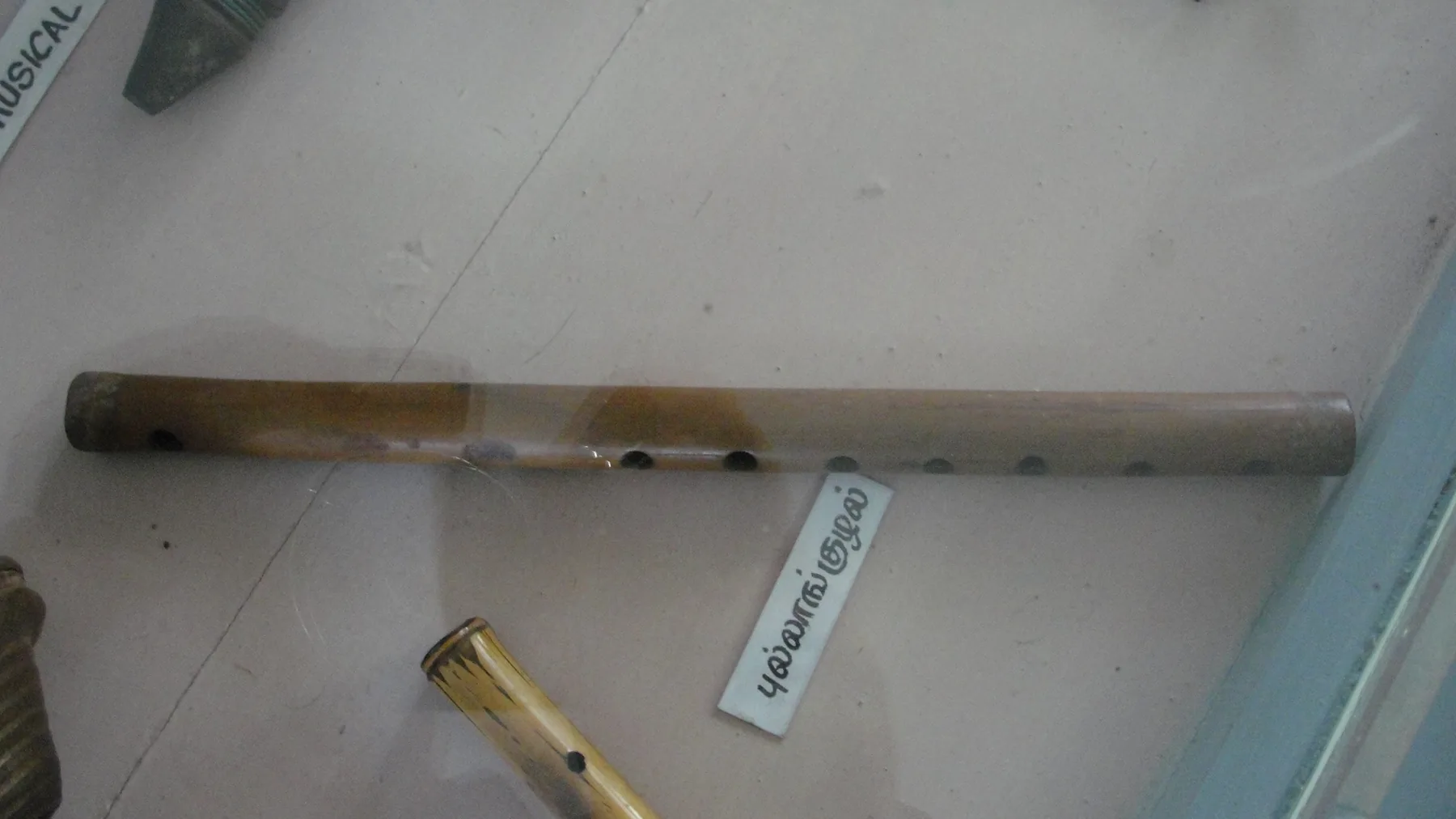
Wood and metal alter the internal cross-section and resonance. A bamboo tube, typical of flutes, projects sound differently from a small ceramic resonator.
The choice of material influences density, porosity, and acoustic response.
- High porosity → greater absorption and a softer tone.
- High density → stronger projection and attack.
- Contemporary models seek a balance between durability and an authentic sound.
| Material | Effect on sound | Advantage |
|---|---|---|
| Ceramic / terracotta | Warm tone, rich harmonics | Authentic sound and attractive appearance |
| Plastic | Neutral tone, fewer harmonics | Durable and affordable |
| Wood / metal / bamboo | Variable projection, distinctive character | Durability and a distinctive tone color |
To explore the acoustic impact of material choice in greater depth, read this acoustic analysis.
Playing Techniques and Breath Control
Controlling air pressure is the musician’s primary means of shaping the sound. Mastering this parameter makes it possible to produce stable notes and expressive dynamics on a small resonator.
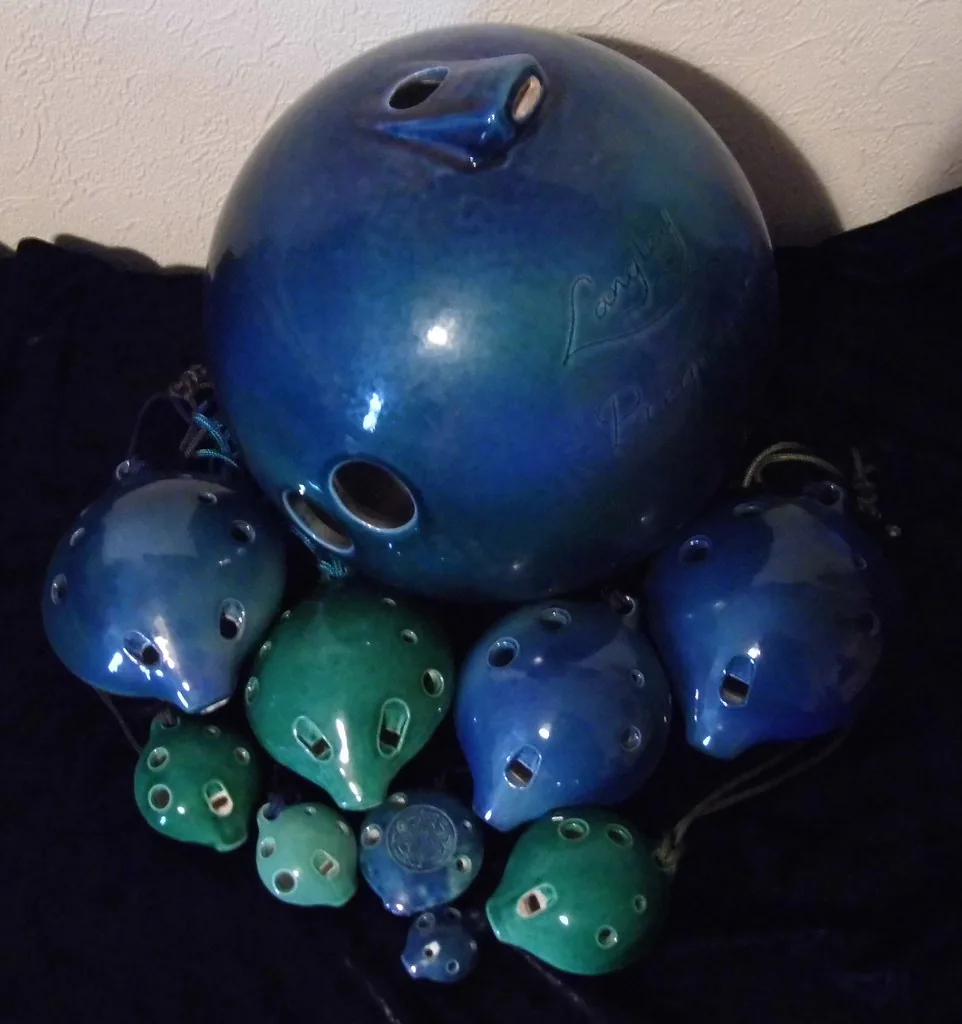
Managing Air Pressure
Too much pressure raises the pitch and muddies the tone. Too little pressure produces a weak, imprecise sound.
Learn to breathe in short, steady cycles. Practice slow scales to feel the relationship between breath and pitch.
The position of the fingers over the holes must be precise to prevent air leaks. A leak affects the volume and clarity.
“Coordination between breath and fingers transforms technique into musical expression.”
- Diaphragmatic breathing for a steady airflow.
- Precise finger placement for clean transitions.
- Embouchure control to vary the attack and tone color.
With slow, regular practice, any musician can play complex melodies. Careful coordination between breathing and movement ensures fluid performance on ocarinas and other wind instruments.
Comparing Ranges and Notes
The available range depends primarily on how the cavity and holes alter the air.
An ocarina’s range is often limited to one octave. The enclosed chamber determines the pitch and consistency of its notes.
By contrast, a keyed tube extends the available range. Harmonics and register changes make it possible to cover several octaves.
Each note on a small resonator depends on the total surface area of the open holes. This explains its sensitivity to finger placement.
The required air volume varies with size. A larger instrument requires more air to achieve the same power.
“The internal cross-section often limits the range, while the tube’s air column expands it through harmonics.”
| Feature | Ocarina | Keyed tube |
|---|---|---|
| Range | Approximately 1 octave | 2 to 3 octaves, depending on the model |
| Note-production mechanism | Surface area of open holes | Tube length and harmonics |
| Air requirement | Moderate volume, steady airflow | Greater volume, dynamic variation |
| Control | Simple mouthpiece, precise fingering | Keys and embouchure control the registers |
Instrument Portability and Ergonomics
For a traveling musician, being able to carry an instrument easily makes all the difference.
Design and Shape
An ocarina’s compact shape makes it easy to hold. Current models feature ergonomic designs that reduce fatigue.
Good ergonomics keep the fingers relaxed. This makes long playing sessions easier and helps musicians progress more quickly.
Ease of Transport
Without a bulky tube, the instrument fits into a pocket or small case. Its small volume makes travel and impromptu rehearsals easier.
The integrated mouthpiece increases durability, allowing the instrument to withstand impacts and moisture more effectively. Controlling the air remains straightforward despite the instrument’s compact size.
“Portability transforms practice: the less you carry, the more you play.”
- A comfortable grip for beginners and experts alike.
- Less space required than for a long tube or a keyed instrument.
- Greater durability thanks to the integrated mouthpiece.
| Criterion | Advantage | Practical impact |
|---|---|---|
| Size | Compact format | Easy to carry in a pocket or small case |
| Ergonomics | Optimized design | Less fatigue and greater precision |
| Construction | Integrated mouthpiece | Greater resistance to impacts |
Musical Uses
These instruments often accompany acoustic ensembles seeking a clear, pure tone.
In folk music, the small resonator offers an intimate tone. It lends popular melodies a touch of nostalgia.
In video-game soundtracks, its sound often creates a melancholy atmosphere. Composers use it to evoke innocence or mystery.
Musicians also incorporate it into many different ensembles. The clarity of each note complements the group’s harmonies.
“Breath control becomes a therapeutic tool for relaxation and meditation.”
- Folk and narrative uses
- A presence in modern soundtracks
- Applications in music therapy
- Adaptability to several contemporary styles
The small mouthpiece allows subtle expression. Soloists use it to convey deep emotion, phrase by phrase.
| Context | Strength | Example of use |
|---|---|---|
| Folk music | Warm tone | Traditional melodies |
| Soundtracks | Evocative tone color | Video games and films |
| Therapy | Breath control | Guided relaxation |
| Ensemble | Clear notes | Acoustic arrangements |
For a more technical comparative analysis, follow this link.
How to Choose Your First Instrument
When starting out, choose a simple model that produces stable notes from the very first hours of practice.
Practicality: a 12-hole alto ocarina in C is often the best compromise for beginners. It generally costs less than €100.
Ease of sound production: the design makes it possible to produce notes without a complex technique. This encourages regular practice.
Check the internal cross-section and volume, as these elements affect intonation and note stability. A cross-section that is too small limits the range to one octave.
Mouthpiece comfort: choose a comfortable mouthpiece that lets you play for long periods without discomfort. Comfort supports the development of fingering and breath control.
- Recommended type: 12-hole alto in C.
- Sound criterion: check note production and intonation.
- Style: choose according to the desired range and musical use.
| Criterion | Why it matters | Recommendation |
|---|---|---|
| Price | Affordability for beginners | < €100 for an entry-level model |
| Volume / cross-section | Intonation and range | A stable chamber suited to a one-octave range |
| Mouthpiece | Comfort and airflow control | An ergonomic shape that feels comfortable against the lips |
| Type | Style and use | Alto in C recommended, depending on the chosen style |
Advantages and Disadvantages for Different Musicians
For beginners, the learning curve of a small resonator allows rapid progress. Within a few hours, players can perform simple melodies using an easy-to-learn basic technique.
For professionals, the principal limitation remains its restricted range. This constraint can limit the performance of demanding classical pieces that require several octaves.
The fragility of some ceramic models requires careful handling. Plastic versions are more durable and better suited to children or travel.
The sound volume is ideal for intimate solos or chamber music. However, it may lack power in a large orchestral ensemble.
Mastering the embouchure remains an ongoing challenge. Each instrument responds differently to breath pressure, so careful listening and adjustment are essential for consistent intonation.
- Beginners: rapid progress and immediate enjoyment.
- Professionals: limited range and less versatility.
- Children / travel use: favor durable models.
| Profile | Advantage | Limitation |
|---|---|---|
| Beginner | Easy to learn | Limited range |
| Professional | Unique tone color | Sound power and note range |
| Child / traveler | Durability (plastic) | Less harmonic richness |
Conclusion
To summarize: each model offers its own balance of playability, tone, and projection. This article has highlighted their construction features, ranges, prices, and learning curves.
Ocarinas are appealing because they are quick to learn and offer an intimate tone. They remain compact and well suited to travel or personal practice.
Your final choice will depend on your goals, budget, and available practice time. To explore the available variations and refine your decision, read our dedicated guide: choosing an ocarina.