
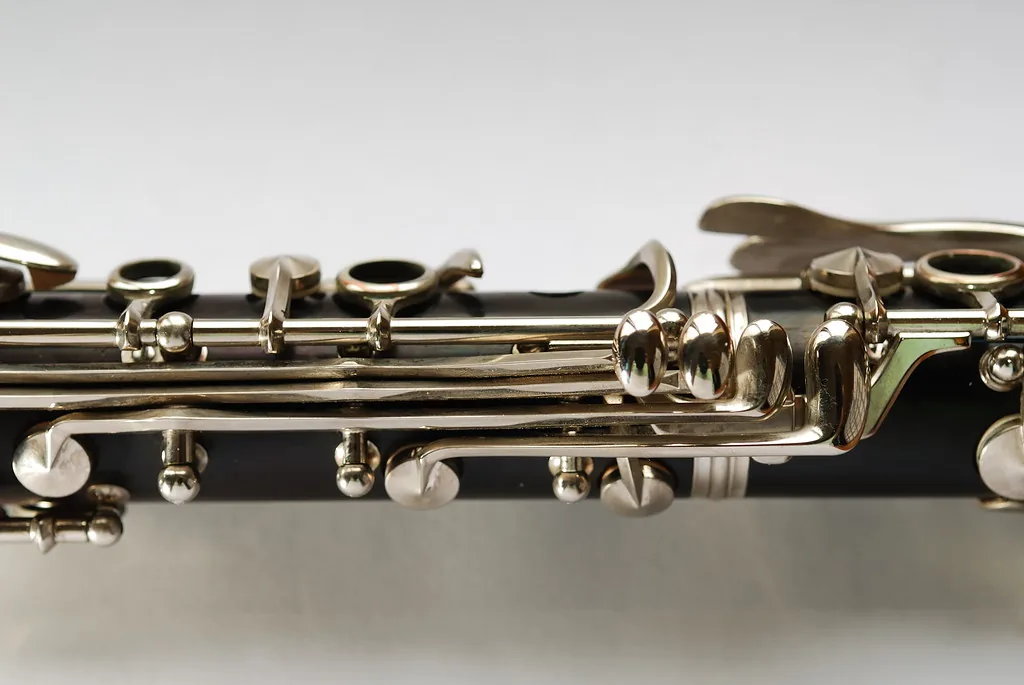

The Clarinet Concerto in A major, K. 622 is a major work by Wolfgang Amadeus Mozart, composed in 1791. It was the last of the master’s forty-three concertos. The piece was written for his friend Anton Stadler, who played the basset clarinet.
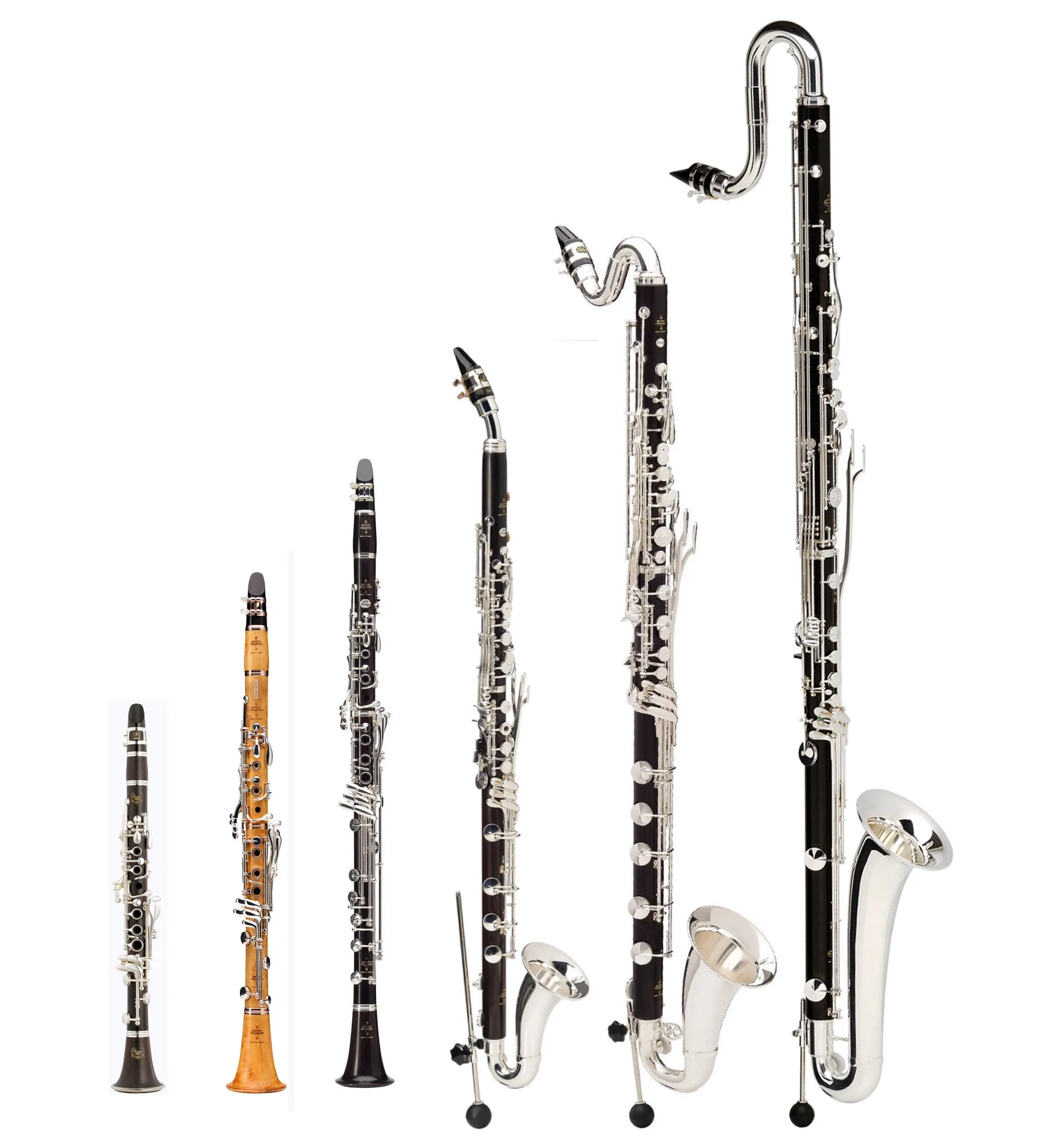
This instrument, longer than today’s clarinet, has additional low notes. Mozart’s concerto is considered a masterpiece of the classical clarinet repertoire, alongside works by Stamitz, Weber and Spohr.
Understanding this concerto requires familiarity with its historical context and the instrument’s distinctive characteristics. It is also essential to examine its influence on the clarinet repertoire.
Historical context of the composition
Wolfgang Amadeus Mozart’s Clarinet Concerto in A major, K. 622 was composed between September 28 and October 7, 1791, barely two months before his death. This celebrated piece was written for Anton Stadler, a clarinetist whom Mozart greatly admired.
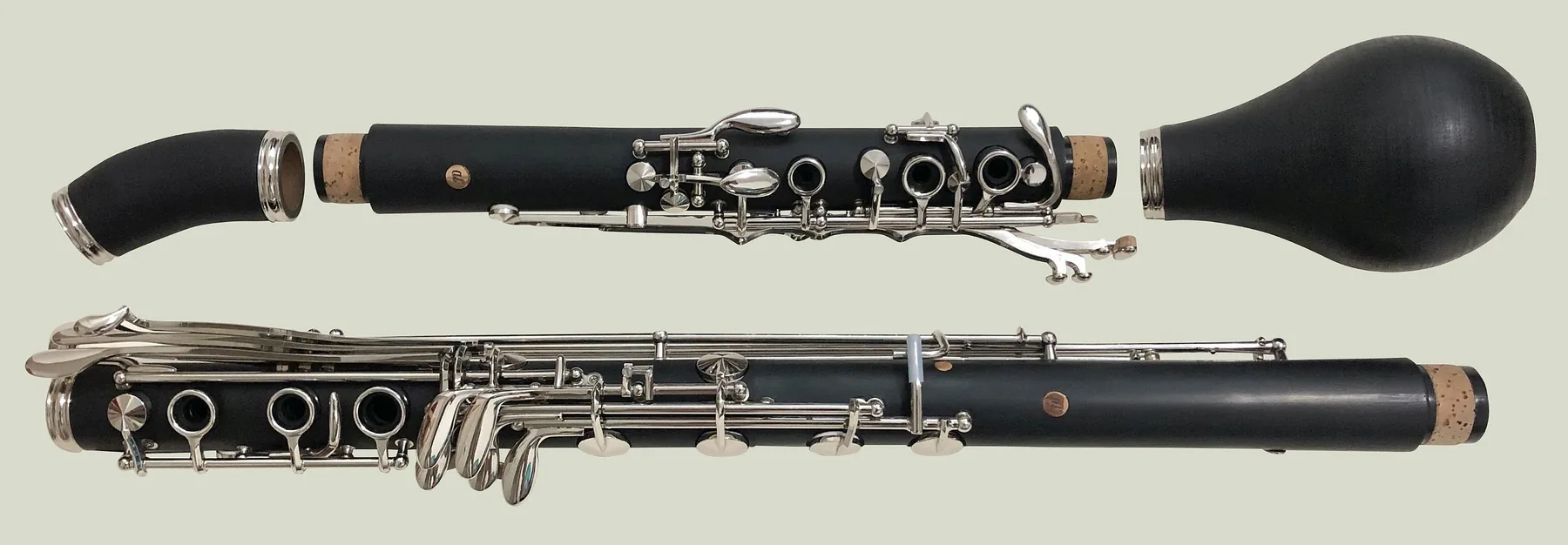
Written for the basset clarinet
A sketch of the Allegro had been written in 1787, although in G major rather than A major. Mozart revisited this movement and incorporated it into the concerto, adding two measures. The basset clarinet in A, developed by Stadler and Theodor Lotz, could play in a lower register.
Editions for the modern clarinet
After Mozart’s death, publishers altered the work to adapt it for clarinets in B-flat or A. They transposed or modified certain passages in the low register. The original version was never published, and its score has been lost. The earliest known version was published by Johann Anton André in 1801 for clarinet in A. In March 1802, a review in the Allgemeine Musikalische Zeitung questioned the changes made to the solo part.
| Key statistics | Values |
|---|---|
| Number of movements in the Clarinet Concerto in A major, K. 622 | 3 |
| Approximate duration of the work | About 28 minutes |
| Composition dates | Between September 28 and October 7, 1791 |
| Premiere | October 16, 1791, in Prague |
Attempts to reconstruct the original version
Mozart’s Clarinet Concerto is widely known, but its history remains mysterious. Many musicologists and musicians have studied its origins and evolution in the hope of recovering Mozart’s original version.
In 1938, Oskar Kroll discovered a study indicating that the present score was an adaptation for the modern clarinet. It had originally been intended for the basset clarinet, a more expressive instrument. This theory was confirmed in 1961 by Arthur Ness, who discovered an 1802 review and established connections with the historical editions.
Since 1968, many musicians have performed the concerto on modern basset clarinets. They seek to do justice to Mozart’s original version. However, the loss of the autograph score makes reconstruction difficult.

Studying historical sources and the clues left by Mozart helps us better understand this work. This research opens the way to new interpretations that pay tribute to the composer.
The clarinet’s influence on Mozart
The clarinet was introduced into the Mannheim orchestra, and Mozart was immediately captivated by its mellow tone. He began incorporating it into his compositions with the 31st Symphony. It became a key element in his operas and some of his piano concertos, such as the Piano Concerto No. 23, whose Adagio is imbued with lyricism.
Mozart discovers the clarinet’s expressive power
Mozart’s encounter with Anton Stadler, a virtuoso in the Vienna orchestra, strengthened his fascination with the clarinet. Stadler played the basset horn, an instrument capable of producing additional low notes. Mozart was dazzled by its expressiveness and gave it a central role in his opera La clemenza di Tito. The clarinet thus became a symbol of Freemasonry.
| The clarinet’s influence on Mozart | Contribution of the Mannheim orchestra | Integration of the clarinet into Mozart’s works |
|---|---|---|
| Mozart falls under the clarinet’s spell | The instrument is introduced into the Mannheim orchestra | The instrument joins the symphonic ensemble beginning with the 31st Symphony |
| Mozart discovers the instrument’s expressive and vocal potential | The instrument inspires the composer’s admiration | The instrument appears in his operas and later piano concertos |
| Mozart meets the virtuoso Anton Stadler | A decisive influence on Mozart’s attraction to the clarinet | The instrument embodies the souls of characters in “La clemenza di Tito” |
Anton Stadler’s basset clarinet opened up a world of sound and poetry for Mozart, profoundly influencing his writing and his conception of the instrument. The clarinet thus became a symbol of Freemasonry.
Mozart’s Clarinet Concerto: analysis and history
The Clarinet Concerto in A major, K. 622 is a major work by Wolfgang Amadeus Mozart. It was composed in 1791, shortly before his death. It was the last of Mozart’s forty-three solo concertos and his only concerto for clarinet.
It was completed between September 28 and October 7, 1791. The premiere took place in Prague on October 16 of that year, with clarinetist Anton Stadler performing the solo part.
Publishers subsequently altered the score so that it could be played on clarinets in B-flat or A. Nevertheless, efforts have been made to recover the original version, played on basset horns or basset clarinets.
The Clarinet Concerto is one of Mozart’s final works. The principal theme of its second movement is often used in films. The third movement, which lasts approximately twelve minutes, is an essential work for clarinetists.
The clarinet, Mozart’s final confidante
Toward the end of his life, Mozart fell ill and exhausted himself through work. It was then that he composed the Clarinet Concerto, his final work. It was his swan song.
The Adagio is particularly moving. Its opening theme rises gently, giving birth to a profoundly affecting passage. This simplicity and purity make the work unique.
A work filled with emotion
Filmmakers have used the concerto in their films, including Sydney Pollack in Out of Africa, drawn to its emotional power. Clarinetists such as Raphaël Sévère perform it with great sensitivity.
“Mozart’s Clarinet Concerto is a work filled with emotion, whose emotional dimension is masterfully conveyed by the great clarinetists.”
The concerto was composed during a difficult period when Mozart was ill and exhausted. The work reflects his emotions and makes the clarinet his confidante.
The concerto’s importance in the solo repertoire
Mozart’s Clarinet Concerto holds a major place in the clarinet’s solo repertoire, alongside concertos by the elder and younger Stamitz, Carl Maria von Weber and Louis Spohr. Mozart’s work profoundly influenced the composers who followed him.
Mozart’s Clarinet Concerto is a masterpiece of the genre. It showcases the clarinet’s capabilities. The work inspired many other pieces for clarinet and orchestra, contributing to the growth of the classical repertoire.
The influence of Mozart’s Clarinet Concerto on later composers is undeniable. Its distinctive qualities and the dialogue it creates between soloist and orchestra inspired numerous works.
“Mozart’s Clarinet Concerto is a true benchmark of the genre and has left an enduring mark on the clarinet’s solo repertoire.”
Today, the concerto continues to be performed and admired, attesting to its importance in the history of the clarinet.
Conclusion
Mozart’s Clarinet Concerto in A major, K. 622 is a masterpiece of the classical repertoire. It was composed during the final years of his life. Intended for his friend, the clarinetist Anton Stadler, it reflects Mozart’s passion for the instrument.
Stadler helped Mozart explore the clarinet’s capabilities. The concerto bears witness to their friendship and Mozart’s attachment to the instrument. Today, it remains a classic cherished by music lovers.
The concerto’s original versions have disappeared, but arrangements have preserved the work. The Clarinet Concerto in A major, K. 622 is rich in harmony and expressiveness. Analyzing this score is fascinating.
FAQ
When was Mozart’s Clarinet Concerto composed?
For whom was the concerto written?
Which version of the concerto is performed today?
How have musicologists attempted to reconstruct the original version?
What impact did the clarinet have on Mozart’s writing?
How did Mozart’s concerto influence the clarinet literature?
What is the emotional dimension of Mozart’s Clarinet Concerto?
Sources
- https://www.justin-beere.com/blog/mozart-clarinet-concerto
- https://geraldlarner.com/work/mozart-clarinet-concerto-in-a-major-k-622
- https://imslp.org/wiki/Clarinet_Concerto_in_A_major%2C_K.622_%28Mozart%2C_Wolfgang_Amadeus%29
- https://en.wikipedia.org/wiki/Clarinet_Concerto_%28Mozart%29
- https://www.mozartsroses.com/mozart-clarinet-concerto.html
- https://digital.library.unt.edu/dam/?next=%2Fark%3A%2F67531%2Fmetadc798253%2F
- https://www.wikidata.fr-fr.nina.az/Concerto_pour_clarinette_de_Mozart.html
- https://sin80.com/en/work/mozart-clarinet-concerto-k622
- https://www.britannica.com/art/clarinet
- https://www.reddit.com/r/Mozart/comments/13ri6bh/discussion_mozarts_clarinet_concerto_k622/
- https://portlandsymphony.org/sights-sounds-stories/insights/5121/mozart-meets-klezmer-program-notes/
- https://music.utexas.edu/events/5193-wind-ensemble
- https://cardinalscholar.bsu.edu/server/api/core/bitstreams/f54191d2-4add-47cb-8070-4673067338e4/content
- https://www.laphil.com/works/clarinet-concerto-mozart
- https://www.um.edu.mt/library/oar/bitstream/123456789/130985/1/(1991)%20Mozart%20Centenary%20Concert%20Programme%20(1301).pdf
- https://www.britannica.com/biography/Wolfgang-Amadeus-Mozart
- https://www.merriam-webster.com/dictionary/concerto
- https://musicbrainz.org/work/d180cb96-0471-4626-bf85-d8083df7272e
- https://dme.mozarteum.at/DME/objs/pdf/nma_139_-11_-3_eng.pdf