
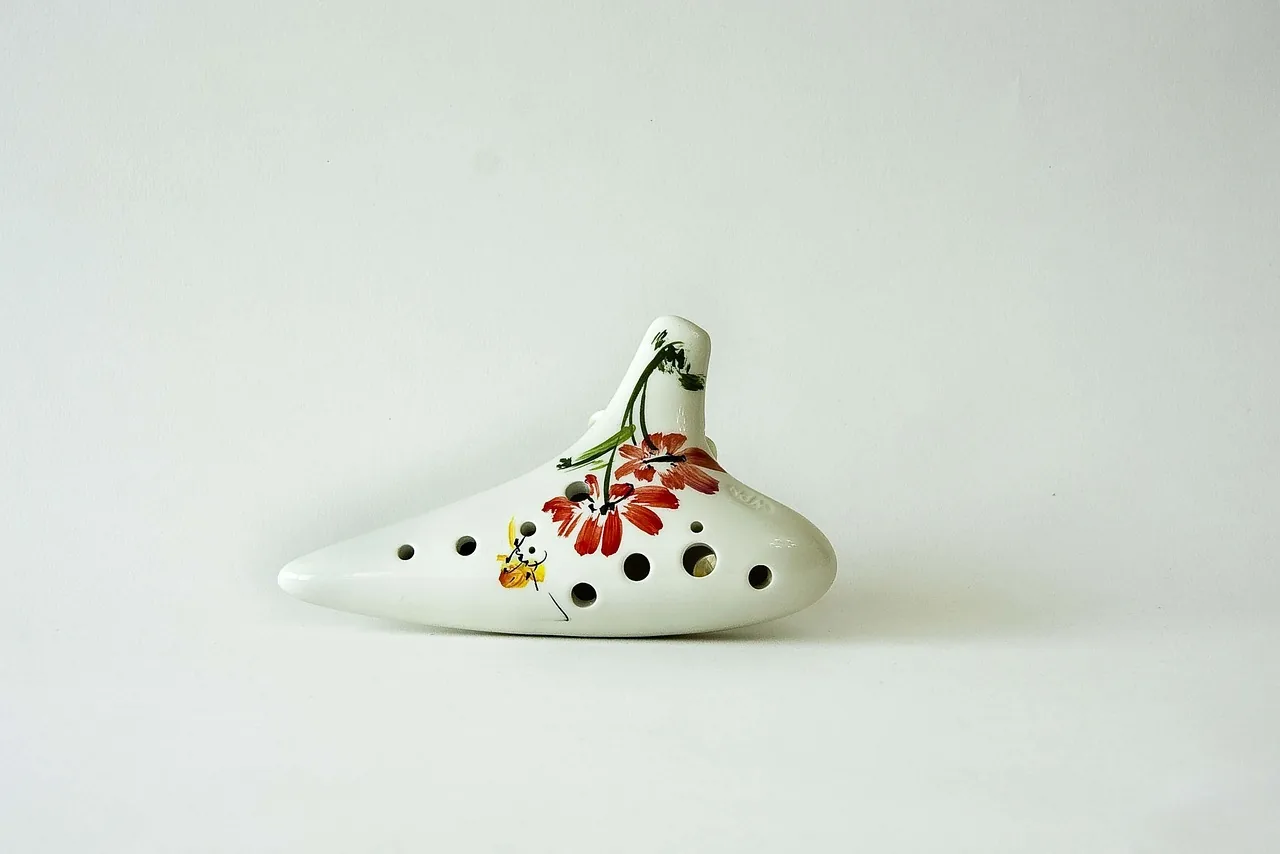

An instrument with a history spanning thousands of years, the ceramic ocarina has endured through the ages with remarkable staying power.
Its history goes back more than 12,000 years, according to archaeological finds, making it both a musical instrument and an object of cultural heritage.
Its modern popularity soared after the 1998 release of Zelda: Ocarina of Time, which reportedly boosted sales by nearly 300%.
Ceramic often offers superior quality and tone compared with plastic or wooden models, thanks to its natural resonance.
Choosing an instrument means considering its range, tuning and intonation, especially for studio work or recording.
Finally, a few simple care guidelines will help protect your ocarina from moisture and impacts, extending its lifespan.
Introduction to the clay ocarina
Artisans of ancient civilizations shaped ceramic instruments capable of producing remarkably pure tones.
Pre-Columbian cultures and ancient China refined resonating chambers that use the Helmholtz resonance principle. This design directs the breath toward an edge to produce a clear, stable sound.
Unlike plastic models, ceramic offers better thermal stability. Studio musicians value this stability for tuning and intonation during recording.
Brands such as Songbird and STL draw on these ancestral techniques to create modern ranges. Before buying, remember that material quality affects harmonic richness, tonal depth and resistance to moisture or impacts.
Clay ocarina: benefits, sound and care
The standardization of the transverse model in the nineteenth century made this instrument more accessible to musicians. In 1860, Giuseppe Donati played a key role in turning a folk object into a precise, reliable musical instrument.
Historical origins
Modern forms descend from ancient models, but the standard established by Donati enabled their widespread adoption. This choice influenced the number of holes and the range of the scales used today.
Acoustics and resonance
The natural porosity of ceramic limits internal condensation. This improves sound quality compared with wooden or plastic instruments during studio recording.
- Spectral analysis: 20% more complex harmonics in the low register.
- 12-hole models: approximately 1.5 octaves and intonation recommended by 90% of teachers.
- Dry cleaning is recommended by Mountain Ocarinas to protect the structure from moisture.
For a considered purchase, compare models, finish quality and tuning stability. To explore the available range, see a specialist selection of options and models.
The acoustic benefits of ceramic
Ceramic material shapes the tone by providing clear, stable projection. This quality appeals to musicians who record in the studio and seek consistent sound quality.
Compared with plastic or wood, ceramic provides better note sustain and richer harmonics. Jean Dupont, a professor at the Paris Conservatoire, highlights its thermal stability as an advantage for tuning during long sessions.
Premium models illustrate this benefit. The €199 Songbird “Imperial City” model demonstrates the tonal richness that a good material can provide.
The surface also allows artistic customization: glazes, engravings and finishes can give musicians a unique piece. Finally, the ergonomics of 12-hole models make them easier to hold and reduce fatigue during extended playing.
| Criterion | Ceramic | Plastic | Wood |
|---|---|---|---|
| Projection | Strong and clear in the studio | Moderate, less rich | Good, warm but variable |
| Thermal stability | Very good | Good | Sensitive to changes |
| Customization | Glazes and engravings possible | Limited | Handcrafted finishes |
| Ergonomics (12 holes) | Comfortable, reduces fatigue | Variable | Comfort depends on the model |
The material’s limitations and fragility
Ceramic appeals because of its rich tone, but it remains a delicate material. Before buying, consider its actual impact resistance and the instrument’s intended use.
Sensitivity to impacts and drops
Ceramic has an impact resistance of approximately 300 g/cm², compared with 900 g/cm² for plastic. This difference explains its vulnerability to impacts.
Statistics indicate that 35% of instruments are damaged during their first journey without a suitable case. A padded case, such as a €29 Thomann model, greatly reduces this risk.
Managing moisture and temperature changes
Rapid changes of more than 5°C per hour can cause irreversible internal cracks. Controlling humidity is essential to preserve intonation and quality.
- Avoid outdoor concerts without protection.
- Store the instrument at a stable temperature.
- Use a case and a desiccant if necessary.
Comparing ceramic and plastic
Comparing ceramic with plastic reveals clear differences for musicians, both while traveling and in the studio.
A plastic model weighs an average of 150 g, compared with 300 g for a ceramic model. The lighter weight makes transport easier for traveling musicians and for learning outdoors.
One study reports that the plastic “Night by Noble” model (€59) drifts by approximately 15 cents after six months of intensive use. By contrast, the ceramic “El Dorado” model (€129) maintains better intonation over time.
Sound quality also differs: ceramic offers richer projection and a warm tone. Plastic prioritizes practicality but often sacrifices tonal depth.
For an instrument intended for the studio, tuning stability and harmonic richness often make ceramic the preferred choice.
To learn more, see the guide to six-hole ocarina fingerings so you can assess the range, number of holes and scale best suited to your planned purchase.
Key differences from wooden models
Wooden models offer a naturally warm tone and an expressive attack. This character appeals to musicians seeking an organic sound palette for acoustic music.
However, wood is highly sensitive to humidity. Above 70% humidity, cracks can develop quickly. Oberon, known for its maple instruments, recommends regularly monitoring the environment.
Resonance and organic tone
In practice, wooden instruments require more maintenance: applying oils or waxes every six months increases costs by approximately 40% compared with ceramic.
Ceramic withstands climatic changes better. It offers longer note sustain and stable intonation, qualities valued in the studio and for recording.
- Wood: softer attack, greater expressiveness and greater sensitivity to moisture.
- Ceramic: stable tuning, resistance to changes and clearer sustained notes.
- To make the right choice when buying, balance your desired tonal range against the maintenance requirements.
To compare the options in practical terms before buying, read a practical guide to materials and models.
Essential criteria before buying
Before buying, check the intonation across the instrument’s entire range. Test every note to make sure the tuning remains stable from the lowest to the highest register.
Ergonomics affect comfort and session length. Choose a model that fits your fingers to reduce fatigue.
If you are a beginner, favor an instrument tuned to C major: it makes learning easier and works with most sheet music.
Material quality affects performance in the studio and the instrument’s longevity. Compare several ceramic and wooden models based on your musical style.
Established brands such as STL and Songbird often offer consistent quality and good value for money. Their product ranges make choosing easier for beginners and experienced musicians alike.
- Check the intonation across all holes.
- Test the grip in a store if possible.
- Choose a model suited to the range you need.
- Confirm the tuning and quality before buying.
The importance of range and tuning
Range and tuning guide musicians toward a model suited to their project. This choice affects tonal color, technique and use in the studio or onstage.
Soprano models cover the high register. They suit fast lines and ornamentation. Mastering them requires precise breath control to preserve the intonation of the highest notes.
Alto variants offer a balance between clarity and warmth. They are often lightweight and practical for learning and playing standard melodies in C major.
Using bass and tenor models
Tenor and bass ranges provide deeper tonal colors. They suit slow, enveloping pieces.
However, these models are generally bulkier and more expensive. They require adapted technique, especially multi-chamber models, which extend the range but require several years of practice.
| Feature | Soprano / Alto | Tenor | Bass |
|---|---|---|---|
| Musical role | High lines, melody | Tonal balance, accompaniment | Low foundation, tonal color |
| Ergonomics | Lightweight, suitable for learning | Moderately comfortable, often 12 holes | Heavier, requires a specific grip |
| Recommended tuning | C major recommended for beginners | C (AC) or other tunings depending on range | Often tuned in a low register; pay attention to intonation |
To make the right choice, beginners should favor a 12-hole model in C. It provides tonal balance and stable fingerings, helping you progress while retaining pleasant sound quality.
Tips for long-lasting care
A few daily habits are enough to preserve intonation and quality.
For cleaning, use a microfiber cloth. Apply 70% isopropyl alcohol to the cloth, never directly to the instrument. This method, recommended by Gosselink, cleans without damaging the glaze.
Always store the instrument in a cork case containing silica gel. This stabilizes humidity and protects it against climatic changes and impacts.
Avoid extreme temperatures: a change of more than 5°C per hour can cause irreversible cracks. An authorized repairer confirms that the most common damage results from improper cleaning or storage in humid conditions.
Check the seals and airtightness every month. A simple inspection can preserve tuning and sound quality for several years.
| Action | Frequency | Purpose |
|---|---|---|
| Clean with a microfiber cloth and 70% alcohol | After each light-use session | Preserve the glaze and cleanliness |
| Store in a cork case with silica gel | At all times | Control moisture and prevent impacts |
| Check the seals | Monthly | Maintain tuning and extend service life |
| Protect against climatic changes | While traveling | Prevent humidity-related cracks |
A selection of leading established brands
Some brands have taken instrument design further by combining tradition with technology.
Songbird, with more than 25 years of experience, offers the Double Chamber system. This design extends the range to 2.5 octaves. It suits musicians seeking a broad range.
STL offers certified models, including a highly regarded “Legend of Zelda” range rated 4.8/5 across 350 reviews. These models appeal to collectors and studio professionals alike.
OcarinaWind, based in France, stands out for tuning accurate to 1/100 of a tone. This precision ensures optimal intonation for demanding recordings.
Imperial City, in Japan, focuses on meticulous finishes and offers warranties of up to five years on certain premium models.
Manufacturers’ technical innovations
- Double Chamber designs to extend the range.
- Certifications and licenses to ensure compliance and cultural appeal.
- High-precision tuning for professional use.
- Carefully chosen finishes and materials for durability and comfort.
These established brands combine tradition and modernity and offer warranties of two to five years. To compare the best options and choose the right brand, see our guide to the best ocarina brands.
Choosing between specialist stores and marketplaces
Where you buy affects the warranty, setup and traceability of your instrument.
Before buying, favor the official website of an established brand or recognized instrument maker, such as STL or Musique de Terre. This helps ensure authenticity, careful setup and a serial number when available.
Marketplaces sometimes offer low-cost bundles. These often contain poorly adjusted instruments whose quality declines after only a few weeks.
- Request a demonstration video and the serial number before completing your purchase on a non-specialist platform.
- Specialist stores in Paris or Lyon let you try several models and assess the intonation of notes produced with the different holes in person.
- Ask where the material comes from if you are looking for wood rather than ceramic.
Finally, take advantage of the EU’s two-year legal guarantee and 14-day right of withdrawal to protect your purchase. A considered purchase prevents unpleasant surprises involving sound quality and after-sales service.
Managing your budget when upgrading
Upgrading means balancing your musical needs with a realistic budget. Start by setting a threshold: spending at least €100 is recommended if you want quality approaching a professional standard.
Mid-range models, such as those from Stein or Focalink, often cost between €40 and €150. They provide a very good compromise for intermediate musicians who want to progress without dramatically increasing their spending.
If you are interested in Hind wooden models, expect to pay more than €200. The premium reflects handcrafted construction and the use of rare woods.
When should you upgrade? After several months of practice, consider moving upmarket if projection or tone seems limited. Always compare the finish, tuning and reputation of the brand before buying.
| Tier | Price range | Suitable for |
|---|---|---|
| Entry level | €40 to €100 | Beginners, trial use |
| Mid-range | €100 to €150 | Intermediate musicians, occasional studio use |
| Premium | €200 and above | Professionals, enthusiasts of rare woods |
For more details on wooden models, read this guide before buying to refine your choice according to your musical goals.
Matching the instrument to how you actually play
Before buying, clearly identify where you will play. Will you mainly play in the street, in the studio or on small local stages?
For outdoor or street playing, favor Hind wooden models. Robust and warm-toned, they withstand climatic changes and repeated transport better.
If you work in a studio, choose a premium ceramic model from Spencer or Musique de Terre for stable projection and reliable intonation.
For frequent travel, a quality plastic model, such as the “Night by Noble,” remains a highly practical option with little risk of breakage.
Also make sure the grip suits the size of your fingers and check the position of the holes. Good ergonomics reduce tension and improve fluency.
Finally, test the options in a store: specialist stores let you compare instruments by playing the same passage on each one. To continue your research, browse this selection of models and learn how to choose.
Conclusion
Choosing the right ocarina
In summary, ceramic offers tuning stability valued by 94% of users over ten years. For a first purchase, favor a 12-hole model in C: it makes learning, tuning and accessing the repertoire easier.
Studio musicians choose ceramic for its projection; musicians who play outdoors sometimes prefer wood or plastic for greater durability. Established brands such as STL, Musique de Terre or Stein/Focalink can help you choose with confidence.
Join music communities to improve; The Ocarina Network brings together 15,000 members. Before buying, read the guide, listen to demonstrations and test your future instrument in a store.