


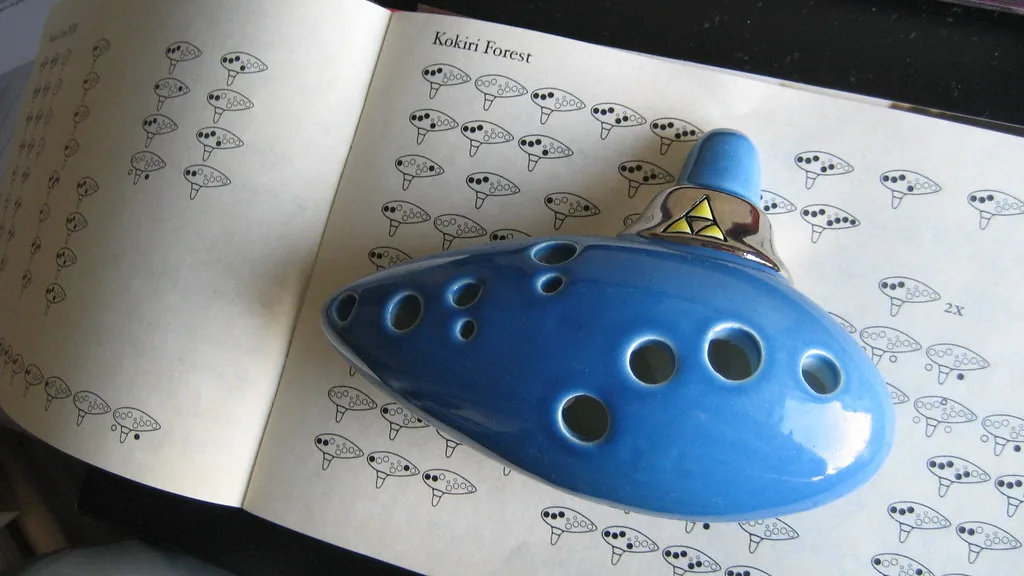
Discovering this wind instrument may seem straightforward, but getting started requires a few pointers. The video game Zelda made it famous, and many people wonder which model they should choose as a beginner.
For a first ocarina, range and tuning are essential. A 12-hole model covers up to 21 notes, making it easier to learn scales and octaves.
Materials matter too. Ceramic versions offer superb sound quality but are fragile. Plastic combines durability with an affordable price.
Practical advice: try several models before buying and choose a well-known brand. STL Ocarina has sold models for more than 15 years and is often recommended.
To learn more about the number of holes and the available options, read this guide to ocarina holes or contact a specialist through our contact page.
An introduction to the world of the ocarina
The earliest forms of this wind instrument can be traced to the Maya and Aztec civilizations. They used it for communication and during community rituals. These ancient uses already demonstrate the instrument’s social and symbolic value.
In the nineteenth century, Giuseppe Donati modernized its design by creating the transverse form we know today. This development made the instrument easier to play and helped it spread throughout Europe.
Since 2015, its popularity has soared: ocarina sales have risen by 300% thanks to popular culture. This revival has made the instrument more accessible and its designs more standardized.
“A gentle breath and precise fingering: mastery comes quickly and opens up a surprisingly broad repertoire.”
- Its ritual function and role in communication within pre-Columbian civilizations.
- Its reinvention by Donati in the nineteenth century.
- Modern growth driven by popular culture and manufacturing standards.
In practice, this instrument combines tradition and modernity. It connects the past with the present and suits both beginners and accomplished musicians seeking a simple, expressive sound.
Ocarina musical instrument: how to choose the right one for your level
Choosing a model suited to your level makes learning much easier. For a beginner, a 12-hole model remains the recommended option: it covers a coherent range of notes and supports steady progress.
Children aged 8 to 12 benefit from compact plastic versions such as those made by Night by Noble. These models are lightweight, durable, and suitable for smaller hands.
Beginners and children
First ocarina: choose a 12-hole model for learning scales. Check its tuning as soon as it arrives. A size suited to your hands reduces fatigue and improves your playing.
Experienced musicians
Experienced players often choose multi-chamber models or portable 6- or 8-hole instruments offering an extended range.
- Pacchioni fingering: an advanced system for greater expression.
- Musique de Terre offers handcrafted models of superior quality.
- STL Ocarina makes it easy to buy online, with a broad selection for different budgets.
Tip: match your choice to your experience and practise regularly to improve.
Understanding the number of holes for better playability
The number of holes directly affects the instrument’s range and the complexity of its fingering.
A 12-hole model provides access to around 21 notes, or nearly an octave and a half. This format became standard in Japan following the modern adaptations that succeeded Giuseppe Donati’s work.
Six-hole versions remain popular for their portability. They can produce up to 17 notes through specific fingering patterns, but require greater precision when playing.
The quality of the hole drilling and machining determines intonation. Inaccurate drilling alters the notes and makes tuning more difficult, even on a premium model.
- 4 holes: ideal for children and introductory learning.
- 6 holes: compact, technical, and portable.
- 12 holes: smooth progression for beginners and an extended repertoire.
The importance of range and tuning
Range and tuning define the character of your ocarina’s sound and guide your choice of repertoire.
For a beginner, an ocarina tuned to C (Alto C / AC) remains the standard choice. It makes it possible to play the full scale without complex movements.

Tuning in C
Stable tuning makes practising at home and playing in a group easier. Check that the instrument follows the A440 standard to ensure its notes are in tune with other instruments.
Alto and soprano ranges
Alto models offer a good balance between lower and higher notes. Soprano versions produce brighter, higher-pitched notes.
The A440 standard
The A440 standard is the international tuning standard. Ask the maker to confirm that the instrument complies with it to ensure quality and accurate intonation.
- Range defines the span of notes and the timbre.
- Tuning in C simplifies the process of learning fingerings.
- Checking the tuning prevents you from practising on an out-of-tune instrument.
Comparing materials: ceramic and plastic
Ceramic or plastic: each material produces a different result and suits a different use.
Ceramic models produce a warm timbre and offer excellent projection. Their often superior sound quality and glazed finishes, such as those offered by Musique de Terre, make them appealing. On the other hand, they are fragile and require care during transport.
Plastic versions—particularly the Night by Noble range—focus on durability. They suit beginners and travelling musicians. Plastic withstands temperature changes and makes everyday maintenance easier.
- Ceramic: warm sound, better projection, fragility.
- Plastic: durability, lower cost, stability.
- Regardless of the material, design and ergonomics should prioritize comfort.
To compare several models before buying, see this comparison guide, which will help you choose an instrument suited to your needs.
What makes multi-chamber models different
Moving to a multi-chamber model substantially expands the available range. These models are designed for musicians who want to cover several octaves without changing instruments.
Asian fingering and Pacchioni fingering
Asian fingering promotes continuity between the notes of one chamber and the next. It maximizes range and makes fast ascending passages easier.
Pacchioni fingering, invented by Giorgio Pacchioni, favours overlapping notes. It makes transitions more consistent and improves sound quality when moving between chambers.
- Double chamber: around 2 octaves, offering a good balance between weight and convenience.
- Triple chamber: up to 3 octaves, ideal for sophisticated transcriptions.
- These models require good breath coordination and precise fingering.
- Mastering a standard model before investing in one is strongly recommended.
| Type | Octaves | Advantage | Suitable for |
|---|---|---|---|
| Single | 1–1.5 | Easy to learn | Beginners |
| Double | ≈ 2 | Extended range, easy to carry | Intermediate musicians |
| Triple | ≈ 3 | Extended repertoire, complex transcriptions | Experienced musicians |
The quality of the chambers and hole drilling remains crucial for accurate notes and smooth transitions. To compare models suited to beginners and professionals, see this selection of the best ocarinas for beginners and professionals.
Why you should avoid general-purpose marketplaces
General-purpose platforms may be appealing because of their prices, but they often present tuning risks.
According to recent studies, 87% of ocarinas sold on some low-cost websites are poorly tuned. For a beginner, an out-of-tune instrument undermines the process of learning notes and creates bad habits.
These marketplaces often lack quality control and after-sales support. Unbranded products are sold without tuning certificates or technical advice.
Choose recognized brands such as STL Ocarina: they offer warranties, reliable tuning, and dedicated customer service.
- Buying online from a specialist website protects your budget.
- A good seller provides certificates and technical guidance.
- A maker’s reputation remains the best indicator for making confident progress.
“A quality instrument, even if it costs a little more, is an investment in your playing.”
To find reliable retailers, see this selection of online buying resources. It will help you avoid the pitfalls of marketplaces and receive an instrument that is ready to play.
Leading brands and makers
From local workshops to major international brands, every maker brings a distinctive touch.
French and European makers
Musique de Terre, run by Olivier Gosselink, represents the finest French craftsmanship.
Handcrafting ensures beautiful sound quality and carefully finished ceramic instruments.
International leaders
STL Ocarina has established itself as a global leader by offering a wide variety of models for beginners and professionals alike.
Spencer offers luxurious instruments whose designs and finishes are often compared to haute couture creations.
- Stein / Focalink: dependable 12-hole models.
- Online purchases: choose recognized brands to avoid poorly tuned instruments.
- Choose by production method: local workshop or international manufacturing.
| Brand | Origin | Strengths |
|---|---|---|
| Musique de Terre | France | Craftsmanship, ceramic, sound quality |
| STL Ocarina | United States | Variety of models, online availability |
| Spencer | United Kingdom / United States | Premium finishes, design |
Tips for a successful online purchase
Buying online requires a few simple checks to avoid unpleasant surprises.
Check for an A440 tuning certificate before completing your order. It confirms that the notes will be accurate and that the range meets accepted standards.
Choose recognized brands that offer returns and dependable customer service. For example, STL Ocarina allows returns within 14 days. Musique de Terre provides personalized advice to help you choose a size suited to your hands and ensure your comfort.
- Read the specifications: number of holes, material, and range.
- Consult verified reviews and demonstration videos to assess sound quality.
- Beware of very cheap bundles that sacrifice quality.
Practical tip: if you are unsure, contact the seller for details about tuning and its return policy.
To find reliable websites and compare the best options, consult this online guide to where to buy an ocarina.
Basic techniques for getting started with confidence
Starting with clear fundamentals speeds up progress and reduces frustration.
Mastering breath control is the first rule. Unlike the transverse flute, the ocarina requires a steady airflow to maintain accurate intonation and a consistent timbre.
Tablature remains a highly effective way to learn which holes to cover and how to produce accurate notes.
Using tablature
Part’Ocarina lets users create and share customized tablature online. This tool makes learning more engaging and guides beginners.
Practise for 15 to 20 minutes each day: simple scales stabilize your notes and develop muscle memory. Twelve-hole models provide an ideally linear progression for applying these exercises.
- Start with simple pieces to build confidence.
- Tablature provides a quick visual guide to finger positions, making music easier to read.
- Sharing your progress on forums can help you stay motivated.
Consistency and breath control are the true drivers of progress.
Maintaining your instrument and extending its life
Regular maintenance significantly extends the life of your ocarina and preserves its intonation. After each session, dry the inside by blowing through it, then wipe the mouthpiece with a soft cloth. This prevents moisture buildup, mould, and changes in the accuracy of the notes.
For ceramic models, a light rinse followed by the application of a vinegar-and-water solution (1:10) helps disinfect the instrument without damaging its finish. Do not immerse it for long periods, and avoid harsh products that could affect sound quality.
Musique de Terre recommends storing ocarinas in a padded case. This protects them from impacts and temperature changes that can cause hairline cracks.
Clean the holes carefully with a suitable small cleaning kit to protect the instrument. Check its tuning once a month with a tuner app. If hairline cracks appear, opt for an epoxy repair rather than cyanoacrylate glue.
“Caring for your instrument means respecting the craftsmanship of the people who made it.”
- Wipe and dry your instrument after every session.
- Avoid prolonged immersion and harsh cleaning products.
- Store it in a padded case to protect it from impacts.
- Check its tuning regularly with a tuner.
Conclusion
A good purchase opens the door to regular, enjoyable playing. With a little patience, any player can turn curiosity into a genuine sonic experience. This wind instrument soon becomes a companion for recreation and self-expression.
For beginners, the ideal first ocarina is often a 12-hole model in C. It offers a balanced range for practising scales and octaves. You should also compare ceramic and plastic models according to how you intend to use them.
Check the tuning when the instrument arrives, test the ocarina’s holes, and choose a recognized brand. This article gives you the essential information for choosing according to your level and enjoying the expressive potential of this small instrument in every practice session.