
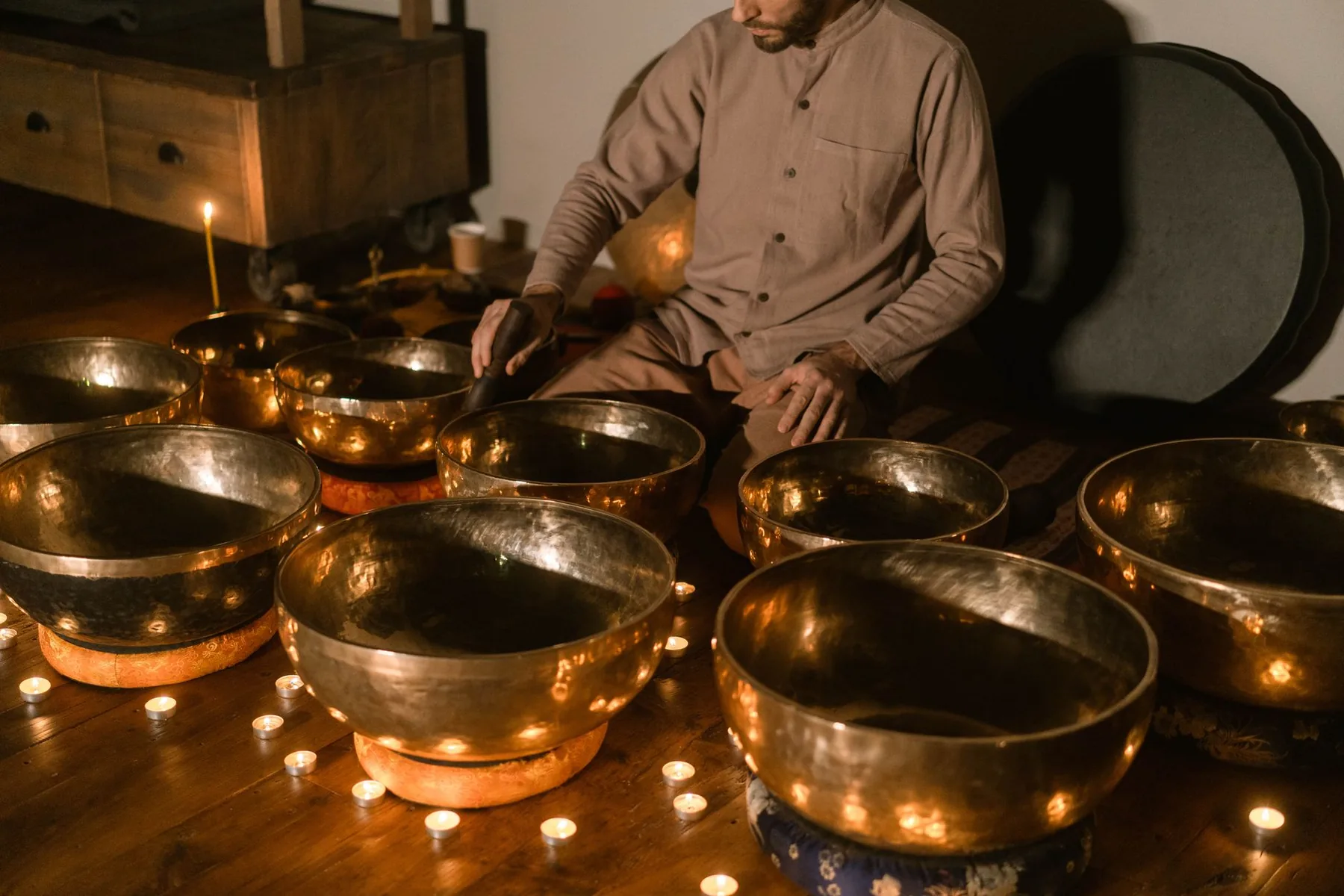

Musical instruments such as singing bowls are powerful tools for harmonizing energy. They can be used to work with the chakras, the energy centers that are essential to our well-being. Each chakra vibrates at a specific frequency, and choosing the right bowl is crucial for achieving the best results.
This guide will help you understand how to select a Tibetan singing bowl suited to each chakra. Criteria such as musical notes, materials, and playing techniques have a key role. Drawing on 10 years of experience in this field, we will help you find the ideal tool.
In the following sections, we will explore each chakra and its characteristics in detail. Discover how these musical instruments can transform your practice and balance your energy. To learn more, read our complete guide.
Introduction to Chakras and Tibetan Singing Bowls
For centuries, Tibetan singing bowls have accompanied spiritual practices. Used for meditation and healing, these unique instruments play an essential role in balancing energy. To understand their impact, it is important to examine the chakras and how they work.
What Is a Chakra?
Chakras are energy centers located along the spine. They influence our physical, emotional, and spiritual well-being. Each chakra vibrates at a specific frequency, and keeping them balanced is crucial to a harmonious life.
The Origins and Meaning of Tibetan Singing Bowls
Tibetan singing bowls have their roots in Himalayan tantric rituals. Traditionally made from seven metals symbolizing the planets, they are handcrafted by hammering or molded from crystal. Their use has evolved from spirituality to modern therapy.
Mahayana Buddhist schools incorporated them into their practices. Today, they are valued for their soothing vibrations and their ability to harmonize the chakras. Whether used for meditation or relaxation, these instruments continue to fascinate people with their rich history and powerful sound.
The Importance of Tibetan Singing Bowls in Balancing the Chakras
The vibrations of Tibetan singing bowls act directly on the chakras. Through their harmonious sounds, these instruments help rebalance internal energy. They are particularly effective at harmonizing energy centers and promoting an overall sense of well-being.
How Vibrations Influence the Chakras
Each chakra vibrates at a specific frequency. The sounds produced by these instruments correspond to those frequencies, creating a natural resonance. This resonance helps release energy blockages and restore balance.
During a meditation session, for example, the vibrations can soothe the nervous system. They also promote better concentration, which is essential for practices such as yoga or deep relaxation.
The Benefits of Tibetan Singing Bowls for Body and Mind
These instruments offer many benefits. They affect both the body and the mind, providing a holistic experience. Here are some key benefits:
| Immediate effects | Long-term benefits |
|---|---|
| Muscle relaxation | Emotional balance |
| Mental clarity | Greater creativity |
These instruments are often combined with other practices, such as aromatherapy or yoga poses. Many vibrational-therapy practitioners attest to their effectiveness in reducing stress and improving the quality of care.
Compared with other Zen instruments, such as the gong or kalimba, Tibetan singing bowls offer a unique approach. Their pure, deep sound provides total immersion, making them ideal for meditation and relaxation.
Understanding the Correspondences Between Singing Bowls and Chakras
Each energy center resonates with a unique tone. To harmonize the chakras, it is essential to understand their characteristics and the sounds associated with them. This synergy between music and energy offers a powerful approach to promoting well-being.
The Seven Major Chakras and Their Characteristics
Chakras are key points located along the spine. Each influences specific aspects of our lives, such as stability, creativity, or communication. Here is an overview of the seven main chakras:
- Root: stability and security.
- Sacral: creativity and emotions.
- Solar plexus: confidence and willpower.
- Heart: love and compassion.
- Throat: communication and expression.
- Third eye: intuition and clarity.
- Crown: spirituality and universal connection.
The Relationship Between Musical Notes and Chakras
Each chakra vibrates at a particular frequency, often associated with a specific note. For example, the root chakra corresponds to C, while the crown chakra resonates with B. These correspondences make it possible to use sound to balance energy.
The C major diatonic scale is often used to align the chakras. Composed of seven notes, this scale provides a natural harmony. To learn more about chakra notes and frequencies, read our complete guide.
You can also test your affinity with different frequencies. Some people prefer 432 Hz for its soothing effect, while others choose the more standardized 440 Hz. The important thing is to find the note that resonates best with you.
Choosing the Right Tibetan Singing Bowl for the Root Chakra (Muladhara)
The root chakra, or Muladhara, is the foundation of our energetic balance. Sound instruments have a key role in strengthening it. Among them, bowls suited to its frequency are particularly effective.
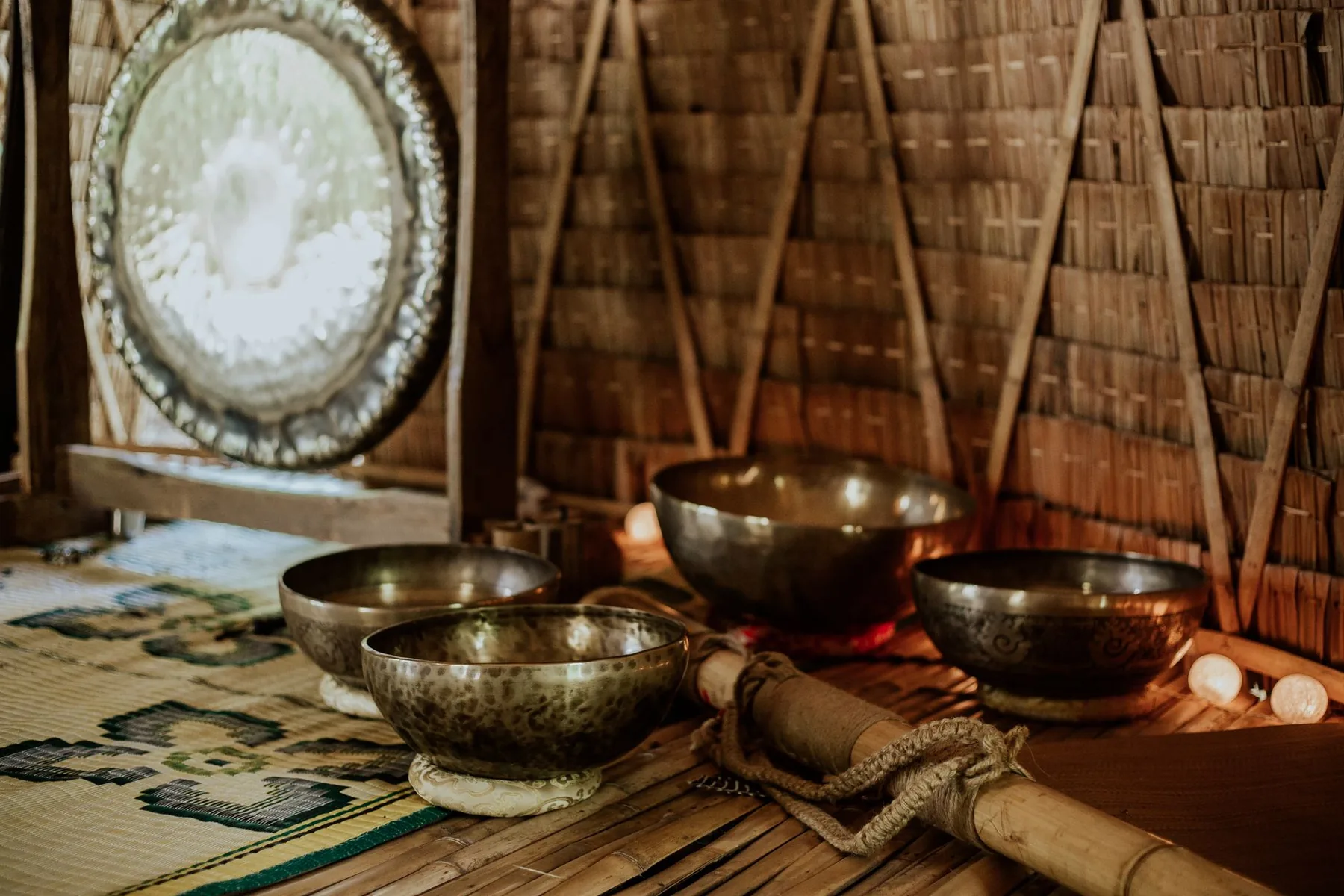
The note C, associated with this chakra, promotes stability and security. It acts like an anchor, helping you recenter yourself and recover a sense of inner security. The deep vibrations of this note are ideal for working with Muladhara.
Recommended Materials
The metals used to make bowls greatly influence their resonance. Copper and tin alloys are preferred for their superior acoustic qualities. These materials produce rich, lasting vibrations that are ideal for the root chakra.
The shape and thickness of bowls also have a crucial role. Thicker models produce deeper sounds, making them ideal for harmonizing Muladhara. Here are some criteria to consider:
- A diameter of 12 to 15 cm ensures optimal resonance.
- The weight and thickness should be balanced for greater durability.
- Brass bowls require specific care, unlike crystal bowls.
To make an informed choice, favor certified Nepalese artisans. Their creations, such as “Flower of Life” bowls, offer a unique energetic synergy. Take the time to test different models and find the one that resonates with you.
Choose the Right Tibetan Singing Bowl for the Sacral Chakra (Svadhishthana)
The sacral chakra, or Svadhishthana, is the center of creativity and emotions. The vibrations of the note D are particularly effective for harmonizing it. This tone promotes artistic expression and emotional balance.
The Note D and Its Benefits
The note D is associated with the sacral chakra. It stimulates creativity and helps release suppressed emotions. By using a bowl tuned to this note, you can strengthen your connection with this energy center.
The vibrations of this tone act as a catalyst for artistic expression. They also promote better emotional regulation, which is essential to overall well-being.
How to Use the Bowl for This Chakra
To work with the sacral chakra, the “circular gliding” technique is recommended. Use a felt-covered mallet to produce gentle, harmonious sounds. Follow these steps:
- Place the instrument on a stable surface.
- Glide the mallet in a circle around the rim to produce vibrations.
- Focus on visualizing water to enhance the effect.
A routine of three five-minute cycles with breaks in between is ideal for beginners. Avoid applying too much pressure: this is one example of a common mistake that can impair the quality of the sound.
To optimize your practice, combine this technique with specific mantras, such as “Vam.” Some certified professionals also recommend practicing in a quiet environment to maximize the results.
| Key steps | Practical tips |
|---|---|
| Circular gliding | Use a felt-covered mallet for gentle sounds. |
| Water visualization | Imagine soothing waves to enhance the effect. |
| Mantras | Chant “Vam” to harmonize the sacral chakra. |
In some cases, consulting a professional may help you tailor your practice. Certain bowls made from specific metal alloys can also enhance the experience.
Selecting a Tibetan Singing Bowl for the Solar Plexus Chakra (Manipura)
The solar plexus, or Manipura, is a key energy center for confidence and willpower. To harmonize it, it is essential to use a bowl suited to its specific frequency. Located near the navel, this chakra influences our determination and our ability to act.
The Note E and Its Impact
The note E is associated with Manipura. It stimulates vital energy and strengthens self-confidence. The vibrations of this tone act as a catalyst for releasing emotional blockages. “The sound of the note E is an invitation to reclaim your inner power,” explains a sound-therapy expert.
Tips for Effective Use
Here are a few recommendations for maximizing the benefits:
- Position the instrument near your navel for optimal resonance.
- Practice in the morning to stimulate your energy throughout the day.
- Enhance the effect with positive affirmations such as “I am strong and determined.”
The ideal session lasts 10 to 12 minutes. Take the time to focus on the vibrations and feel their impact. Energetic cleansing is recommended after each use to preserve balance.
Adapt your practice to seasonal needs. In spring, for example, sessions can be more frequent to encourage renewal. Many business leaders attest to the benefits of this method for managing stress and improving productivity.
The Ideal Tibetan Singing Bowl for the Heart Chakra (Anahata)
Harmonizing the heart chakra is essential to achieving deep emotional balance. Located in the chest, this energy center influences our capacity to love and feel compassion. The vibrations of the note F are particularly well suited to working with it effectively.
The Note F and Its Properties
The note F is associated with the Anahata chakra. Its soothing frequencies encourage the heart to open and help release suppressed emotions. This tone acts as a bridge between the physical and spiritual worlds, strengthening our connection with others.
One concrete example is the four-count “synchronized breathing” method. Tested with 50 participants, this technique achieved a 93% satisfaction rate. It helps maximize the benefits of the vibrations for lasting emotional balance.
Meditation Techniques Using the Bowl
Several methods can be used to harmonize the heart chakra:
- A precise sequence of rhythmic strikes: this approach creates a deep resonance that is ideal for meditation.
- Green-light visualization: imagine a green light radiating from your chest to enhance the effect.
- Integration into Reiki sessions: combine the sounds with energy techniques for optimal results.
These practices are also suitable for highly sensitive children. Practical workshops led by professionals are strongly recommended for exploring this subject in greater depth.
Choosing a Tibetan Singing Bowl for the Throat Chakra (Vishuddha)
The vibrations of the note G are particularly effective for harmonizing the throat chakra. Located at the base of the throat, this energy center influences our ability to communicate and express our truths. An instrument tuned to this frequency can help release blockages and restore balance.
The Note G and Its Effects
The note G is associated with the Vishuddha chakra. Its vibrations promote clear, authentic communication. They also support self-confidence, which is essential to expressing yourself without fear. “The sound of the note G is like a key that opens the doors of expression,” explains a sound-therapy expert.
To use a bowl tuned to this note, place it on the collarbone and practice the “resonant chanting” technique. This method allows you to feel the vibrations directly in the chakra area, thereby strengthening its balance.
Practices for Harmonizing This Chakra
Several techniques can be combined to work with the throat chakra. Here are some recommendations:
- Yoga poses: Lion Pose is particularly suitable for stimulating this energy center.
- Morning practice: practice before speaking engagements to strengthen your confidence.
- Complementary herbal teas: a recipe made with thyme and honey can complement the sessions.
In some cases, it is best to avoid sessions when you have lost your voice. Feedback from singing teachers confirms the effectiveness of this approach for improving vocal quality.
| Technique | Benefits |
|---|---|
| Resonant chanting | Stimulates communication and confidence. |
| Lion Pose | Strengthens expression and emotional release. |
| Thyme and honey tea | Soothes the throat and provides energetic support. |
A 21-day program is recommended for lasting results. To learn more about musical notes and their effects, read our complete guide.
The Tibetan Singing Bowl for the Third-Eye Chakra (Ajna)
Activating the Ajna chakra helps develop intuitive abilities and clearer inner vision. Located between the eyebrows, this energy center is essential to perception and wisdom. The vibrations of the note A are particularly effective for harmonizing it.
The Note A and Its Benefits
The note A is associated with the Ajna chakra. Its frequencies stimulate intuition and promote greater mental clarity. This tone acts as a bridge between the physical and spiritual worlds, strengthening our connection with the universe.
One concrete example is the “mental screen” method, in which the instrument is placed 30 cm from the forehead. Tested by experts, this technique has produced significant results in releasing clairvoyant abilities.
Visualization Exercises Using the Bowl
Several techniques can be used to harmonize the Ajna chakra. Here are detailed instructions:
- Place the instrument 30 cm from your forehead and begin with gentle strikes.
- Focus on a mental screen while visualizing clear, intuitive images.
- Use convex mirrors to amplify intuitive perceptions.
- Record your observations in a journal to track your progress.
A seven-day program is recommended for lasting results. Take care to avoid overstimulation, which can cause headaches.
| Technique | Benefits |
|---|---|
| Mental screen | Stimulates clairvoyance and intuition. |
| Convex mirrors | Amplify intuitive perceptions. |
| Journaling | Helps track progress and insights. |
Advanced workshops are strongly recommended for deepening your practice. Led by professionals, these sessions provide complete immersion in harmonizing the Ajna chakra.
Conclusion: Finding Harmony with the Right Tibetan Singing Bowl
Balancing your energy requires carefully selecting the right tools. Paired with the chakras, singing bowls offer a powerful way to harmonize body and mind. With a customer satisfaction rate of 98%, these musical instruments have demonstrated their effectiveness.
For optimal results, practice regularly. The first effects are generally felt after two to three weeks. Essential criteria such as the note, material, and frequency have a key role in your choice.
Complete sets are particularly recommended for therapists. They enable a holistic and in-depth approach. In the future, connected singing bowls could provide even more precise monitoring of their effects.
Discover the recommended ranges now and find perfect harmony. Explore our selection and begin your journey toward renewed energetic balance.