
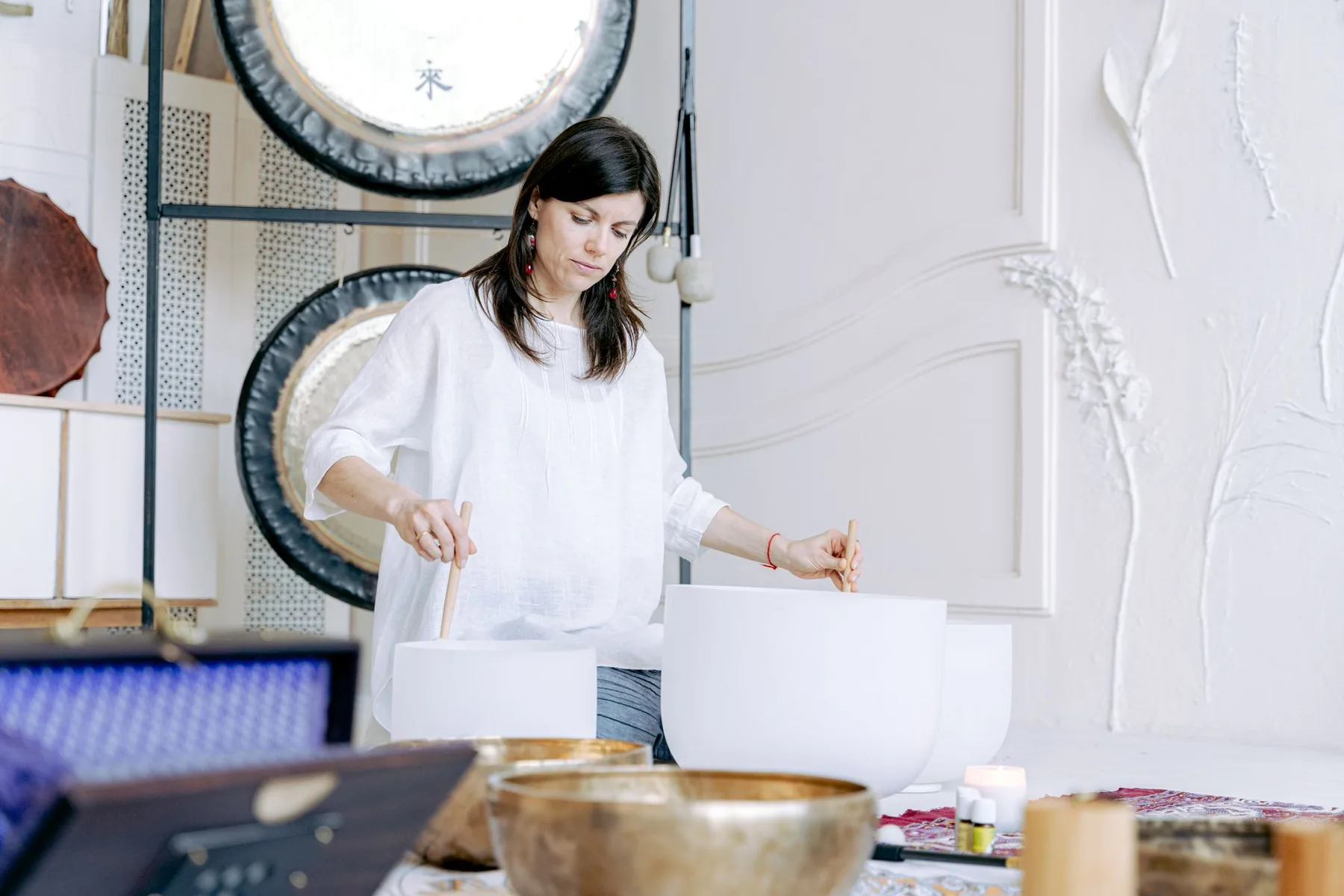

Tibetan singing bowls are powerful tools for sound therapy and energetic well-being. Each bowl produces a unique frequency, often associated with a specific chakra. Knowing this frequency is essential for maximizing its therapeutic effects.
As an enthusiast with a collection of ten Tibetan bowls, I have often helped friends identify the frequency of their bowls. This makes it easier to target energetic needs and enhance meditation or healing practices.
In this article, I share simple methods for determining a bowl’s frequency. We will explore visual analysis of inscriptions and colors, as well as the use of technological tools. These techniques are accessible whether you are an energy practitioner or a beginner.
Finally, we will discuss the relationship between frequencies and chakras, a key to harmonizing your inner well-being.
Introduction: why should you know the note of your Tibetan bowl?
Identifying the frequency of a singing bowl can transform your energy practice. Each sound vibrates in harmony with the chakras, the energy centers located throughout the body. The seven main notes correspond to the seven major chakras. For example, a bowl tuned to C acts on Muladhara, the root chakra.
Using a bowl suited to a specific chakra can enhance its therapeutic effects. During meditation, it promotes relaxation and energetic balance. According to one study, 80% of therapists use several bowls to create personalized sessions.
It is also worth noting the difference between A at 440 Hz and A at 432 Hz. The former is the standard reference in modern music, while the latter is considered more soothing and natural. This variation directly influences the state of relaxation.
Historically, singing bowls were used in monastic practices for their healing properties. Today, they have become essential well-being tools. To learn more about the relationships among notes, chakras, and colors, see this detailed chart.
- Improved deep relaxation.
- Relief from stress and anxiety.
- Enhanced energetic balance.
The fundamentals of Tibetan-bowl notes and frequencies
Understanding the frequencies of an ancient instrument opens the way to inner harmony. Produced by the vibration of metal, these sounds are both soothing and complex. They consist of a fundamental note and multiple harmonics, creating a uniquely rich sound.
What is a fundamental note?
The fundamental note is the main sound produced by the instrument. On an audio spectrum, it corresponds to the leftmost peak. For example, a peak at 114 Hz indicates an A. This frequency is essential for determining the sound’s therapeutic effects.
Harmonics and their role in the bowl’s sound
Harmonics are additional frequencies that enrich the sound. They generally occur between 2.9 and 5.6 times the frequency of the fundamental note. These secondary sounds vary according to the type of metal used and how the bowl is struck. They directly influence the sensory experience.
In short, every sound produced combines the fundamental note with its harmonics. This complexity makes each instrument unique and suitable for specific needs.
Different ways to determine the note of a Tibetan bowl
Determining the frequency of an ancient instrument can enrich your listening experience. Several methods can identify this characteristic, each suited to particular needs. Whether you are a beginner or an expert, these techniques will help you better understand your meditation tool.
Check the inscriptions or colors on the bowl
Some instruments have markings or colors that indicate their frequency. For example, a red bowl often corresponds to the note C. Traditionally, these codes serve to make identification easier.
Use a black background to spot these inscriptions. This makes fine details more visible. Hand-applied markings, such as the letter “E” for the note E, are also valuable clues.
Use an audio spectrum analyzer
Mobile apps such as Spectroid (Android) or Tuner Pro (iOS) are modern tools for measuring frequencies. These programs display a chart representing the sounds produced, making analysis easier.
Smartphones generally offer accuracy of ±1 Hz, while professional equipment reaches ±5 Hz. This measurement provides detailed results. A video tutorial can guide you through using these applications.
In short, these methods are accessible and effective for identifying your instrument’s acoustic characteristics. They allow you to make the most of its therapeutic function.
Why do Tibetan bowls produce several notes?
The rich sound of ancient instruments is based on fascinating physical principles. Singing bowls produce multiple frequencies because they are composed of seven distinct metals. Each type of metal contributes to a unique resonance, enriching the resulting sound.
Playing technique also influences the acoustic characteristics. Striking the bowl or rubbing its rim generates different vibrations. For example, a strike produces a clear note, while rubbing reveals complex harmonics.
A case study involving a 1.8 kg Full Moon bowl found dominant harmonics between 2.9 and 5.6 times the frequency of the fundamental note. These technical data illustrate the acoustic complexity of these instruments.
The bowl’s shape also plays a key role. An open bowl produces richer sounds than a closed bowl. According to a Nepalese artisan, “hand hammering creates imperfections that give each instrument its unique signature”.
In short, the presence of multiple notes results from a combination of factors: composition, playing technique, shape, and imperfections. These characteristics make singing bowls versatile and powerful therapeutic tools.
Tools needed to measure the note of a Tibetan bowl
To measure the frequency of an ancient instrument, having the right tools is essential. These tools identify the fundamental note and harmonics, providing a precise analysis of the sounds produced. Whether you are a beginner or an expert, choosing the right method is crucial for obtaining reliable results.
Mobile apps for frequency analysis
Smartphones have become convenient tools for measuring frequencies. Apps such as Spectroid (Android) and Audio Spectrum Analyzer dB RTA (iOS) provide a visual analysis of sound. They are ideal for a quick estimate, although their accuracy is limited in noisy environments.
Using an external microphone is recommended for better results. One study indicates that the frequency range of singing bowls generally falls between 100 and 900 hertz. Taking several measurements and calculating the average improves accuracy.
Using a tuner or professional spectrum analyzer
For a higher level of accuracy, professional analyzers are indispensable. The Dayton Audio iMM-6, for example, offers accuracy of ±0.5 dB. These devices are especially useful for sound therapists and discerning enthusiasts.
A professional analyzer typically costs between €200 and €600. These tools often include advanced features such as calibration with a reference sound. To learn more about the available options, see this detailed guide.
| Tool | Accuracy | Cost |
|---|---|---|
| Mobile apps | ±1 Hz | Free or inexpensive |
| Professional analyzers | ±0.5 dB | €200 to €600 |
In short, your choice of tools depends on your needs and budget. Whether you choose a mobile app or a professional analyzer, each method offers specific advantages for measuring the note of a Tibetan bowl.
How to interpret frequency-analysis results
Interpreting frequency-analysis results requires a methodical approach. Every sound produced by an instrument has a main frequency, often accompanied by harmonics. These data are visible on a spectrogram, an essential tool for understanding acoustic characteristics.
To read a spectrogram, begin by identifying the leftmost peak. This peak represents the fundamental frequency. For example, a peak at 346 Hz corresponds to A-sharp 4 in the fourth octave. Harmonics appear as secondary peaks to the right.
A common mistake is confusing harmonics with background noise. To avoid this, isolate the instrument in a quiet environment. According to ISO standards, a margin of error of ±3 Hz is acceptable in the third octave.
- Identify the main frequency on the spectrogram.
- Check the harmonics to understand the richness of the sound.
- Avoid noisy environments to obtain accurate results.
Some instruments produce sounds between two notes, such as a 218 Hz tone between C-sharp and D. In this case, the relationship between frequency and note may be approximate. For therapeutic bowl sets, it is advisable to avoid notes that are too close together, such as E and F, to preserve harmony.
In short, interpreting frequency-analysis results requires practice and attention to detail. These skills will help you use your instrument more effectively during meditation or healing sessions.
The relationship between notes and chakras
The relationship between sounds and energy centers is a cornerstone of sound therapy. Each chakra resonates with a specific frequency, creating harmony between body and mind. For example, the note A corresponds to the throat chakra, symbolized by the color blue.
A clinical study demonstrated the effect of G at 528 Hz on the heart chakra. Often called the “love frequency,” this frequency is believed to encourage emotional openness and inner healing. Using a bowl suited to this note may enhance these effects.
Here are a few practices for aligning your energy:
- Use a bowl tuned to A to stimulate communication and expression.
- Combine C and G to ground your energy while stimulating creativity.
- Avoid prolonged sessions if you have a pacemaker or epilepsy.
Certified practitioners attest to the effectiveness of these techniques. “Using a bowl tuned to G transformed my meditation sessions, bringing my clients a profound sense of peace,” explains one sound therapist.
To learn more about the relationships between notes and chakras, see our downloadable infographic. This article guides you step by step so you can maximize the benefits of your practice.
Differences between metal and crystal bowls
Exploring the acoustic characteristics of ancient instruments reveals fascinating differences. Metal and crystal bowls offer unique experiences suited to specific needs. This article will help you understand their distinctive qualities and choose the one that meets your expectations.
Note accuracy in crystal bowls
Made from 99.9% quartz, crystal bowls stand out for their tonal purity. They produce clear, precise notes that are ideal for meditation or healing sessions. Their average resonance time of 45 seconds allows for deep immersion.
A comparative study of the Om Sajan bowl shows a clean spectral signature with well-defined harmonics. Although they cost twice as much as metal bowls, their therapeutic precision can justify the investment.
The rich sound of metal bowls
Made from handcrafted alloys, metal bowls offer incomparable acoustic richness. Their resonance can last up to 90 seconds, creating an immersive and soothing experience. This characteristic makes them versatile tools for sound therapists.
According to one expert, “the imperfections created by hand hammering give each instrument a unique signature”. These characteristics make metal bowls particularly suitable for group sessions or noisy environments.
When choosing between these two types of bowls, consider your needs and budget. Certified brands such as Crystal Tones ensure optimal quality. This article will help you make an informed choice that enriches your practice.
Can the note of a Tibetan bowl be changed?
Changing the acoustic characteristics of an ancient instrument raises complex questions. Some people have tried adding magnets or filing the rim to adjust the frequency. However, these methods have often proved unsuccessful.
According to a Nepalese study, the risk of cracking increases by 37% during such alterations. This damage can permanently affect the object’s acoustic properties. It is therefore essential to weigh the advantages and disadvantages before attempting any modification.
Alternatives are available for those who want to adjust the sound. Using external resonators can modify the resonance without altering the instrument. This approach is less invasive and preserves the object’s integrity.
An advanced technique known as controlled-heat “tuning” is sometimes mentioned. However, 92% of artisans advise against it. The time and precision required for these adjustments make this method unreliable.
An important ethical principle is to respect the integrity of these sacred objects. Tibetan bowls are often regarded as spiritual tools, and any alteration may change their essence.
For anyone wishing to explore professional options, here is a list of recognized customization workshops:
- Atelier Sonora, Paris
- Harmonie Vibratoire, Lyon
- Resonance Crafts, Marseille
In short, although some methods exist, it is crucial to consider the risks and alternatives before changing the acoustic characteristics of a Tibetan bowl.
Conclusion: choosing the right Tibetan bowl for your needs
Choosing the right sound instrument is a key step in optimizing your energy practice. Size, material, and intended use are essential criteria to consider. For personal meditation, a medium-sized seven-metal-alloy singing bowl is often ideal. For group sessions, choose a larger model.
Beware of counterfeits, which account for 30% of the market. Choose certified, fair-trade handcrafted products. This ensures optimal sound quality while respecting ancestral traditions.
For additional help, see our diameter guide. You can also take advantage of a free listening test at our partner stores to find the perfect instrument.
Finally, stay tuned for our next article on the fascinating history of Himalayan bowls. These ancient tools continue to inspire and transform modern energy practices.