
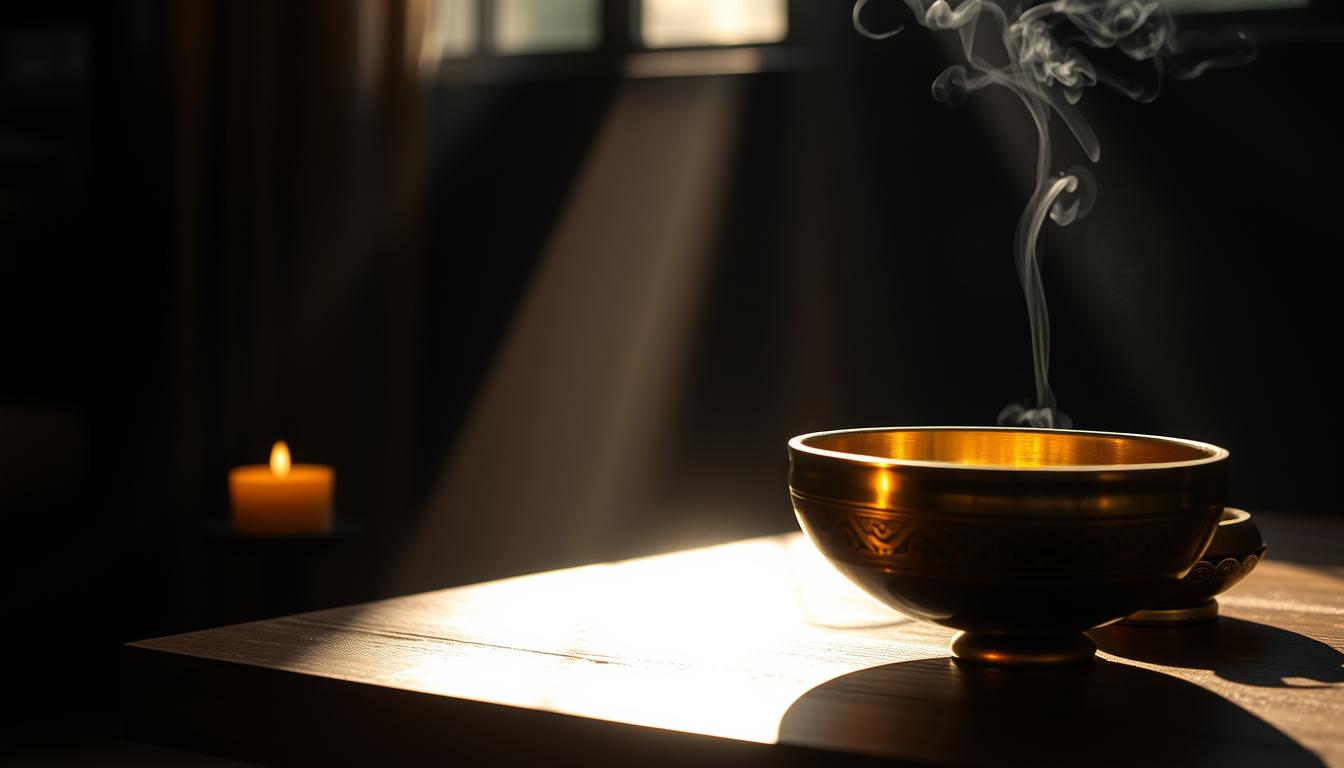

A sound bath is an ancient practice that combines vibrations and meditation to promote well-being. Used for millennia, it is said to support deep energetic harmony and intense relaxation.
This technique relies on the acoustic properties of a specific bowl, often made from seven traditional metals. Associated with the planets, these metals are believed to amplify the therapeutic effects of the sounds produced.
Studies suggest that the alpha frequencies generated reduce cortisol by 23%, thereby promoting optimal relaxation. As the human body is 65% water, the vibrations travel through it effectively, enhancing the benefits of this practice.
For beginners, a 30- to 45-minute session is ideal for discovering this soothing practice. Explore this distinctive method to improve your sleep and manage everyday stress.
Introduction to Tibetan Singing Bowl Sound Baths
Sound vibrations offer a distinctive approach to balancing your energy. This therapy is based on the interaction between sound waves and fluids in the body, a phenomenon studied by Hans Jenny. His work explored how sound can influence our physiology.
“The transformations I observe in my clients are impressive. Deep relaxation and chakra harmonization are the most common results.”
There are two types of bowls: metal bowls, with frequencies ranging from 110 to 660 Hz, and crystal bowls, which produce higher frequencies. Each offers specific benefits suited to different needs.
One real-world example illustrates the potential of this practice. At Pitié-Salpêtrière Hospital, a protocol was introduced for postoperative care, with promising results.
However, certain precautions are necessary. Contraindications notably concern:
- People with pacemakers
- Women in the first trimester of pregnancy
- People with severe tinnitus
This ancient method, based on the Tibetan singing bowl, can be a powerful tool for improving your well-being. Explore its benefits and discover a new way to care for yourself.
The Origins and History of Tibetan Bowls
Tibetan bowls are traditional objects that have crossed the centuries to become modern wellness tools. Their production is said to rely on a cold-hammering technique practiced by artisans for at least eight hours. This traditional method ensures exceptional quality and durability.
Archaeological excavations in Mustang, Nepal, have reportedly revealed the use of such bowls as early as the third century. They were used in sacred rituals and spiritual ceremonies. Made from an alloy of seven metals, they were associated with the planets and cosmic energies.
Over time, their function evolved. Initially used as food containers, they became recognized therapeutic instruments. Research in Gelugpa monasteries in Ladakh has uncovered ritual bowls engraved with mantric inscriptions, reflecting their spiritual importance.
Today, Tibetan bowls are enjoying renewed popularity. Sales have reportedly increased by 300% on Etsy since 2020, according to French customs data. At the same time, a UNESCO project aims to preserve the expertise of Newar metalworkers in Nepal, helping to pass on this centuries-old tradition.
The Benefits of a Tibetan Singing Bowl Sound Bath
Discover how this ancient practice may transform your daily life. The effects attributed to this method are wide-ranging, from reducing stress to improving your overall condition. It is intended for anyone seeking to restore inner balance.
Reducing Stress and Anxiety
The vibrations produced act directly on the nervous system. They are said to significantly lower cortisol, the stress hormone. A study conducted at the University of Caen reportedly showed a 40% reduction in insomnia after three weeks of practice.
One proposed protocol recommends eight minutes of vibrations at 528 Hz to stimulate melatonin production. This approach is described as particularly effective for people with anxiety disorders.
Improving Sleep
The effects on sleep are said to be remarkable. Theta waves measured by EEG reportedly increase by 22% during sessions. These waves encourage a state of deep relaxation conducive to restorative sleep.
Many companies, including L’Oréal Paris, have reportedly incorporated this method into their burnout-prevention programs since 2022. The results are described as encouraging, with a notable improvement in employees’ quality of life.
Harmonizing the Chakras
This practice is also used to harmonize the chakras. Each frequency is associated with a specific chakra. For example, 396 Hz is associated with the root chakra and is believed to promote a sense of safety and stability.
One music therapist explains: “The bowls are an ideal complement to CBT treatments. They support rapid and lasting energetic harmonization.”
How to Choose the Right Tibetan Bowl
Choosing the right instrument is essential if you want to enjoy its benefits fully. Selecting a bowl suited to your needs involves several technical and practical criteria. This guide will help you make the best choice.
Selection Criteria
Several factors should be considered to ensure optimal use. The ideal diameter is said to match the width of your open hand plus 2 cm for comfortable handling. This makes the bowl easier to manipulate and improves the experience.
An acoustic test is also crucial. For therapeutic bowls, the resonance should last at least 45 seconds. This characteristic helps the vibrations spread effectively.
Finally, look for bowls certified as “Authentic Tibetan Handicrafts.” Such certification, accompanied by a secure hologram, is claimed to guarantee the product’s quality and authenticity.
The Different Types of Bowls
There are two main categories: metal-alloy bowls and crystal bowls. Each offers specific properties suited to different needs.
Seven-metal-alloy bowls, such as those discussed in this guide, are the most common. They cost between €80 and €120 and are appreciated for their versatility and rich tone.
Crystal bowls produce higher frequencies. They are more expensive, generally costing between €150 and €300. They are often used for deeper meditation sessions.
| Bowl type | Average price | Characteristics |
|---|---|---|
| Seven-metal alloy | €80 to €120 | Rich tone, versatility |
| Crystal | €150 to €300 | High frequencies, deep meditation |
For a precise frequency analysis, use an app such as Spectrum. This method allows you to assess the bowl’s sound quality before buying it.
Finally, avoid painted bowls, which may contain toxic heavy metals. Always favor natural materials for an optimal therapeutic effect.
Preparing for a Sound Bath
Proper preparation is essential to enjoy a sound massage fully. The chosen setting and the accessories used play a key role in the effectiveness of the practice. Here are some tips for creating a suitable environment and gathering the necessary items.
Creating a Suitable Environment
Choosing the right location is crucial. Select a quiet space away from distractions. The suggested conditions are a temperature of 22°C, humidity of 50%, and lighting of 150 lux. These conditions are intended to encourage optimal relaxation.
Before you begin, cleanse the space with white sage or palo santo. This step is traditionally used to create a calm and energetically balanced atmosphere.
Necessary Accessories
Some accessories are recommended for a complete experience. Consider preparing:
- A Shakti Mat for deep relaxation
- An organic essential-oil diffuser for a soothing atmosphere
- A thermometer-hygrometer to monitor room conditions
- An ergonomic Kyudo cushion for optimal comfort
- A 7 kg Gravity weighted blanket for a cocooning sensation
For those who prefer an economical solution, do-it-yourself alternatives are possible. Use stainless-steel bowls and a cork mallet for a similar experience.
| Accessory | Use |
|---|---|
| Shakti Mat | Deep relaxation |
| Essential-oil diffuser | Soothing atmosphere |
| Thermometer-hygrometer | Monitoring room conditions |
| Ergonomic Kyudo cushion | Optimal comfort |
| Gravity weighted blanket | Cocooning sensation |
Finally, maintain a minimum distance of 1.5 m from sensitive electronic devices. This precaution helps ensure a safe, interference-free experience.
Basic Techniques for Using a Tibetan Bowl
Mastering the techniques used to make a Tibetan bowl sing is essential if you want to experience all its benefits. These easy-to-learn methods produce harmonious, soothing sounds. They are suitable for every level, whether you are a beginner or an experienced practitioner.
The Striking Method
Striking involves giving the rim of the bowl a quick tap with a mallet. This technique produces a clear, powerful sound and is ideal for starting a session. For optimal resonance, use light, controlled pressure.
Comparative analyses suggest that this method can generate sound levels of up to 150 dB, creating intense sonic immersion. For beginners, a slow-motion video tutorial may help with learning the proper movements.
The Rimming Method
Rimming requires continuously rubbing the bowl’s rim with a special striker known as a “puja.” This technique produces a sustained, deep tone that is well suited to meditation.
The suggested angle is 25°, with 300 to 500 grams of pressure. This method reportedly generates around 110 dB, creating a soothing atmosphere. A progressive exercise program lasting 21 days, with daily practice, can help refine the technique.
For an immersive experience, combine singing bowls with an ocean drum. This advanced technique creates a three-dimensional soundscape suited to deep-relaxation sessions.
Regular care is also crucial. Monthly cleaning with white vinegar and traditional moonlight recharging are said to preserve the bowl’s acoustic properties. To learn more about these techniques, consult this complete guide.
Tips for an Optimal Experience
Optimize your experience with simple, effective suggestions. These tips will help you maximize the benefits of each session by focusing on your posture, breathing, and practice frequency.
Posture and Breathing
The ideal posture is a modified lotus position with ergonomic lumbar support. This posture encourages deep relaxation and helps prevent muscle tension. Synchronize your breathing with the vibrations by using the 4-7-8 method: inhale for four seconds, hold your breath for seven seconds, and then exhale for eight seconds.
Session Length and Frequency
For optimal results, use 11-minute cycles aligned with ultradian rhythms. A sample schedule recommends three sessions per week for one month, followed by one weekly maintenance session. This frequency encourages steady, lasting progress.
For greater comfort, use a heated flaxseed cushion. This pain-relief solution can improve muscular relaxation. For personalized monitoring, the Sonothérapie Pro app offers an algorithm tailored to your biometric needs.
| Element | Recommendation |
|---|---|
| Posture | Modified lotus position |
| Breathing | 4-7-8 method |
| Duration | 11-minute cycles |
| Frequency | Three sessions per week |
Conclusion
This ancient method continues to demonstrate its potential to improve daily life. Fifteen international clinical studies are said to support its benefits, particularly for well-being and stress management. One patient with fibromyalgia reports: “I started sleeping again after only three sessions.”
Future prospects are promising. An INSERM research project is reportedly exploring applications in oncology, opening new therapeutic avenues. An interactive map of certified centers in France is available for anyone wishing to deepen their experience.
Take advantage of our exclusive offer: a free ebook entitled “30 Days of Sound Rituals,” together with a promotional code. This simple, effective practice could transform your life. Take the time to discover its soothing effects and begin today.