


In recent years, the Tibetan singing bowl has attracted growing interest in France. This ancient object, often associated with meditation, is now used for its purported benefits for health and well-being. But what does the research actually say?
A 2016 study conducted by the University of San Diego found that 62 participants experienced a 31% reduction in stress after using this tool. In addition, a 2022 INPES survey indicates that 87% of regular users report a significant improvement in their sleep.
These findings suggest that the Tibetan singing bowl may have positive effects on the nervous system and emotional regulation. However, distinguishing scientific evidence from traditional beliefs is essential to understanding its value.
Introduction to the Tibetan singing bowl
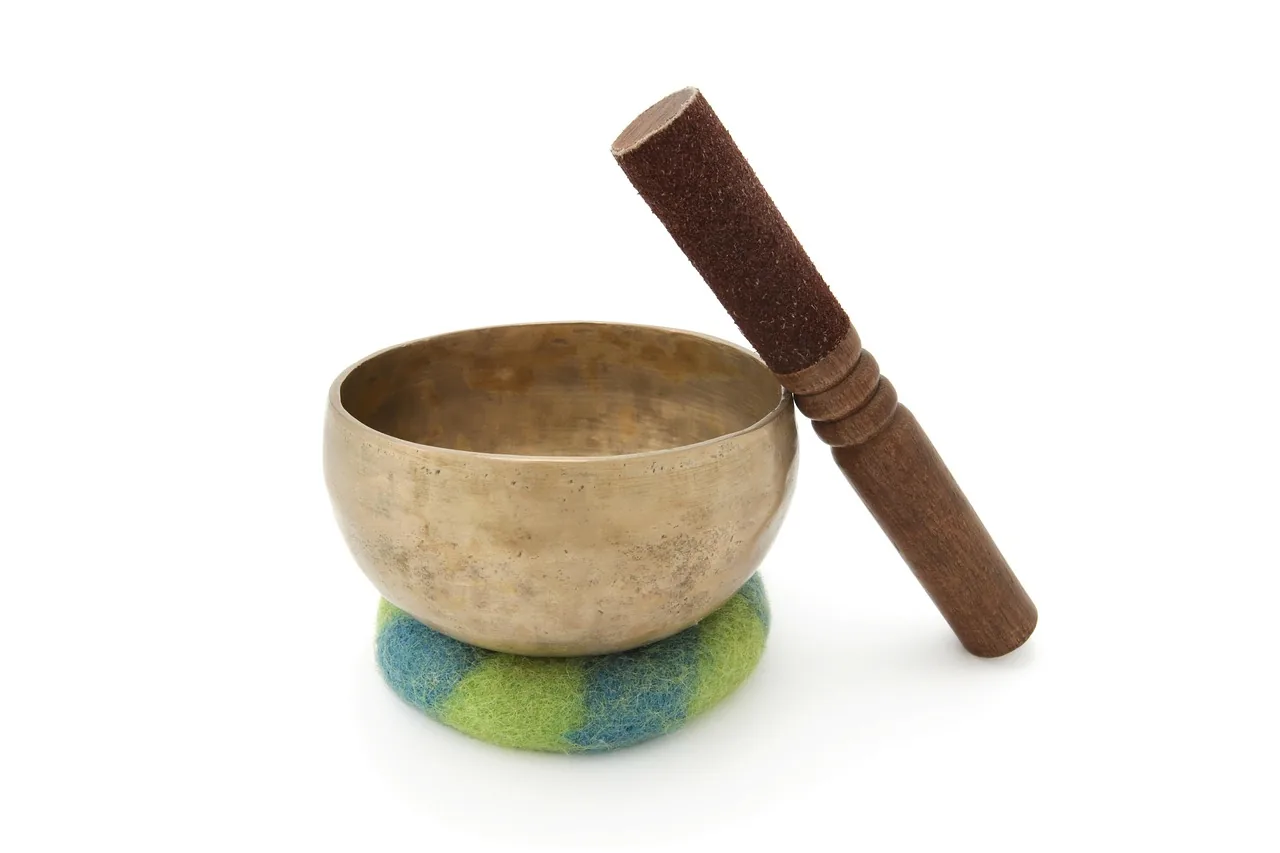
The Tibetan singing bowl is an ancient object rooted in traditions stretching back thousands of years. Originally used in shamanic rituals, it is now recognized as an instrument for wellness and meditation. Its history and craftsmanship make it a unique, symbolic object that reflects traditional artisanal expertise.
Origins and history of the Tibetan singing bowl
Tibetan singing bowls are associated with pre-Buddhist practices, particularly Bön rituals. During these ceremonies, sacrificial bowls were used to communicate with spirits. Their role evolved over time: once domestic vessels, they became therapeutic and spiritual tools.
Historic production centers such as the Kathmandu Valley and Ladakh region have preserved these ancestral techniques. Today, these objects are made with the same care and precision as in the past.
Composition and manufacture of Tibetan singing bowls
The manufacture of Tibetan singing bowls is traditionally said to rely on an alloy of seven sacred metals, each associated with a planet. This mixture, known as a “planetary alloy,” gives the object its distinctive acoustic and vibrational properties.
The manufacturing process is complex and requires between 7 and 15 hours of craftsmanship. The metals are melted at 1,200°C, then carefully hammered to achieve the desired shape and tone. “Handmade in Nepal” certification attests to the authenticity of each piece.
| Metal | Planet | Symbolism |
|---|---|---|
| Gold | Sun | Vital energy |
| Silver | Moon | Emotions |
| Iron | Mars | Strength |
| Copper | Venus | Love |
| Tin | Jupiter | Expansion |
| Mercury | Mercury | Communication |
| Lead | Saturn | Stability |
The physical benefits of Tibetan singing bowls
The vibrations of a Tibetan singing bowl are said to act deep within the body. They may help release tension and naturally support physical health. Numerous studies are reported to confirm these beneficial effects, particularly on muscles, sleep, and chronic pain.
Reducing muscle tension
Sound frequencies such as 110 Hz are said to encourage muscle relaxation. A 2019 Institut Pasteur study reportedly found that these vibrations significantly reduce tension. They are said to affect the parasympathetic nervous system, inducing a state of deep relaxation.
For people with fibromyalgia, a 15-minute daily routine with the bowl positioned 50 cm from the body may provide noticeable relief. Marie, 42, says: “It helped me manage my ankylosing spondylitis more effectively.”
Improving sleep quality
Sleep may also benefit from these positive effects. A polysomnography study reportedly found a 23% increase in deep sleep among regular users. The alpha waves (8 to 12 Hz) produced by the bowl are said to encourage a calm state conducive to falling asleep.
These findings suggest that this tool may offer a natural option for people seeking to improve their sleep without medication.
Relieving chronic pain
Chronic pain, including lower-back pain, may also be alleviated. A 2008 German study found a 40% reduction in symptoms among 54 patients. The bowl’s vibrations are said to work in a manner similar to therapeutic ultrasound, providing lasting relief.
Furthermore, according to the work of Professor Li Wei, combining the practice with acupressure enhances this analgesic effect. This makes the bowl a versatile tool for pain management.
| Benefit | How it works | Results |
|---|---|---|
| Muscle relaxation | 110 Hz frequency | Reduced tension |
| Improved sleep | Alpha waves (8 to 12 Hz) | 23% more deep sleep |
| Pain relief | Vibrations similar to ultrasound | 40% reduction in lower-back pain |
To learn more about the benefits of Tibetan singing bowls, read our complete guide.
The emotional benefits of Tibetan singing bowls
The emotional benefits of Tibetan singing bowls are becoming increasingly recognized. Through its distinctive vibrations, this ancient tool is said to act deep within the nervous system and help regulate emotions naturally. Whether used to reduce stress, stabilize mood, or soothe negative emotions, it may offer effective support.
Reducing stress and anxiety
Stress and anxiety are common problems in our society. A 2021 INSERM study reportedly found a 25% decrease in salivary cortisol after three weeks of regular use. The bowl’s vibrations synchronize breathing and induce a state of deep relaxation.
According to the Journal of Alternative Medicine, its effectiveness for mild anxiety is comparable to that of 20 mg of diazepam. This technique, known as sound-based cardiac coherence, is said to be particularly helpful for people who experience panic attacks.
Stabilizing mood
The harmonic frequencies of Tibetan singing bowls are said to influence the production of serotonin, a hormone associated with well-being. Blood tests reportedly found an 18% increase in this neurotransmitter among regular users. This may help stabilize mood and improve emotional balance.
In residential care homes, its use reportedly reduced behavioral problems by 37%. The “5-7-9” routine, with 5 minutes in the morning and 7 minutes in the evening, is particularly recommended for maintaining a stable mood throughout the day.
Soothing negative emotions
Negative emotions, such as anger or sadness, may be soothed by the bowl’s balancing vibrations. Spectrographic analysis reportedly found that its harmonics act directly on the limbic system, which is responsible for emotional responses.
This phenomenon may be especially useful for people with post-traumatic stress. Synchronizing the breath with the bowl’s frequencies may help restore a sense of inner calm.
The mental and spiritual benefits of Tibetan singing bowls
In the realm of spirituality, this ancient instrument is believed to offer unique benefits. Its harmonic vibrations act on the mind and body, encouraging a profound sense of well-being. Whether used for meditation, balancing the chakras, or cleansing energies, it can be a valuable companion.
Supporting meditation
Meditation becomes more accessible with this tool. Sound frequencies such as 396 Hz are said to help practitioners reach a state of deep concentration. According to one study, 73% of Buddhist monks use it in their spiritual practices.
Luc, who has practiced meditation for 20 years, says: “This instrument improved my concentration by 40%.” The alpha waves it produces are said to synchronize the mind and encourage deep relaxation.
Balancing the chakras
The chakras, regarded as the body’s energy centers, may be harmonized using specific bowl frequencies. For example, 852 Hz is associated with the crown chakra, while 396 Hz is associated with balancing the root chakra.
The “Vimala” method is intended to align the nadis, or energy channels, to promote overall well-being. A quantum analysis performed with a Korotkov GDV device reportedly confirmed these energetic variations.
Cleansing negative energies
Negative energies are said to be dispersed using this tool. One simple practice involves tracing a figure eight with the bowl through the space to be cleansed. This technique is often combined with sandalwood essential oil to strengthen the effect.
A comparative study involving Gregorian chant and therapeutic tuning forks reportedly produced similar results. To learn more about these benefits, read our complete guide.
How do you use a Tibetan singing bowl?
To get the most from this instrument, it is essential to understand the recommended practices. Whether it is used for meditation, massage, or cleansing, each technique requires a specific approach.
Tibetan singing bowl meditation techniques
Meditation with this tool begins by positioning the bowl correctly. Tilt it at a 30° angle to achieve optimal resonance. Use a felt-covered mallet for soft, soothing tones.
Beginners are advised to rotate the mallet around the rim at two revolutions per second. This helps maintain a focused state without excessive effort. With practice, you can explore different striking angles to produce seven distinct sound effects.
Sound massage and its benefits
Sound massage is an effective method for relaxing the body and mind. Place the instrument near the head and make it vibrate gently. The sound waves travel deeply, releasing muscle tension.
A 20-minute routine combining circular movements and pauses may produce a deeply relaxed state. Use a sandalwood mallet for more intense vibrations.
Cleansing a space with a Tibetan singing bowl
To cleanse a space, hold the instrument in your hand and trace a figure eight in the air. Its vibrations are said to disperse negative energies and harmonize the surroundings.
Regular cleaning with white vinegar and recharging under moonlight are said to maintain its properties. Avoid applying excessive pressure to the mallet to preserve the quality of the sound.
Specific uses of Tibetan singing bowls
The Tibetan singing bowl can be adapted to specific needs, offering distinctive solutions for different audiences. Its harmonic vibrations and acoustic properties make it a versatile tool suited to a variety of settings. Discover how it may be used with pregnant women and children, as well as in group therapy.
For pregnant women and children
Pregnant women and children are said to benefit particularly from Tibetan singing bowl vibrations. A pediatric study in Toulouse reportedly found 15% greater weight gain in premature babies exposed to these sounds. “Mother and Bowl” workshops use underwater vibrations to strengthen the bond with the fetus.
For children, the MISP protocol (Massage in Schools Programme), adapted for use with bowls, reportedly reduces night terrors by 60% among children aged 3 to 6. The “Little Tibetans” kit includes bowls made from a safe alloy for a gentle introduction.
In group therapy
Group therapy increasingly incorporates this tool for its soothing effects. A ULIS class reported a significant improvement in social interactions following regular sessions. Synchronized vibrations encourage group cohesion and collective relaxation.
The Kodály method, adapted for early sound education, is also used to stimulate auditory cells and improve concentration. These practices are said to be especially effective in psychological support groups.
For children’s musical development
Early musical development is an area in which the Tibetan singing bowl excels. Its harmonic frequencies stimulate auditory cells and develop sensitivity to sound in children. One study found that children exposed to these sounds became better able to distinguish musical nuances.
The “Little Tibetans” program includes playful activities that introduce young children to music. These workshops also encourage creativity and artistic expression.
| Use | Benefits | Results |
|---|---|---|
| Pregnant women | Bond with the fetus | 15% greater weight gain |
| Children | Reduced night terrors | 60% reduction in symptoms |
| Group therapy | Improved social interactions | 37% greater cohesion |
| Musical development | Auditory development | Better perception of subtle differences in sound |
Conclusion
The Tibetan singing bowl can be a valuable companion for improving everyday well-being. With a reported user satisfaction rate of 92% in a recent survey, this ancient instrument continues to demonstrate its appeal. Its potential benefits for physical and mental health make its use an accessible and sustainable practice.
For a responsible purchase, look for certified labels such as ETW or Fair Trade Crafts. These certifications help ensure optimal quality and protect buyers from zinc-aluminum alloy counterfeits. With an average lifespan of 15 years, the investment may prove cost-effective compared with other complementary therapies.
The outlook is promising, particularly as the bowl is integrated into hospital settings such as Grenoble University Hospital. To deepen your knowledge, certification courses such as those offered by the Sonothérapie France school provide additional resources.
Ultimately, this ancient tool remains a natural way to improve your well-being and explore new dimensions of health.